Can you make maple syrup in South Carolina?
Local timing guidance
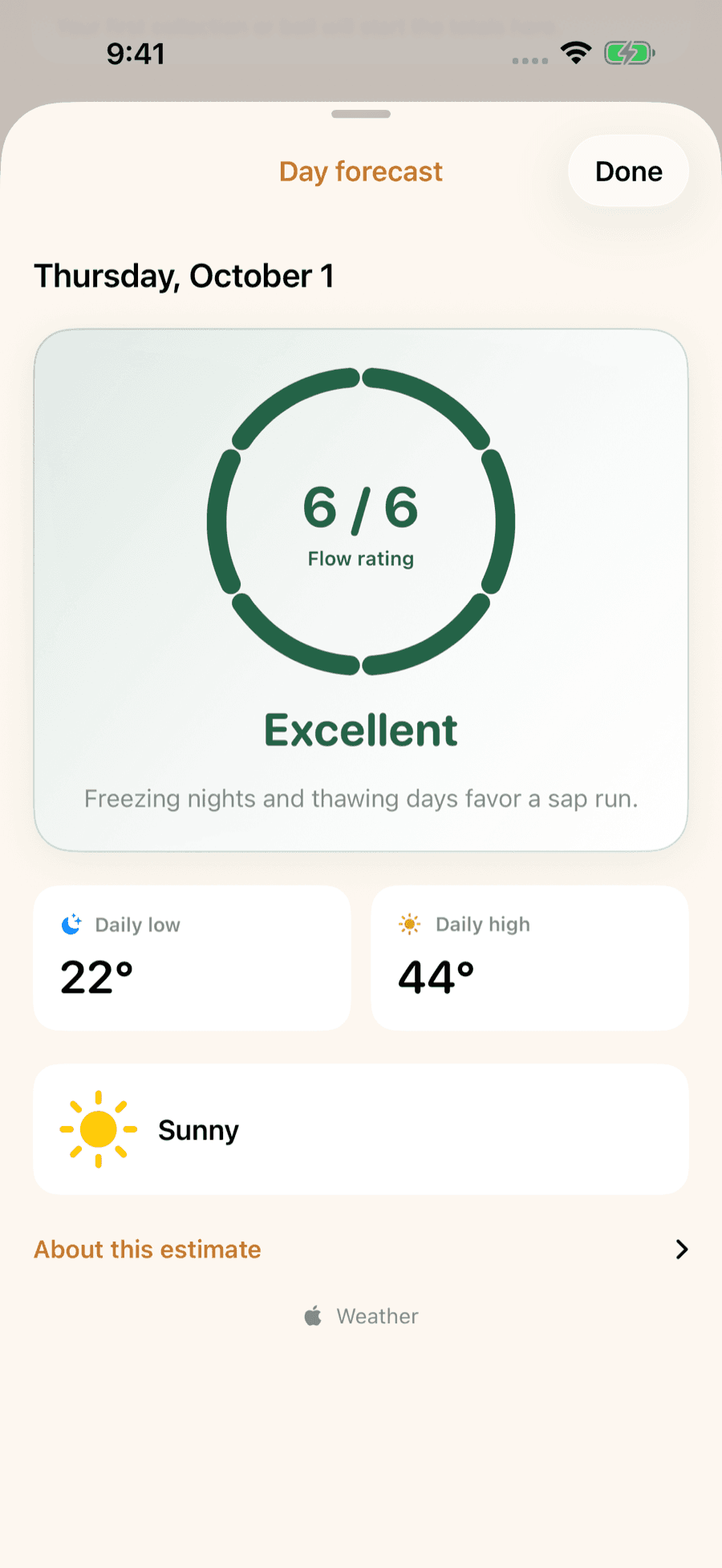
No local source gives tapping dates for South Carolina. The rule everywhere is the same: tap when the forecast shows freezing nights and days near 40 °F; our sap forecast works for any location.
Trees
Tappable trees in South Carolina
| Species | Status | Where |
|---|---|---|
| Sugar mapleAcer saccharum | native | 'Local populations occur in northwestern South Carolina' — the mountain corner onlySource: US Forest Service range data |
| Silver mapleAcer saccharinum | native | The US Forest Service range runs 'north through western South Carolina'; river bottoms of the Upstate; planted elsewhereSource: US Forest Service range data |
| Red mapleAcer rubrum | native | StatewideSource: US Forest Service range data |
| Florida / southern sugar mapleAcer floridanum | native | Piedmont bottomlands and mesic slopes (photographed in McCormick and Pickens counties), 'Common (rare in Mountains)'; no tapping recordSource: NameThatPlant (Weakley's Flora) |
| BoxelderAcer negundo | native | Riparian sites statewideSource: US Forest Service range data |
| Black walnutJuglans nigra | native | Upstate and PiedmontSource: US Forest Service range data |
USDA Forest Inventory · plots measured 2017–2025
How many tappable maples?
The Forest Service counts about 23 million red maples 10 inches and up on South Carolina's forest land.
| Statewide | 10 in and up | 18 in and up |
|---|---|---|
| Statewide | ||
| Red maples | 10 in and up about23 million ±6.2% sampling error (21–24 million) · tallied on 395 plots | 18 in and up about2.5 million ±15% sampling error (2.1–2.9 million) · tallied on 63 plots |
| Boxelders | 10 in and up about890,000 ±34% sampling error (590,000–1.2 million) · tallied on 15 plots | 18 in and up Too few inventory plots for a reliable statewide estimate. |
- FIA counts trees on forest land only. Yard, street and farm trees are not counted, so true numbers are higher.
- Plots measured 2017–2025. FIA visits a different share of its plots each year, so a “current” estimate pools 9 years of visits.
- Species are listed only where the statewide sampling error is 50% or less.
- Source: USDA Forest Service, Forest Inventory and Analysis (live trees on forest land, by species and trunk diameter at 4.5 ft). How FIA counts trees →
Who already does it
Sugaring in South Carolina, documented
Regional research (Warrensville NC site at 1,035 m, 30 km from the SC line) found warm-edge sap of 1.3–1.6 °Bx and box elder/silver maple the better alternatives to red maple
Cautions
What local sources warn about
- Red maple breaks bud early and its sap turns off-flavoured — the main statewide maple is the least forgiving one in a warm spring.Source: Producers Manual (2006)
- Expect leaner sap than the Northeast (1.3–1.6 °Bx measured just over the NC line).Source: Peters et al. 2020
Where to look
Likely sugaring country
Walhalla / Mountain Rest (Oconee County)
Blue Ridge escarpment corner where the US Forest Service puts sugar maple
Pickens (Pickens County)
Glassy Mountain / Table Rock foothills; Florida maple documented in heritage preserves
Landrum (Spartanburg County)
Foothills town on the NC line below the Saluda grade — the eastern edge of plausible freeze-thaw country
FAQ
Sugaring in South Carolina: questions
- Can you tap maple trees in South Carolina?
- Marginal. Marginal: sugar and silver maple reach only the Blue Ridge escarpment of the Upstate (Oconee, Pickens, Greenville), red and Florida maple are common statewide but break bud early and the Piedmont/Lowcountry seldom get a sustained freeze-thaw run; Clemson Extension discusses tapping only in passing and no South Carolina producer was found.
- Which trees can you tap in South Carolina?
- Sugar maple (Acer saccharum, native): 'Local populations occur in northwestern South Carolina' — the mountain corner only. Silver maple (Acer saccharinum, native): The US Forest Service range runs 'north through western South Carolina'; river bottoms of the Upstate; planted elsewhere. Red maple (Acer rubrum, native): Statewide. Florida / southern sugar maple (Acer floridanum, native): Piedmont bottomlands and mesic slopes (photographed in McCormick and Pickens counties), 'Common (rare in Mountains)'; no tapping record. Boxelder (Acer negundo, native): Riparian sites statewide. Black walnut (Juglans nigra, native): Upstate and Piedmont.

LuckySap · free on iPhone & Android
Try a season where you are
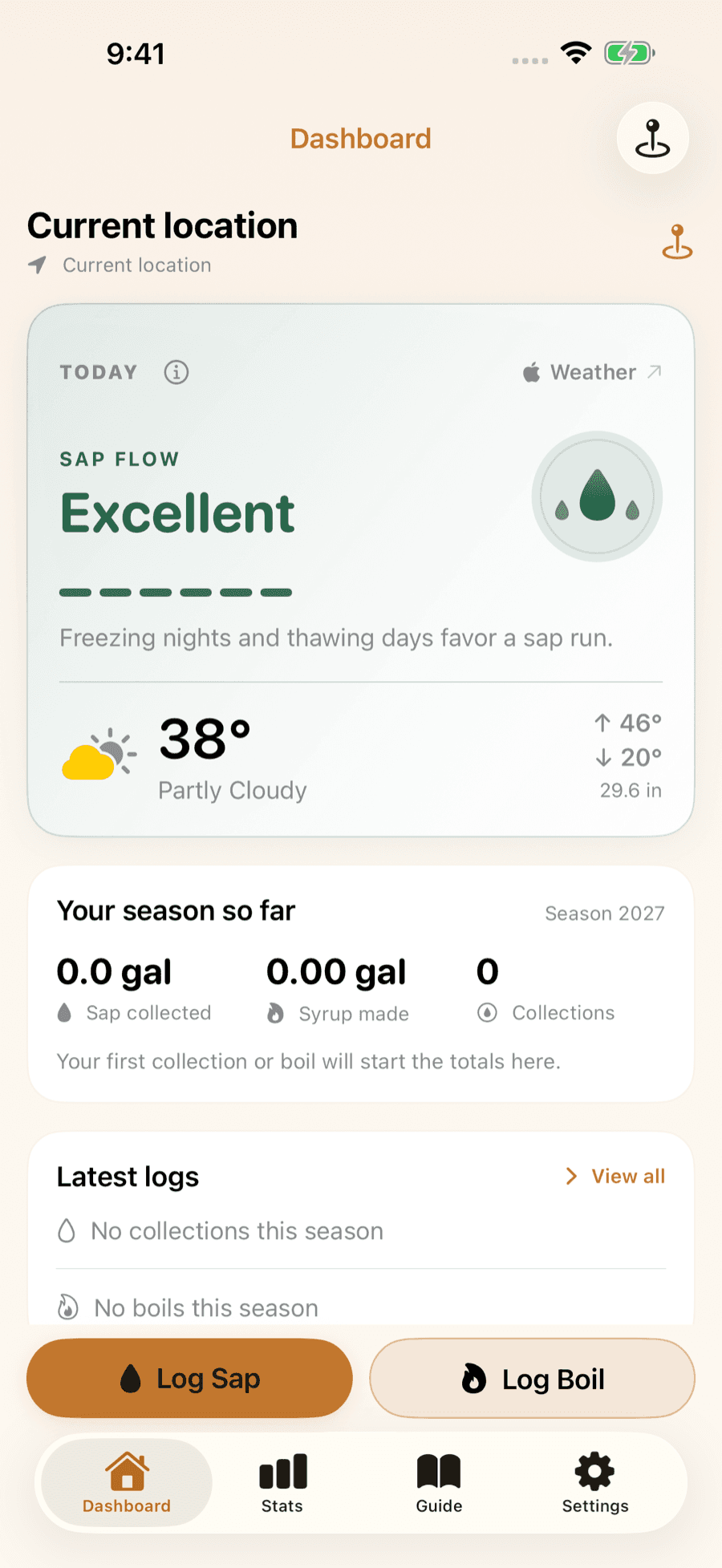
LuckySap turns the forecast for any spot into a day-by-day sap outlook and logs every collection and boil. Free on iPhone and Android.