Can you make maple syrup in New Jersey?
Local timing guidance
Event listing: 'From early February until mid-March, the maple sugaring season is at its peak in New Jersey.' Stockton began tapping its tubing system in the last week of December 2020 after partners reported sap, and sampled red maples in February 2021.
Source: The Montclair Girl 2023; Stockton University 2020/2021
Trees
Tappable trees in New Jersey
| Species | Status | Where |
|---|---|---|
| Sugar mapleAcer saccharum | native | Northern and central counties (Sussex, Warren, Morris, Hunterdon); 'extremely rare' in South Jersey where any present were probably plantedSource: US Forest Service range data; NJ Conservation Foundation 2023 |
| Red mapleAcer rubrum | native | Statewide; 'plentiful in the forested swamps of South Jersey' and the Pine Barrens — the tree Stockton taps (400 trees in Galloway Township)Source: US Forest Service range data; NJ Conservation Foundation 2023; Stockton University |
| Silver mapleAcer saccharinum | native | River floodplains (Delaware, Raritan, Passaic) and widely plantedSource: US Forest Service range data |
| BoxelderAcer negundo | native | Riparian and disturbed sites statewide; the US Forest Service range starts 'from New Jersey and central New York'Source: US Forest Service range data |
| Norway mapleAcer platanoides | introduced | Street and yard tree throughout the state; escaped in the northeastSource: US Forest Service range data |
| Black walnutJuglans nigra | native | Statewide on rich soilsSource: US Forest Service range data |
USDA Forest Inventory · plots measured 2021–2025
How many tappable maples?
The Forest Service counts about 3.0 million sugar maples and 15 million red maples 10 inches and up on New Jersey's forest land.
| Statewide | 10 in and up | 18 in and up |
|---|---|---|
| Statewide | ||
| Sugar maples | 10 in and up about3.0 million ±15% sampling error (2.5–3.5 million) · tallied on 56 plots | 18 in and up about380,000 ±27% sampling error (280,000–490,000) · tallied on 14 plots |
| Red maples | 10 in and up about15 million ±7.6% sampling error (14–17 million) · tallied on 227 plots | 18 in and up about1.9 million ±13% sampling error (1.6–2.1 million) · tallied on 64 plots |
- FIA counts trees on forest land only. Yard, street and farm trees are not counted, so true numbers are higher.
- Plots measured 2021–2025. FIA visits a different share of its plots each year, so a “current” estimate pools 5 years of visits.
- Species are listed only where the statewide sampling error is 50% or less.
- Source: USDA Forest Service, Forest Inventory and Analysis (live trees on forest land, by species and trunk diameter at 4.5 ft). How FIA counts trees →
Who already does it
Sugaring in New Jersey, documented
Stockton University Maple Project (Galloway Township, Atlantic County): three 3-year USDA grants; 'Initial sample tapping began in February 2021 on red maples'; community outreach gives residents with red maples ≥10 in DBH equipment and training in exchange for yield records
'Early in 2020, the university received a $410,000 three-year United States Agriculture Department grant'; about 20 private property owners joined; just under 100 red maples on tubing in Dec 2020
'native sugar maple trees grow in our state's north and central counties and many small farms tap trees for syrup'; Stockton's 400 tapped red maples made 25 gallons of syrup in 2022; grants totalling over $900,000
New Jersey Conservation Foundation ('The State We're In', 2 Feb 2023)Producer or news report
Public sugaring programs across North/Central Jersey: Howell Living History Farm (Hopewell Twp, every Saturday in February), Great Swamp OEC (Chatham), Schiff Nature Center (Mendham), Tenafly Nature Center (Sundays Feb–mid-March), Reeves-Reed Arboretum (Summit)
The Montclair Girl, 24 Feb 2023 (event listing)Producer or news report
Cautions
What local sources warn about
- Red maple sap is roughly half as sweet: 'The rule of thumb for red maples is it takes about 50 to 60 gallons of sap to make a gallon of syrup' (Stockton's Judy Vogel). Stockton relies on vacuum and reverse osmosis to make it pay.Source: NJ Conservation Foundation 2023 (quoting Stockton)
- South Jersey's problem is climate as much as trees: sugaring 'never developed in South Jersey due to the relative rarity of sugar maple trees ... and shorter duration of freeze-thaw cycling'.Source: Stockton University project page
- Stop when buds swell: sap 'develops a bitter aftertaste once maple trees begin to bud'.Source: NJ Conservation Foundation 2023
Where to look
Likely sugaring country
Galloway Township (Atlantic County)
Stockton University's 1,600-acre campus red-maple sugarbush — the South Jersey test case
Wantage / Sussex County
Lusscroft Farm's heritage sugarbush
Hopewell Township (Mercer County)
Howell Living History Farm runs February sugaring every Saturday — central Jersey anchor
FAQ
Sugaring in New Jersey: questions
- Can you tap maple trees in New Jersey?
- Yes. Yes: sugar maple is native in the north and centre and 'many small farms tap trees for syrup'; in South Jersey, where sugar maple is nearly absent, Stockton University's USDA-funded Maple Project has shown red maple can be sugared with vacuum and reverse osmosis.
- When do you tap maple trees in New Jersey?
- Event listing: 'From early February until mid-March, the maple sugaring season is at its peak in New Jersey.' Stockton began tapping its tubing system in the last week of December 2020 after partners reported sap, and sampled red maples in February 2021. (Source: The Montclair Girl 2023; Stockton University 2020/2021.)
- Which trees can you tap in New Jersey?
- Sugar maple (Acer saccharum, native): Northern and central counties (Sussex, Warren, Morris, Hunterdon); 'extremely rare' in South Jersey where any present were probably planted. Red maple (Acer rubrum, native): Statewide; 'plentiful in the forested swamps of South Jersey' and the Pine Barrens — the tree Stockton taps (400 trees in Galloway Township). Silver maple (Acer saccharinum, native): River floodplains (Delaware, Raritan, Passaic) and widely planted. Boxelder (Acer negundo, native): Riparian and disturbed sites statewide; the US Forest Service range starts 'from New Jersey and central New York'. Norway maple (Acer platanoides, introduced): Street and yard tree throughout the state; escaped in the northeast. Black walnut (Juglans nigra, native): Statewide on rich soils.

LuckySap · free on iPhone & Android
Try a season where you are
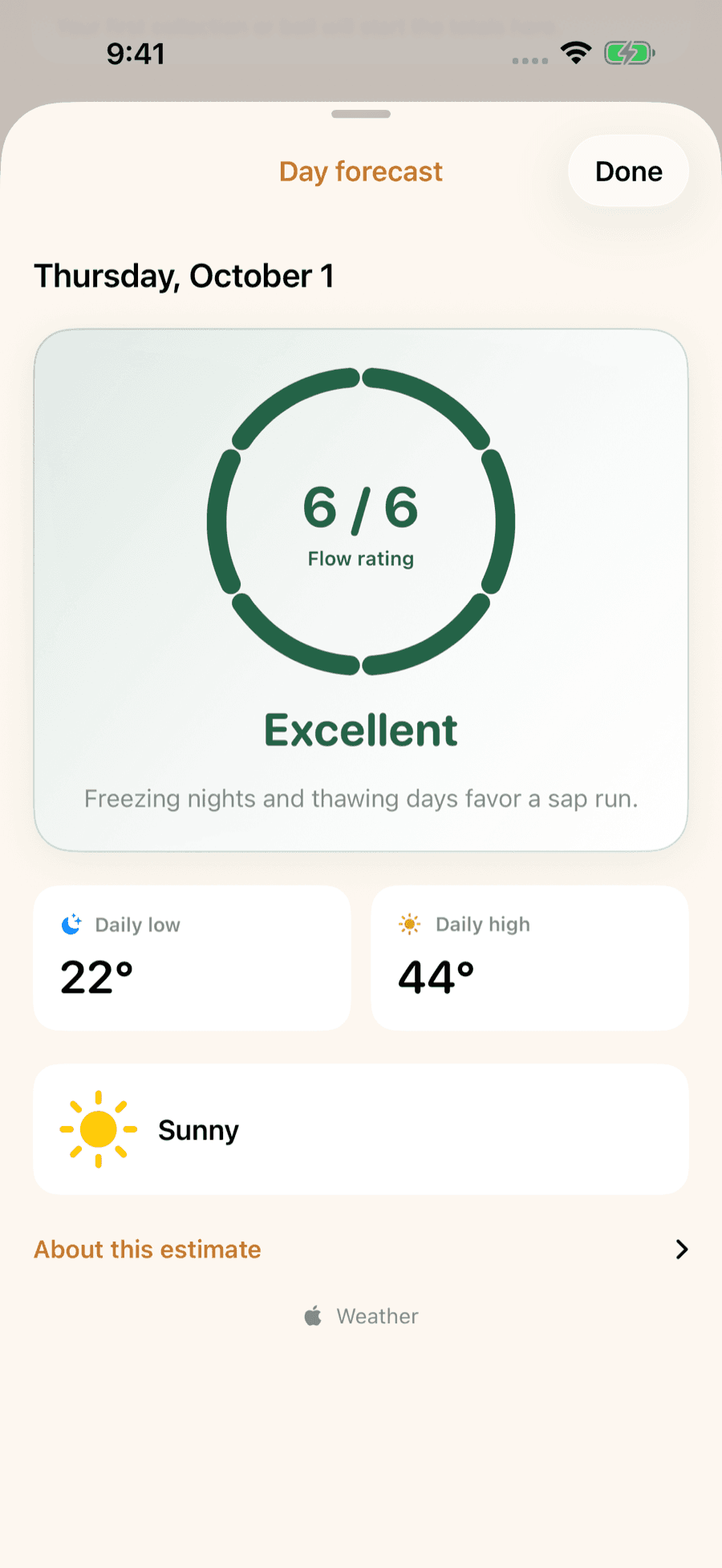
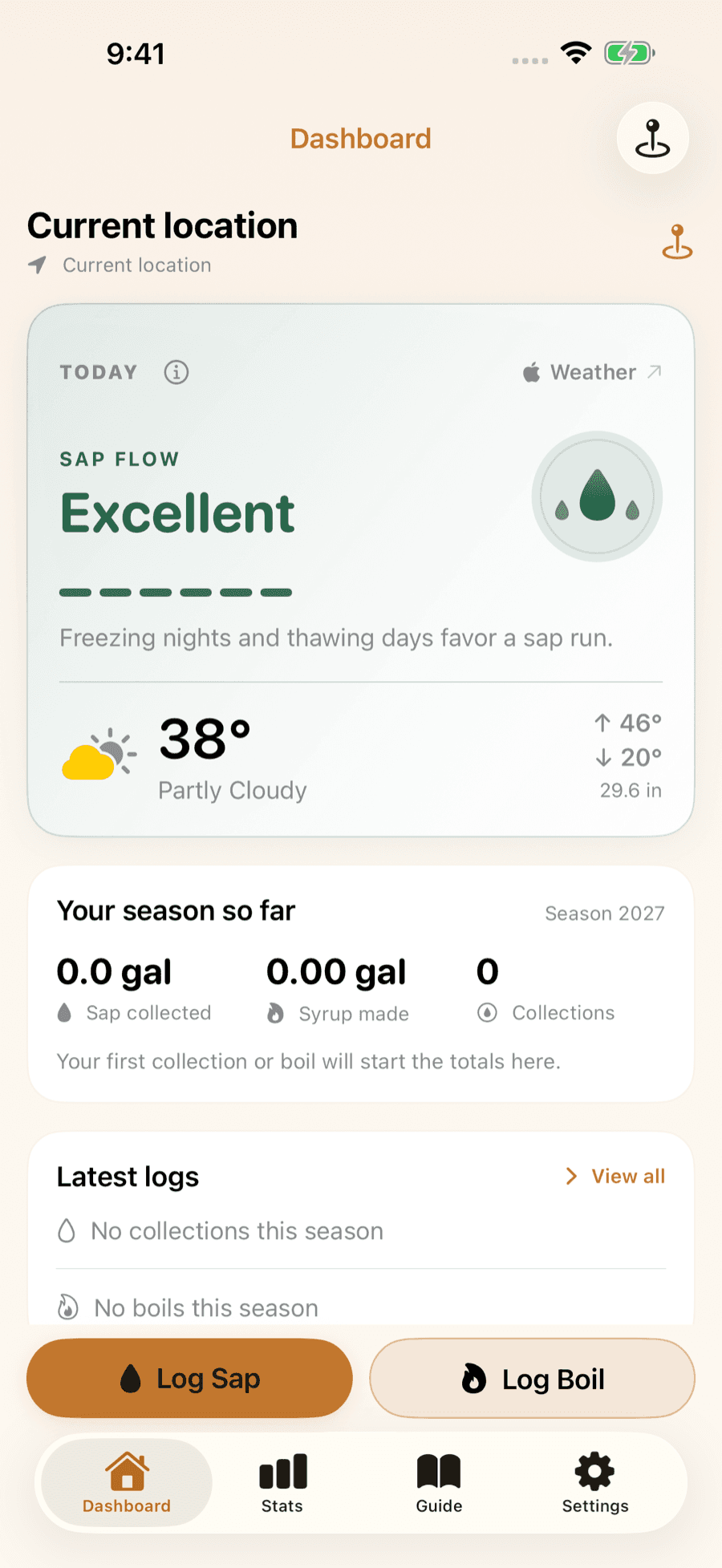
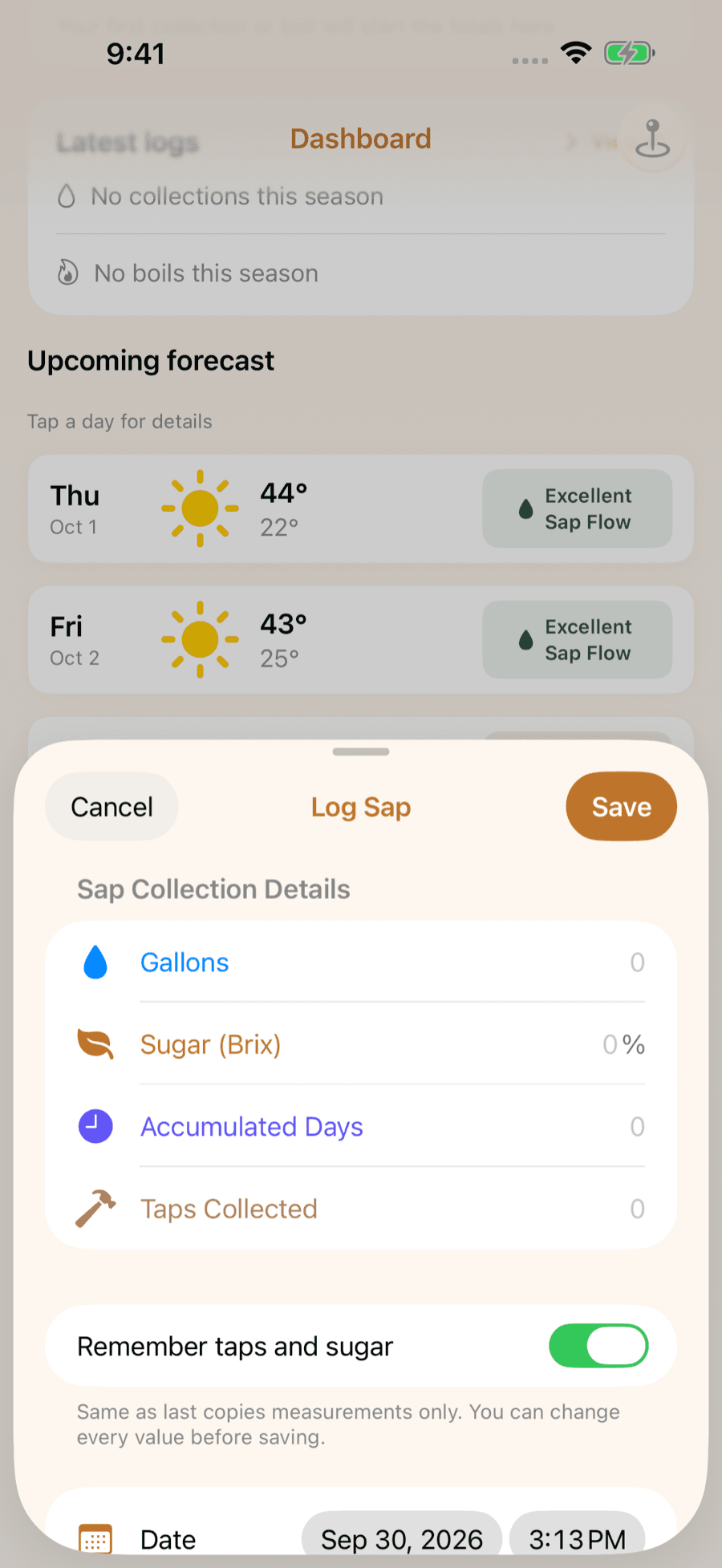
LuckySap turns the forecast for any spot into a day-by-day sap outlook and logs every collection and boil. Free on iPhone and Android.