Can you make maple syrup in California?
Local timing guidance
No California-specific guidance; the Humboldt study collected 'from February to March 2025'. PNW hobby rule: leaf-fall to bud-break, best 'in January and February'.
Source: Cal Poly Humboldt 2025 (study dates only); Raven's Roots 2016
Trees
Tappable trees in California
| Species | Status | Where |
|---|---|---|
| Bigleaf mapleAcer macrophyllum | native | Coast Ranges, Klamath–Siskiyou mountains, 'the northern Sierra Nevada' foothills; 'limited ... by drought to the south'Source: US Forest Service range data |
| Boxelder (California boxelder)Acer negundo var. californicum | native | Central Valley and foothill riparian corridorsSource: US Forest Service range data |
| Rocky Mountain mapleAcer glabrum | native | Sierra Nevada and northern mountains; smallSource: US Forest Service range data |
USDA Forest Inventory · plots measured 2014–2024
How many tappable maples?
Sugar and red maples are too scarce on the Forest Service’s California plots for a reliable count, but it counts about 7.9 million bigleaf maples 10 inches and up on California's forest land.
| Statewide | 10 in and up | 18 in and up |
|---|---|---|
| Statewide | ||
| Bigleaf maples | 10 in and up about7.9 million ±10% sampling error (7.1–8.7 million) · tallied on 121 plots | 18 in and up about1.0 million ±21% sampling error (820,000–1.3 million) · tallied on 31 plots |
- FIA counts trees on forest land only. Yard, street and farm trees are not counted, so true numbers are higher.
- Plots measured 2014–2024. FIA visits a different share of its plots each year, so a “current” estimate pools 11 years of visits.
- Species are listed only where the statewide sampling error is 50% or less. FIA measures bigtooth and Rocky Mountain maples at the root collar rather than at chest height, so they are not in these counts.
- Source: USDA Forest Service, Forest Inventory and Analysis (live trees on forest land, by species and trunk diameter at 4.5 ft). How FIA counts trees →
Who already does it
Sugaring in California, documented
Humboldt State (Cal Poly Humboldt) undergraduate study, spring 2025: 'Over six weeks of collection from February to March 2025, we tapped 24 bigleaf maple trees in Humboldt County'; sap yield correlated negatively with the day/night temperature spread (r = −0.91); 'not suitable for large-scale commercial expansion, it may support small-scale, hobbyist operations'
Reinhart, Ramos-Cool & Richardson, Cal Poly Humboldt Digital Commons
Pacific Northwest hobby guide (applies to the North Coast): collect 'from the time the leaves fall off the trees, until the leaves start budding ... the best flows seem to happen in January and February'
Raven's Roots Naturalist School (Jan 2016)Producer or news report
No California commercial bigleaf producer found; West Coast coverage names only Washington and BC producers
Modern Farmer 2020Producer or news report
Cautions
What local sources warn about
- Warmth kills flow: in Humboldt 'lower and more stable temperatures correlat[ed] with higher sap production'; the southern range is for hobbyists only.Source: Cal Poly Humboldt 2025
- Bigleaf sap is about 1–1.5% sugar (WSU) — 80–100 gallons per gallon of syrup.Source: WSU Extension (Washington)
- Young smooth-barked stems (4–18 in) tap more easily than old furrowed trunks; collect every 2–3 days at most in mild weather.Source: Raven's Roots 2016
Where to look
Likely sugaring country
Arcata / Eureka (Humboldt County)
Site of the only California bigleaf tapping study
Nevada City / Grass Valley (Nevada County)
Northern Sierra foothills with bigleaf maple and real winter freezes
Mount Shasta / Yreka (Siskiyou County)
Klamath–Siskiyou bigleaf country with the state's most reliable freeze-thaw
FAQ
Sugaring in California: questions
- Can you tap maple trees in California?
- Marginal. Marginal: bigleaf maple grows from the North Coast through the Sierra foothills, and a 2025 Humboldt State study tapped 24 trees for six weeks — but sap flow fell as temperatures rose, the authors judged the species' southern range 'not suitable for large-scale commercial expansion' though possible for hobbyists, and no California producer was found.
- When do you tap maple trees in California?
- No California-specific guidance; the Humboldt study collected 'from February to March 2025'. PNW hobby rule: leaf-fall to bud-break, best 'in January and February'. (Source: Cal Poly Humboldt 2025 (study dates only); Raven's Roots 2016.)
- Which trees can you tap in California?
- Bigleaf maple (Acer macrophyllum, native): Coast Ranges, Klamath–Siskiyou mountains, 'the northern Sierra Nevada' foothills; 'limited ... by drought to the south'. Boxelder (California boxelder) (Acer negundo var. californicum, native): Central Valley and foothill riparian corridors. Rocky Mountain maple (Acer glabrum, native): Sierra Nevada and northern mountains; small.

LuckySap · free on iPhone & Android
Try a season where you are
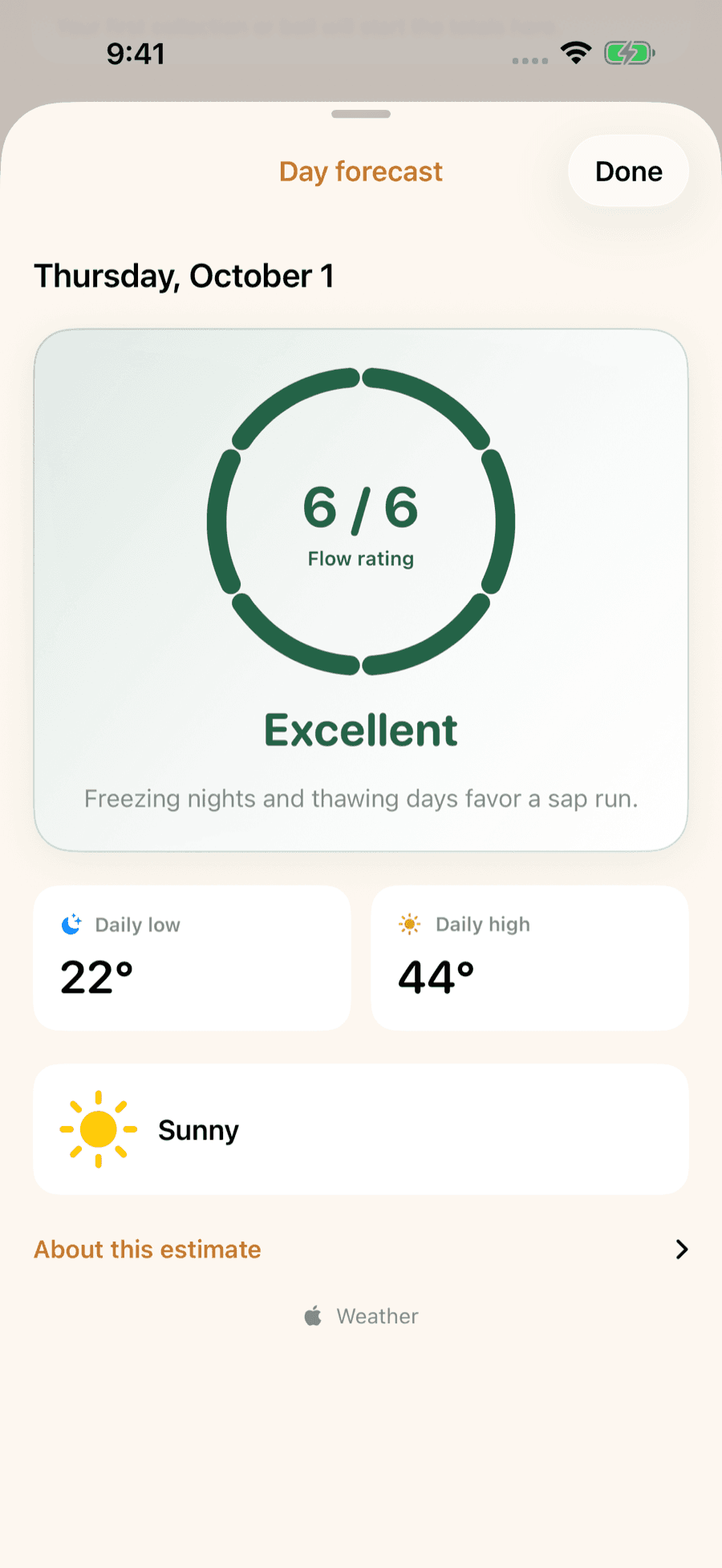
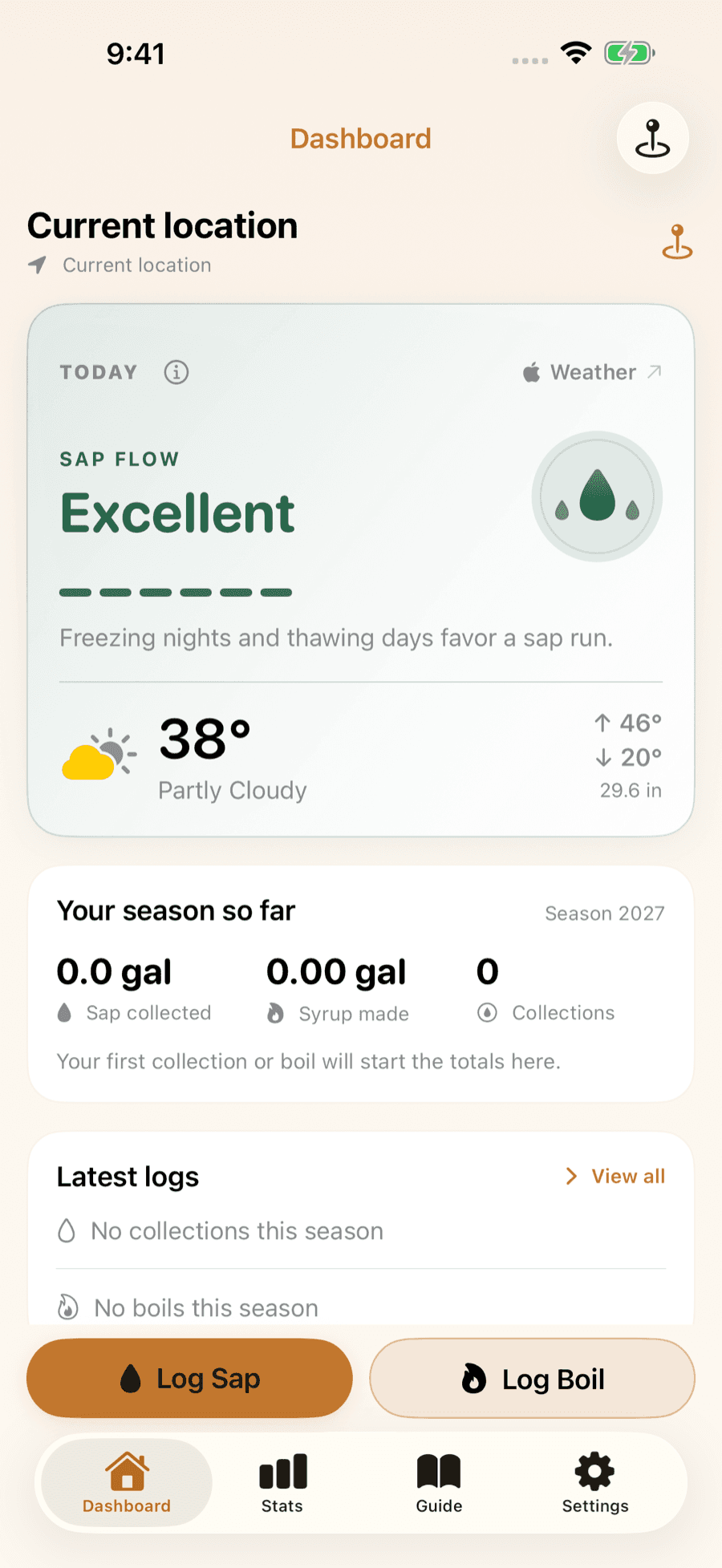
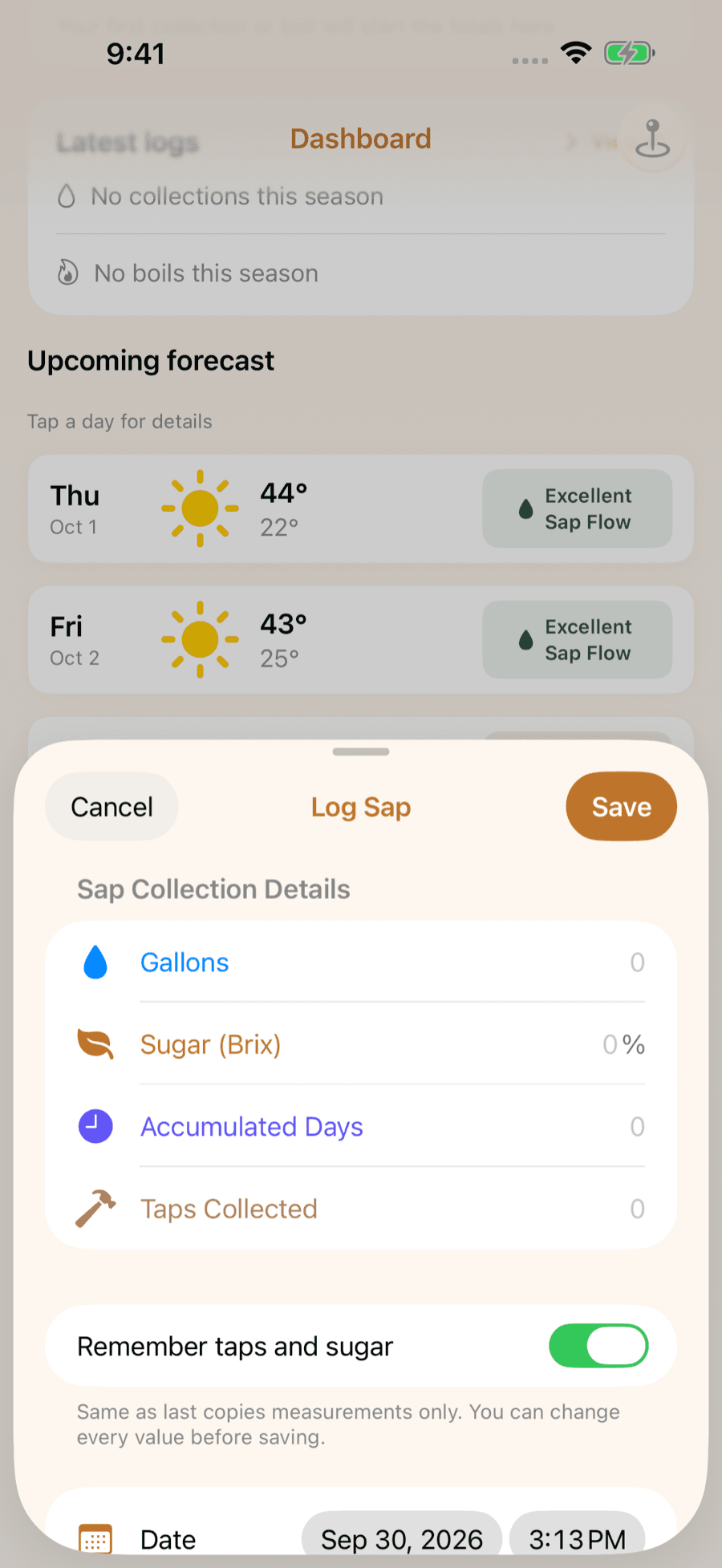
LuckySap turns the forecast for any spot into a day-by-day sap outlook and logs every collection and boil. Free on iPhone and Android.