Can you make maple syrup in Alabama?
Local timing guidance
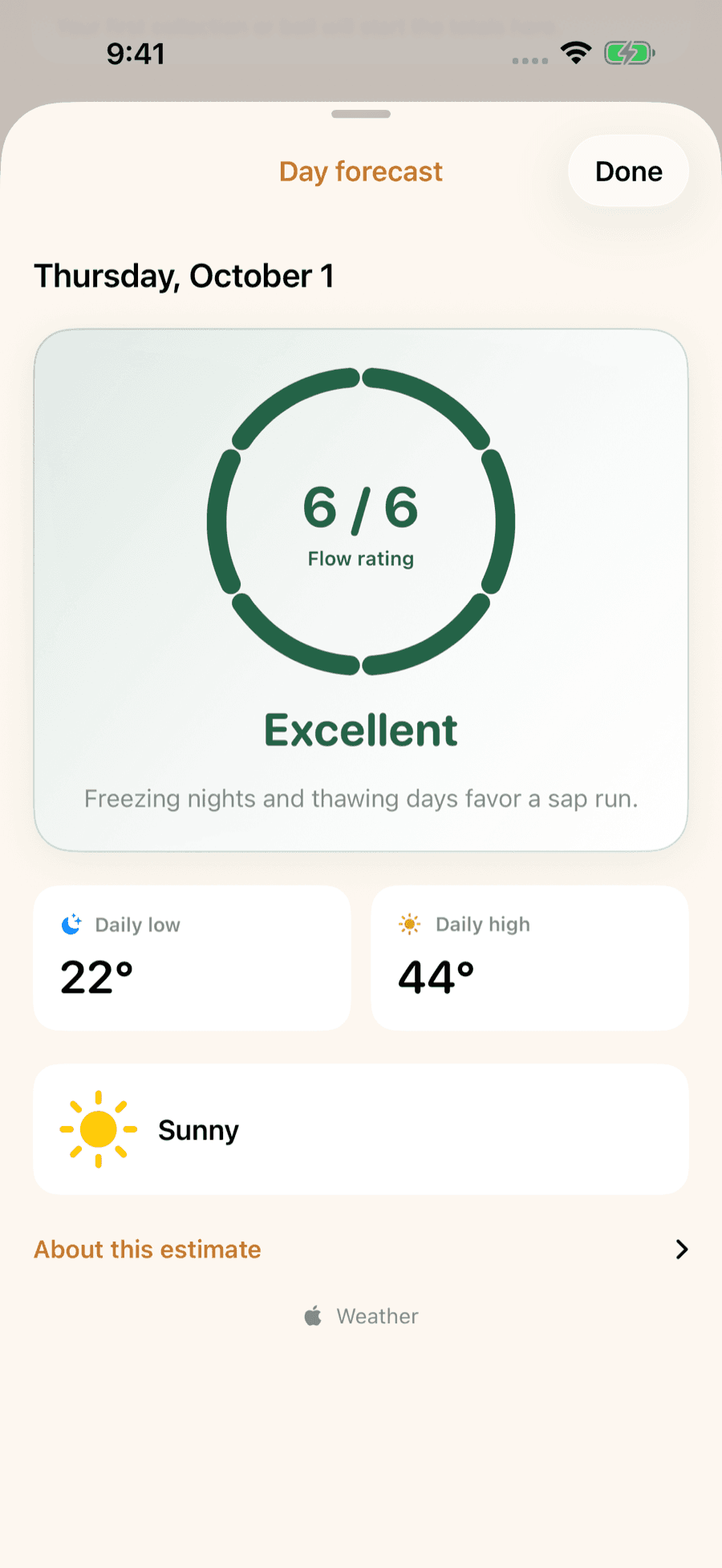
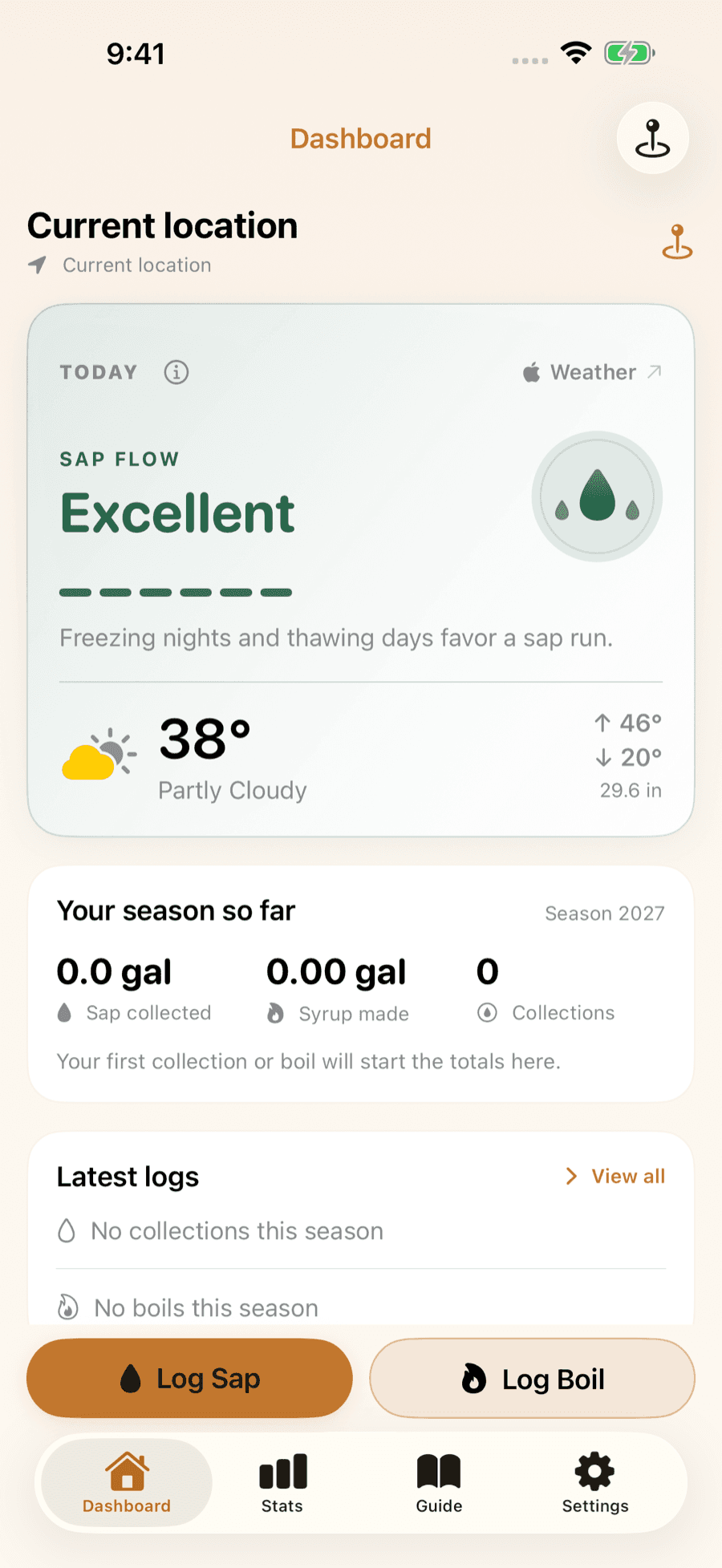
No local source gives tapping dates for Alabama. The rule everywhere is the same: tap when the forecast shows freezing nights and days near 40 °F; our sap forecast works for any location.
Trees
Tappable trees in Alabama
| Species | Status | Where |
|---|---|---|
| Sugar mapleAcer saccharum | native | North Alabama ridges and coves (Cumberland Plateau, Appalachian foothills) at the southern edge of the range; ACES lists it among 'Other trees not listed in the key'Source: US Forest Service range data; Alabama Cooperative Extension ANR-0509 |
| Florida / southern sugar mapleAcer barbatum (A. floridanum) | native | Statewide on moist rich soils and as a street tree — 'Florida maple or southern sugar maple Acer barbatum' in the ACES keySource: Alabama Cooperative Extension ANR-0509 |
| Chalk mapleAcer leucoderme | native | Piedmont and north-central Alabama slopes — 'chalk maple Acer leucoderme' in the ACES keySource: Alabama Cooperative Extension ANR-0509 |
| Red mapleAcer rubrum | native | StatewideSource: Alabama Cooperative Extension ANR-0509; US Forest Service range data |
| Silver mapleAcer saccharinum | native | River bottoms, mainly north; widely plantedSource: Alabama Cooperative Extension ANR-0509; US Forest Service range data |
| BoxelderAcer negundo | native | Riparian sites statewideSource: Alabama Cooperative Extension ANR-0509; US Forest Service range data |
| Black walnutJuglans nigra | native | North and central AlabamaSource: US Forest Service range data |
USDA Forest Inventory · plots measured 2016–2025
How many tappable maples?
The Forest Service counts about 480,000 sugar maples and 16 million red maples 10 inches and up on Alabama's forest land.
| Statewide | 10 in and up | 18 in and up |
|---|---|---|
| Statewide | ||
| Sugar maples | 10 in and up about480,000 ±44% sampling error (270,000–690,000) · tallied on 7 plots | 18 in and up Too few inventory plots for a reliable statewide estimate. |
| Red maples | 10 in and up about16 million ±6.2% sampling error (15–17 million) · tallied on 315 plots | 18 in and up about1.3 million ±17% sampling error (1.1–1.6 million) · tallied on 35 plots |
| Boxelders | 10 in and up about1.3 million ±23% sampling error (1.0–1.7 million) · tallied on 27 plots | 18 in and up Too few inventory plots for a reliable statewide estimate. |
| Florida maples | 10 in and up about2.9 million ±17% sampling error (2.4–3.4 million) · tallied on 53 plots | 18 in and up about260,000 ±42% sampling error (150,000–370,000) · tallied on 6 plots |
- FIA counts trees on forest land only. Yard, street and farm trees are not counted, so true numbers are higher.
- Plots measured 2016–2025. FIA visits a different share of its plots each year, so a “current” estimate pools 10 years of visits.
- Species are listed only where the statewide sampling error is 50% or less.
- Source: USDA Forest Service, Forest Inventory and Analysis (live trees on forest land, by species and trunk diameter at 4.5 ft). How FIA counts trees →
Who already does it
Sugaring in Alabama, documented
Only an unspecific hobby claim: 'People have had success tapping trees as far down as Georgia and Alabama' (East Tennessee homestead blog). No named Alabama producer, festival or extension program was found.
Earth to Dome, Feb 2022Producer or news report
Cautions
What local sources warn about
- Nearest research (Peters et al. 2020, Appalachian warm edge) found 1.3–1.6 °Bx sap and red maple a poor volume producer; Alabama's winters are warmer still, so expect fewer run days and leaner sap than any Northeast figure.Source: Peters et al. 2020 (different region)
- An East Tennessee hobbyist at 1,600 ft reports the classic 20s-nights/40s-days pattern 'sometimes for 2-3 weeks between January and February' at best — Alabama sits south of that.Source: Earth to Dome 2022
Where to look
Likely sugaring country
Mentone / Fort Payne (DeKalb County)
Lookout Mountain, the state's highest and coldest plateau country where sugar maple is likeliest
Huntsville (Madison County)
Tennessee Valley foothills with the most northern-hardwood cover and an urban maple canopy
Birmingham (Jefferson County)
Ridge-and-valley Piedmont edge with chalk and Florida maple — the southern bound for any realistic attempt
FAQ
Sugaring in Alabama: questions
- Can you tap maple trees in Alabama?
- Marginal. Marginal: Alabama Extension's native-tree key lists sugar, red, silver, chalk and Florida maple plus boxelder, so the trees exist (mostly in the north), but freeze-thaw runs are brief and no Alabama producer, festival or extension sugaring program was found.
- Which trees can you tap in Alabama?
- Sugar maple (Acer saccharum, native): North Alabama ridges and coves (Cumberland Plateau, Appalachian foothills) at the southern edge of the range; ACES lists it among 'Other trees not listed in the key'. Florida / southern sugar maple (Acer barbatum (A. floridanum), native): Statewide on moist rich soils and as a street tree — 'Florida maple or southern sugar maple Acer barbatum' in the ACES key. Chalk maple (Acer leucoderme, native): Piedmont and north-central Alabama slopes — 'chalk maple Acer leucoderme' in the ACES key. Red maple (Acer rubrum, native): Statewide. Silver maple (Acer saccharinum, native): River bottoms, mainly north; widely planted. Boxelder (Acer negundo, native): Riparian sites statewide. Black walnut (Juglans nigra, native): North and central Alabama.

LuckySap · free on iPhone & Android
Try a season where you are
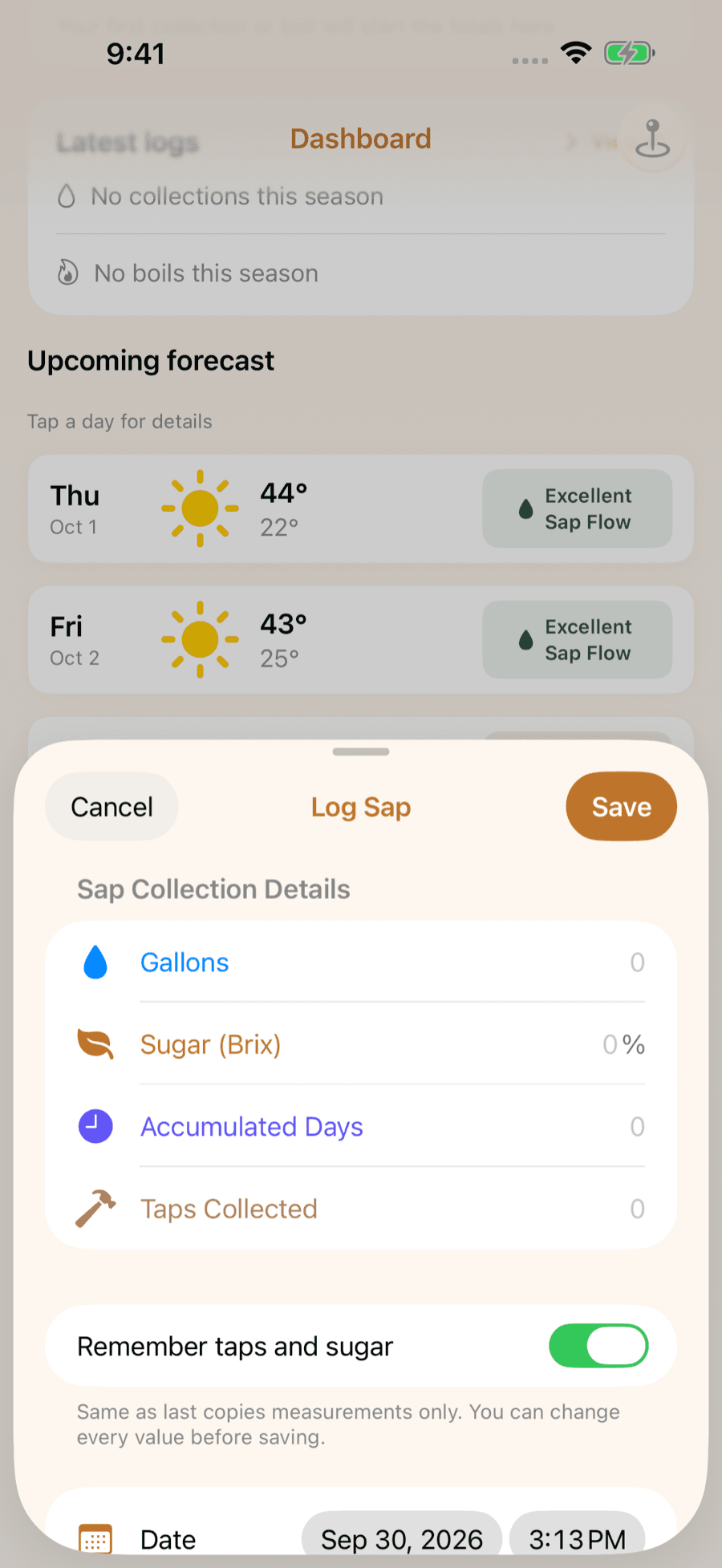
LuckySap turns the forecast for any spot into a day-by-day sap outlook and logs every collection and boil. Free on iPhone and Android.