Can you make maple syrup in Arkansas?
Local timing guidance
University of Arkansas: sap is 'gathered in late winter'. No Arkansas extension tapping-date publication found.
Source: University of Arkansas tree database
Trees
Tappable trees in Arkansas
| Species | Status | Where |
|---|---|---|
| Sugar mapleAcer saccharum | native | Ozark hills and hollows of the north; University of Arkansas: 'best suited to northwest Arkansas'; sap 'gathered in late winter to make maple syrup and sugar'Source: US Forest Service range data; University of Arkansas tree database |
| Red mapleAcer rubrum | native | StatewideSource: US Forest Service range data |
| Silver mapleAcer saccharinum | native | River bottoms statewideSource: US Forest Service range data |
| BoxelderAcer negundo | native | Riparian sites statewideSource: US Forest Service range data |
| Black walnutJuglans nigra | native | Ozarks and OuachitasSource: US Forest Service range data |
USDA Forest Inventory · plots measured 2021–2025
How many tappable maples?
The Forest Service counts about 8.2 million red maples 10 inches and up on Arkansas' forest land; its plots tally too few sugar maples that size for a reliable count.
| Statewide | 10 in and up | 18 in and up |
|---|---|---|
| Statewide | ||
| Red maples | 10 in and up about8.2 million ±9.0% sampling error (7.5–8.9 million) · tallied on 157 plots | 18 in and up about890,000 ±22% sampling error (690,000–1.1 million) · tallied on 22 plots |
| Silver maples | 10 in and up about1.5 million ±27% sampling error (1.1–1.9 million) · tallied on 21 plots | 18 in and up about570,000 ±37% sampling error (360,000–780,000) · tallied on 9 plots |
| Boxelders | 10 in and up about3.7 million ±16% sampling error (3.1–4.2 million) · tallied on 57 plots | 18 in and up about400,000 ±38% sampling error (250,000–550,000) · tallied on 8 plots |
| Florida maples | 10 in and up about3.5 million ±16% sampling error (3.0–4.1 million) · tallied on 60 plots | 18 in and up about330,000 ±37% sampling error (210,000–450,000) · tallied on 8 plots |
- FIA counts trees on forest land only. Yard, street and farm trees are not counted, so true numbers are higher.
- Plots measured 2021–2025. FIA visits a different share of its plots each year, so a “current” estimate pools 5 years of visits.
- Species are listed only where the statewide sampling error is 50% or less.
- Source: USDA Forest Service, Forest Inventory and Analysis (live trees on forest land, by species and trunk diameter at 4.5 ft). How FIA counts trees →
Who already does it
Sugaring in Arkansas, documented
A Newton County family 'south of the Ponca Wilderness area above the National River valley' whose maple production 'has been a way of life' — 'we cook it exactly the way my family did 200 years ago'; 'even local people ... have no idea that this is tapped. They see jugs along the road'
Arkansas PBS, Exploring Arkansas, May 2015 (transcript)Producer or news report
University of Arkansas tree database notes sugar maple's 'clear watery sap which is gathered in late winter to make maple syrup and sugar' and that the species is 'best suited to northwest Arkansas'
Cautions
What local sources warn about
- Year-to-year swings are the norm: 'some years we'll make more and some years we'll make less'.Source: Arkansas PBS 2015
- Sugar maple is 'intolerant of heat or dry sites' in Arkansas and confined to the northwest; lowland tappers will be working red, silver and boxelder with leaner sap.Source: University of Arkansas tree database
Where to look
Likely sugaring country
Jasper / Ponca (Newton County)
The documented family operation above the Buffalo National River; Ozark National Forest
Marshall (Searcy County)
Boston Mountains plateau
Fayetteville (Washington County)
Northwest Arkansas, the zone UADA calls best suited to sugar maple; University of Arkansas home
FAQ
Sugaring in Arkansas: questions
- Can you tap maple trees in Arkansas?
- Yes, in parts of it. Yes in the Ozark highlands: native sugar maples are 'best suited to northwest Arkansas', a Newton County family has boiled syrup for generations — the Delta and south have only red, silver and boxelder with too few freeze-thaw days.
- When do you tap maple trees in Arkansas?
- University of Arkansas: sap is 'gathered in late winter'. No Arkansas extension tapping-date publication found. (Source: University of Arkansas tree database.)
- Which trees can you tap in Arkansas?
- Sugar maple (Acer saccharum, native): Ozark hills and hollows of the north; University of Arkansas: 'best suited to northwest Arkansas'; sap 'gathered in late winter to make maple syrup and sugar'. Red maple (Acer rubrum, native): Statewide. Silver maple (Acer saccharinum, native): River bottoms statewide. Boxelder (Acer negundo, native): Riparian sites statewide. Black walnut (Juglans nigra, native): Ozarks and Ouachitas.

LuckySap · free on iPhone & Android
Try a season where you are
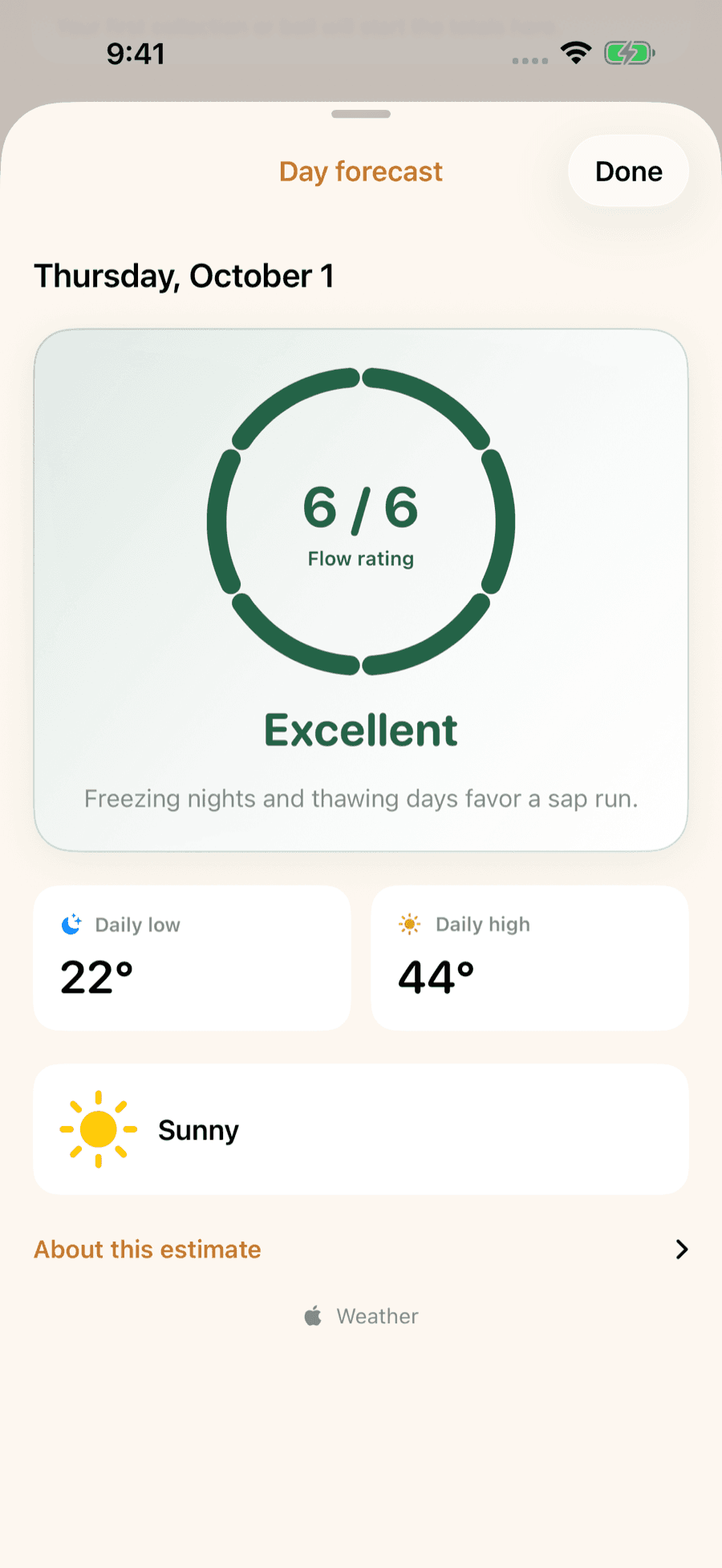
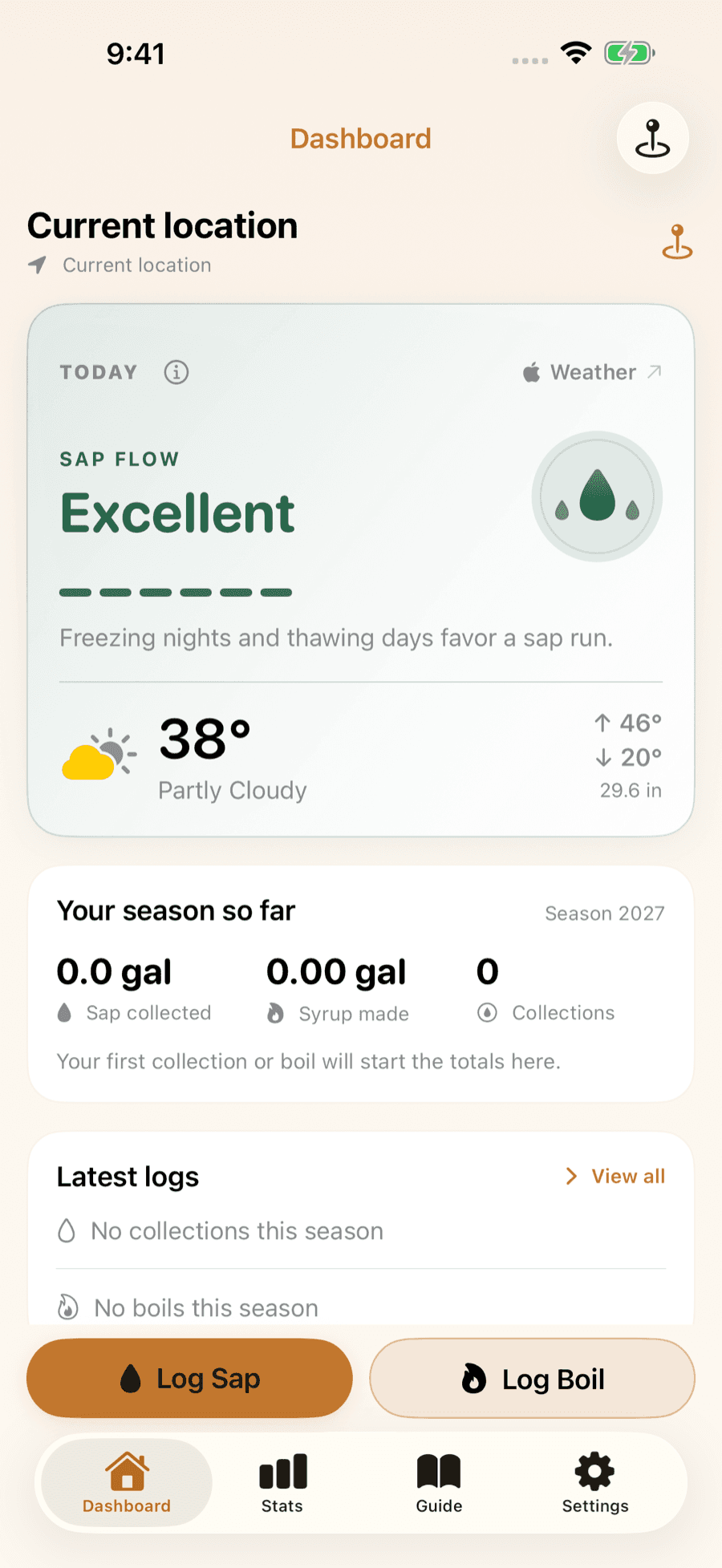
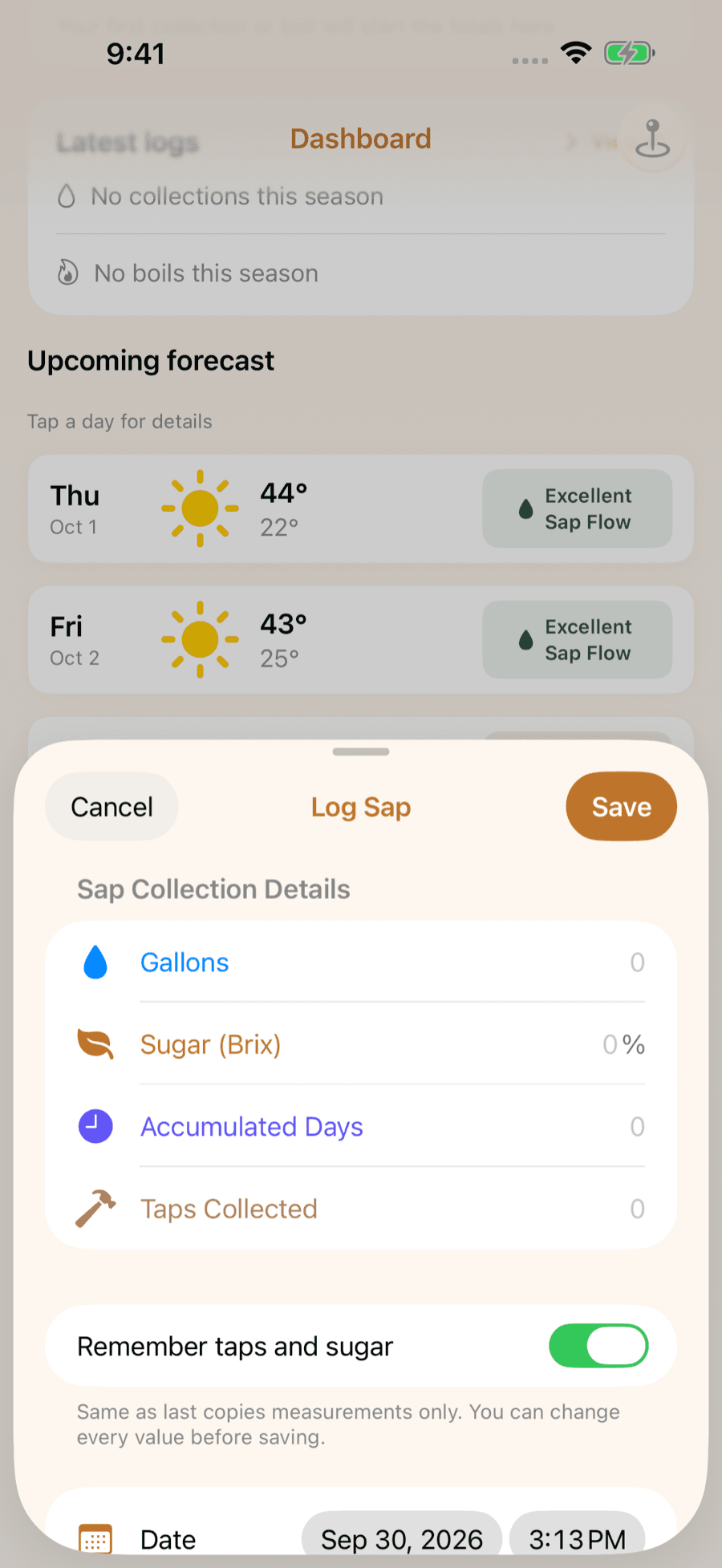
LuckySap turns the forecast for any spot into a day-by-day sap outlook and logs every collection and boil. Free on iPhone and Android.