Can you make maple syrup in Montana?
Local timing guidance
Producer (Missoula): 'Around Valentine's Day, before the trees begin to bud, the maple sugaring season begins.' Research tapping dates in Missoula: 10 Feb 2022, 11 Mar 2023, 4 Feb 2024, with collection to 24 Mar, 9 Apr and 17 Mar. MSU Extension workshop note: 'Late January might have been a touch too early — and a touch too cold — for Sugaring Season' (Kalispell).
Source: Daily Montanan 2021; ASHS 2025; Flathead County/MSU 2025
Trees
Tappable trees in Montana
| Species | Status | Where |
|---|---|---|
| BoxelderAcer negundo | native | 'native to the Intermountain West'; river bottoms across the state — the US Forest Service range reaches 'central Montana'; trial trees in MissoulaSource: ASHS 2025 abstracts; US Forest Service range data |
| Norway mapleAcer platanoides | introduced | Boulevard tree in Missoula since the 1890s; the US Forest Service lists it escaped in western Montana; the dominant species in MapleWorks' sugarbushSource: Modern Farmer 2023; US Forest Service range data |
| Silver, sugar and black mapleAcer saccharinum / saccharum / nigrum | planted | Planted yard and boulevard trees in Missoula, Hamilton (Daly Mansion sugar maples) and other valley townsSource: Modern Farmer 2023; Daily Montanan 2021 |
| Rocky Mountain mapleAcer glabrum | native | Mountains statewide — smallSource: US Forest Service range data |
| Bigtooth mapleAcer grandidentatum | native | 'south-central Montana' (US Forest Service)Source: US Forest Service range data |
| Paper birchBetula papyrifera | native | 'western Montana' and Great Plains outliers; birch syrup 'has become a specialty product in Montana'Source: US Forest Service range data; Flathead County/MSU Extension 2025 |
USDA Forest Inventory · plots measured 2013–2022
How many tappable maples?
The Forest Service’s Montana plots tally too few maples 10 inches and up for a reliable count.
- FIA counts trees on forest land only. Yard, street and farm trees are not counted, so true numbers are higher.
- Plots measured 2013–2022. FIA visits a different share of its plots each year, so a “current” estimate pools 10 years of visits.
- Species are listed only where the statewide sampling error is 50% or less. FIA measures bigtooth and Rocky Mountain maples at the root collar rather than at chest height, so they are not in these counts.
- Source: USDA Forest Service, Forest Inventory and Analysis (live trees on forest land, by species and trunk diameter at 4.5 ft). How FIA counts trees →
Who already does it
Sugaring in Montana, documented
Montana MapleWorks (David Knudson, Missoula): 'the only commercially licensed maple syrup producer in the state'; approval to tap 400 trees; taps Norway maple, box elder, silver, sugar and black maple; seventh season in 2023
Modern Farmer, 17 Feb 2023Producer or news report
MSU Extension (Flathead County) Maple Tapping class, 21 Jan 2025, about 50 participants, led by Knudson ('tapping trees commercially since 2019'); scouted Norway maples in a Kalispell park
ASHS 2025: Missoula trials — boxelder 'seasonal sap yields of 9.21, 18.86, and 16.81 L' and Norway maple '28.38, 15.45, and 30.15 L' per tree over 42-, 29- and 42-day periods (2022–24); three-state boxelder comparison gave 18.9 L/tree in Montana over 29 days
American Society for Horticultural Science 2025 (USU-led project)
Daly Mansion (Hamilton, Bitterroot Valley): volunteers tap the sugar maples lining the lane; syrup sale 'a significant springtime fundraiser'; an 11-season volunteer group
Daily Montanan, 19 Dec 2021Producer or news report
Cautions
What local sources warn about
- Urban trees are the sugarbush, and they are stressed: 'the increasingly long and dry summers are taking their toll' on Missoula's Norway maples; Knudson observes a tree for a year before tapping.Source: Modern Farmer 2023
- Permission and vandalism: city code barred tapping boulevard trees; taps along the irrigation ditch were vandalised.Source: Modern Farmer 2023
- Yields swing by year — boxelder 9 to 19 L per tree across three Missoula seasons.Source: ASHS 2025
- Birch takes about 150 gallons of sap per gallon (vs about 40 for sugar maple).Source: Flathead County/MSU 2025
Where to look
Likely sugaring country
Missoula
Montana MapleWorks and the USU/MSU boxelder–Norway maple trial site
Hamilton (Bitterroot Valley)
Daly Mansion sugar-maple tapping fundraiser
Kalispell (Flathead Valley)
MSU Extension tapping workshops; Norway maples in city parks
FAQ
Sugaring in Montana: questions
- Can you tap maple trees in Montana?
- Yes, in parts of it. Yes in western Montana's valley towns: Missoula's Montana MapleWorks is the state's only licensed producer (planted Norway, silver and sugar maples plus native boxelder), MSU Extension runs tapping workshops, and ASHS-published trials measured 9–30 L of sap per tree per season — but the window is short, urban trees are stressed by hot summers, and east of the Divide the only natives are boxelder and birch.
- When do you tap maple trees in Montana?
- Producer (Missoula): 'Around Valentine's Day, before the trees begin to bud, the maple sugaring season begins.' Research tapping dates in Missoula: 10 Feb 2022, 11 Mar 2023, 4 Feb 2024, with collection to 24 Mar, 9 Apr and 17 Mar. MSU Extension workshop note: 'Late January might have been a touch too early — and a touch too cold — for Sugaring Season' (Kalispell). (Source: Daily Montanan 2021; ASHS 2025; Flathead County/MSU 2025.)
- Which trees can you tap in Montana?
- Boxelder (Acer negundo, native): 'native to the Intermountain West'; river bottoms across the state — the US Forest Service range reaches 'central Montana'; trial trees in Missoula. Norway maple (Acer platanoides, introduced): Boulevard tree in Missoula since the 1890s; the US Forest Service lists it escaped in western Montana; the dominant species in MapleWorks' sugarbush. Silver, sugar and black maple (Acer saccharinum / saccharum / nigrum, planted): Planted yard and boulevard trees in Missoula, Hamilton (Daly Mansion sugar maples) and other valley towns. Rocky Mountain maple (Acer glabrum, native): Mountains statewide — small. Bigtooth maple (Acer grandidentatum, native): 'south-central Montana' (US Forest Service). Paper birch (Betula papyrifera, native): 'western Montana' and Great Plains outliers; birch syrup 'has become a specialty product in Montana'.

LuckySap · free on iPhone & Android
Try a season where you are
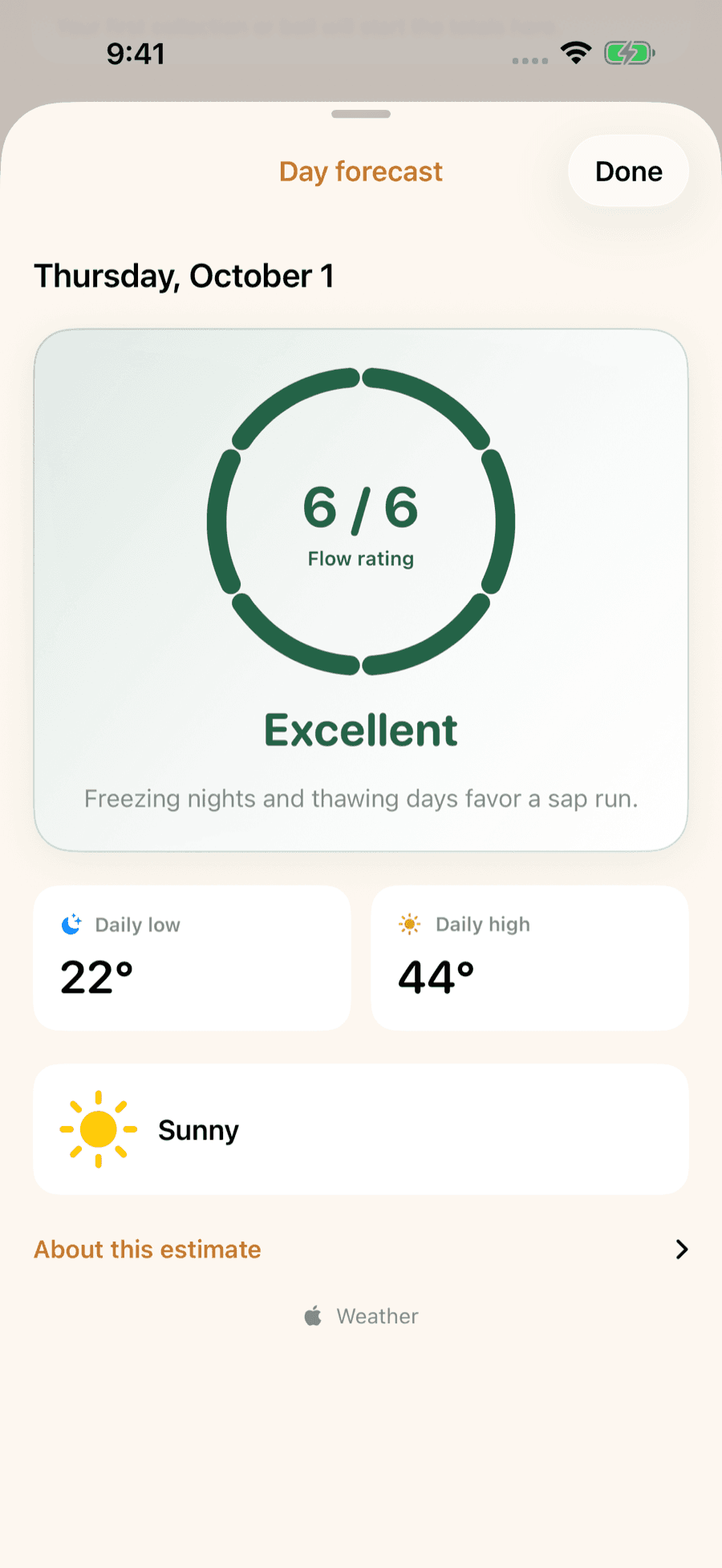
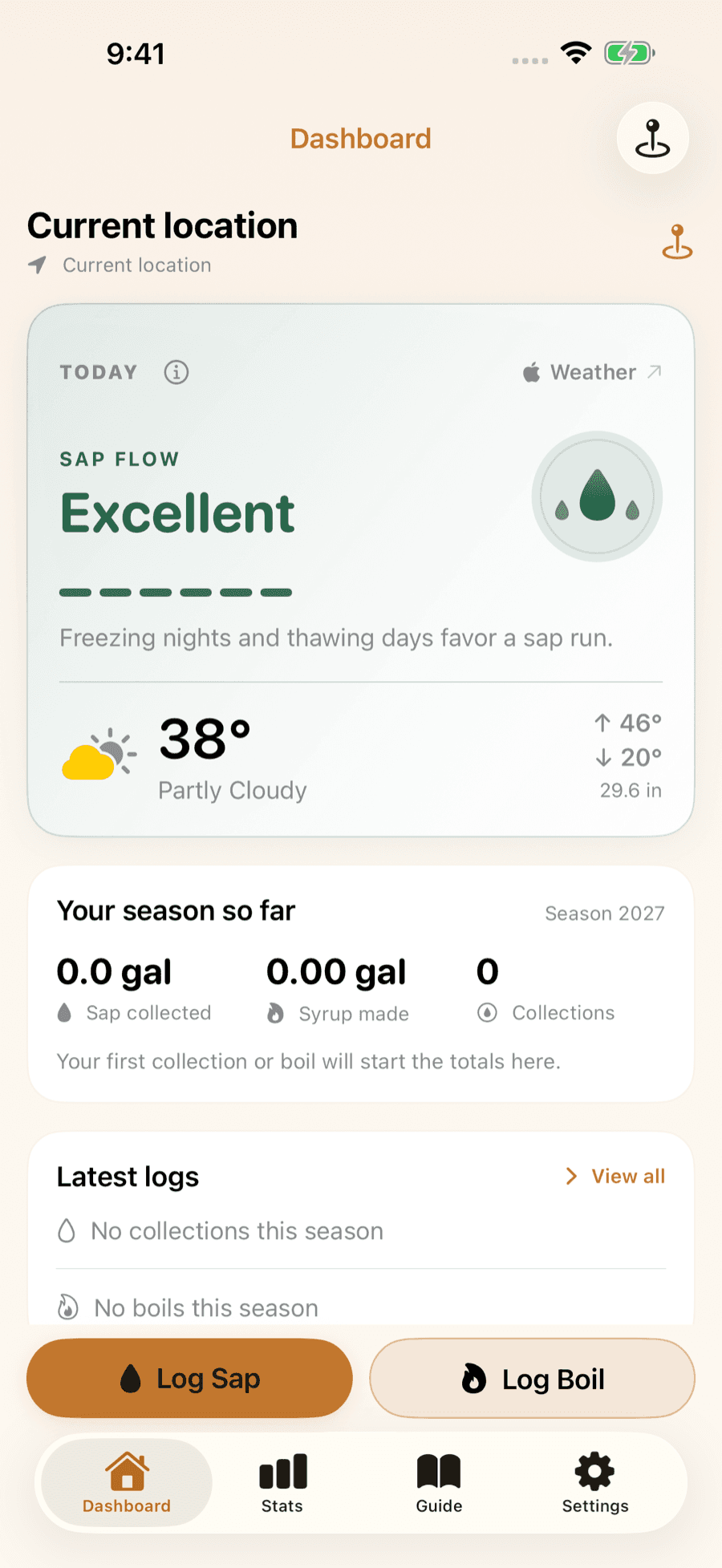
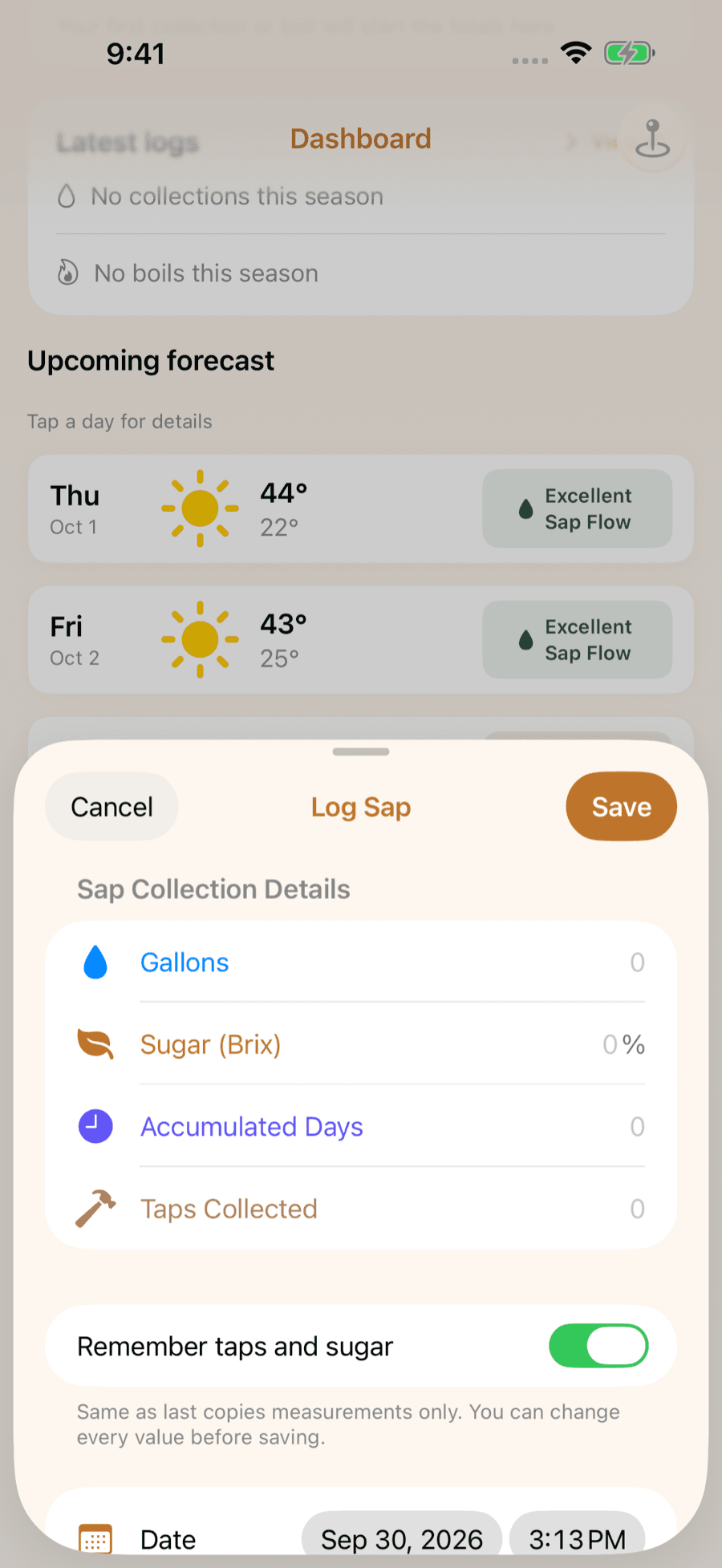
LuckySap turns the forecast for any spot into a day-by-day sap outlook and logs every collection and boil. Free on iPhone and Android.