Can you make maple syrup in Rhode Island?
Local timing guidance
Spring Hill Sugar House (Richmond): 'we've gone anywhere from the first of January, and as late as the 15th of March'; 2020 taps set the last week of January; season averages '4 to 6 weeks'. Uncle Buck's: 'usually taps his trees in late January or early February'. Tourism council: season 'typically lasting from late February to early March' (a conservative summary that conflicts with the producers' earlier starts).
Source: WJAR 2020; Planet Forward; South County 2025
Trees
Tappable trees in Rhode Island
| Species | Status | Where |
|---|---|---|
| Sugar mapleAcer saccharum | native | 'uncommon in Rhode Island and is usually found along roads and in association with old farmsteads' — mainly the northwest uplands (Foster, Glocester, Burrillville)Source: Rhode Island DEM 'Maple Syrup as a sustainable land-based business'; US Forest Service range data |
| Red mapleAcer rubrum | native | Statewide — the state tree; 'can also be tapped to produce syrup'; 'an abundance of what we call red maples, or swamp maples' in southern RISource: Rhode Island DEM; WJAR 2020 |
| Norway mapleAcer platanoides | introduced | Towns and roadsides; tapped at Spring HillSource: WJAR 2020 |
| Silver mapleAcer saccharinum | native | River valleys (Blackstone, Pawtuxet) and plantedSource: US Forest Service range data |
| BoxelderAcer negundo | native | 'local in ... Connecticut' per the US Forest Service; riparian/disturbed sitesSource: US Forest Service range data |
USDA Forest Inventory · plots measured 2019–2025
How many tappable maples?
The Forest Service counts about 150,000 sugar maples and 6.6 million red maples 10 inches and up on Rhode Island's forest land.
| Statewide | 10 in and up | 18 in and up |
|---|---|---|
| Statewide | ||
| Sugar maples | 10 in and up about150,000 ±39% sampling error (94,000–210,000) · tallied on 6 plots | 18 in and up Too few inventory plots for a reliable statewide estimate. |
| Red maples | 10 in and up about6.6 million ±12% sampling error (5.8–7.4 million) · tallied on 80 plots | 18 in and up about610,000 ±22% sampling error (470,000–740,000) · tallied on 22 plots |
- FIA counts trees on forest land only. Yard, street and farm trees are not counted, so true numbers are higher.
- Plots measured 2019–2025. FIA visits a different share of its plots each year, so a “current” estimate pools 7 years of visits.
- Species are listed only where the statewide sampling error is 50% or less.
- Source: USDA Forest Service, Forest Inventory and Analysis (live trees on forest land, by species and trunk diameter at 4.5 ft). How FIA counts trees →
Who already does it
Sugaring in Rhode Island, documented
RI DEM forestry fact sheet 'Maple Syrup as a sustainable land-based business' (Rural Lands Coalition) — economics (minimum about 40 taps/acre), species, and that sugar maple is uncommon in RI
Spring Hill Sugar House, Richmond (Gibby Fountain): 'taps in to 3,000 maple trees on 30 acres' via tubing; 2020 taps 'started the last week in January'; sugar content 'about half the average' after a mild winter
WJAR NBC 10, 5 Mar 2020Producer or news report
Uncle Buck's Sugar House, Ashaway/Hopkinton, since 1997 — 'usually taps his trees in late January or early February'; a snowy winter delayed tapping to 6 March and cut sap about 8%
Planet Forward (student journalism)Producer or news report
Five South County sugarhouses listed (Uncle Buck's, Charlie's, Shady Tree Maple Farm, Slocum Sugar House, Spring Hill)
South County Tourism Council, 27 Feb 2025Producer or news report
Senate Resolution 2020-S 2729 'Proclaiming the month of March to be Maple Syrup Month in the State of Rhode Island'
Cautions
What local sources warn about
- Mild winters cut sugar, not volume: in 2020 'The sugar content has been about half the average, but with nearly the same volume' — 'The trees never really got ... a rest.'Source: WJAR 2020
- Sugar maple is scarce; expect to work red/swamp and Norway maples with leaner sap.Source: Rhode Island DEM; WJAR 2020
- Deep snow can delay tapping by weeks (2015: first tap 6 March).Source: Planet Forward
- Economics: DEM puts the 'widely accepted minimum' at 40 taps per acre for a viable operation — roadside trees are the exception.Source: Rhode Island DEM
Where to look
Likely sugaring country
Richmond (Washington County)
Spring Hill Sugar House, 3,000 taps on Beaver River Road
Hopkinton / Ashaway (Washington County)
Uncle Buck's Sugar House since 1997
Foster (Providence County)
Northwest upland with the state's best sugar maple and the coldest nights (no specific producer verified)
FAQ
Sugaring in Rhode Island: questions
- Can you tap maple trees in Rhode Island?
- Yes. Yes: Rhode Island has a small working sugaring scene — Spring Hill Sugar House (Richmond) taps 3,000 trees and Uncle Buck's (Hopkinton) has run since 1997, the state Senate proclaims March 'Maple Syrup Month' — though sugar maple is 'uncommon' here and much of the crop comes from red, swamp and Norway maples with leaner sap.
- When do you tap maple trees in Rhode Island?
- Spring Hill Sugar House (Richmond): 'we've gone anywhere from the first of January, and as late as the 15th of March'; 2020 taps set the last week of January; season averages '4 to 6 weeks'. Uncle Buck's: 'usually taps his trees in late January or early February'. Tourism council: season 'typically lasting from late February to early March' (a conservative summary that conflicts with the producers' earlier starts). (Source: WJAR 2020; Planet Forward; South County 2025.)
- Which trees can you tap in Rhode Island?
- Sugar maple (Acer saccharum, native): 'uncommon in Rhode Island and is usually found along roads and in association with old farmsteads' — mainly the northwest uplands (Foster, Glocester, Burrillville). Red maple (Acer rubrum, native): Statewide — the state tree; 'can also be tapped to produce syrup'; 'an abundance of what we call red maples, or swamp maples' in southern RI. Norway maple (Acer platanoides, introduced): Towns and roadsides; tapped at Spring Hill. Silver maple (Acer saccharinum, native): River valleys (Blackstone, Pawtuxet) and planted. Boxelder (Acer negundo, native): 'local in ... Connecticut' per the US Forest Service; riparian/disturbed sites.

LuckySap · free on iPhone & Android
Try a season where you are
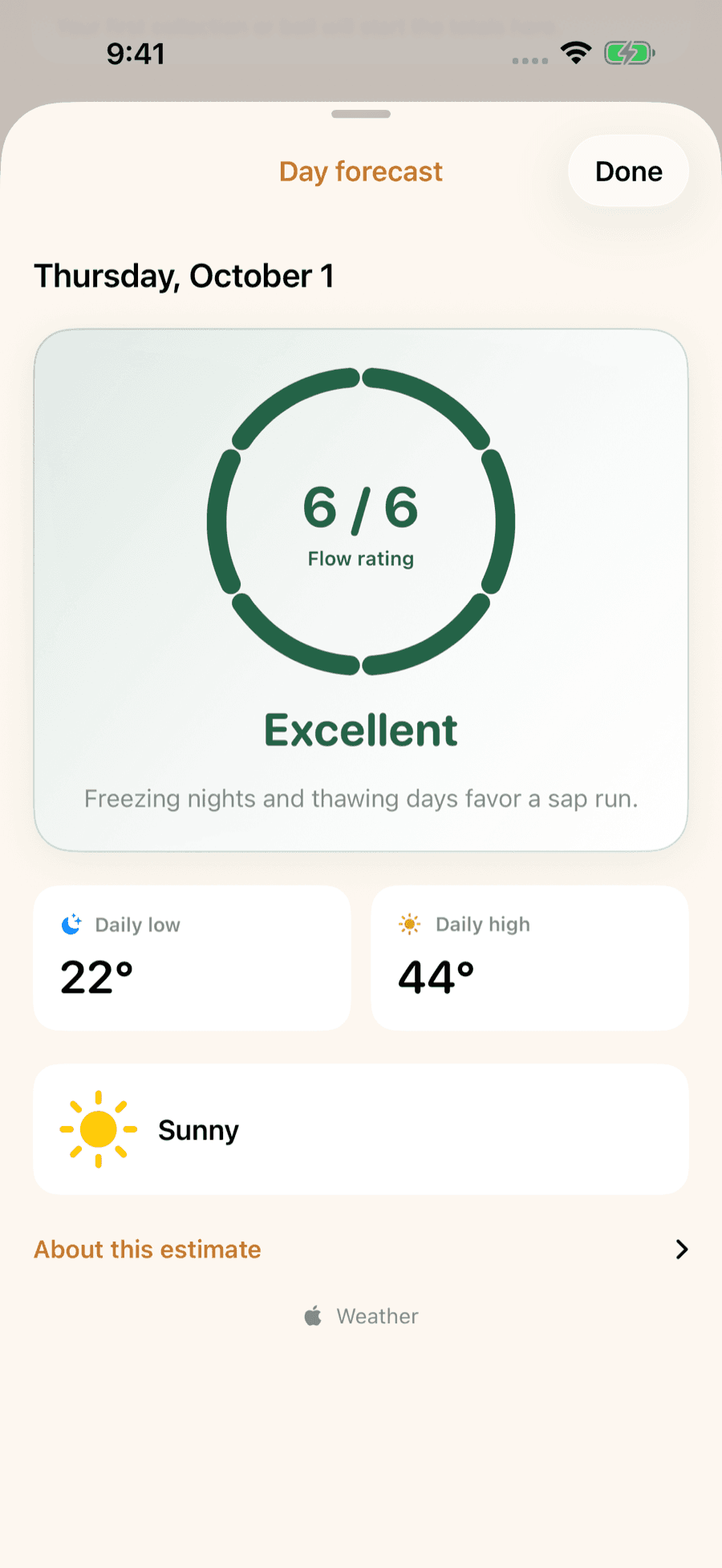
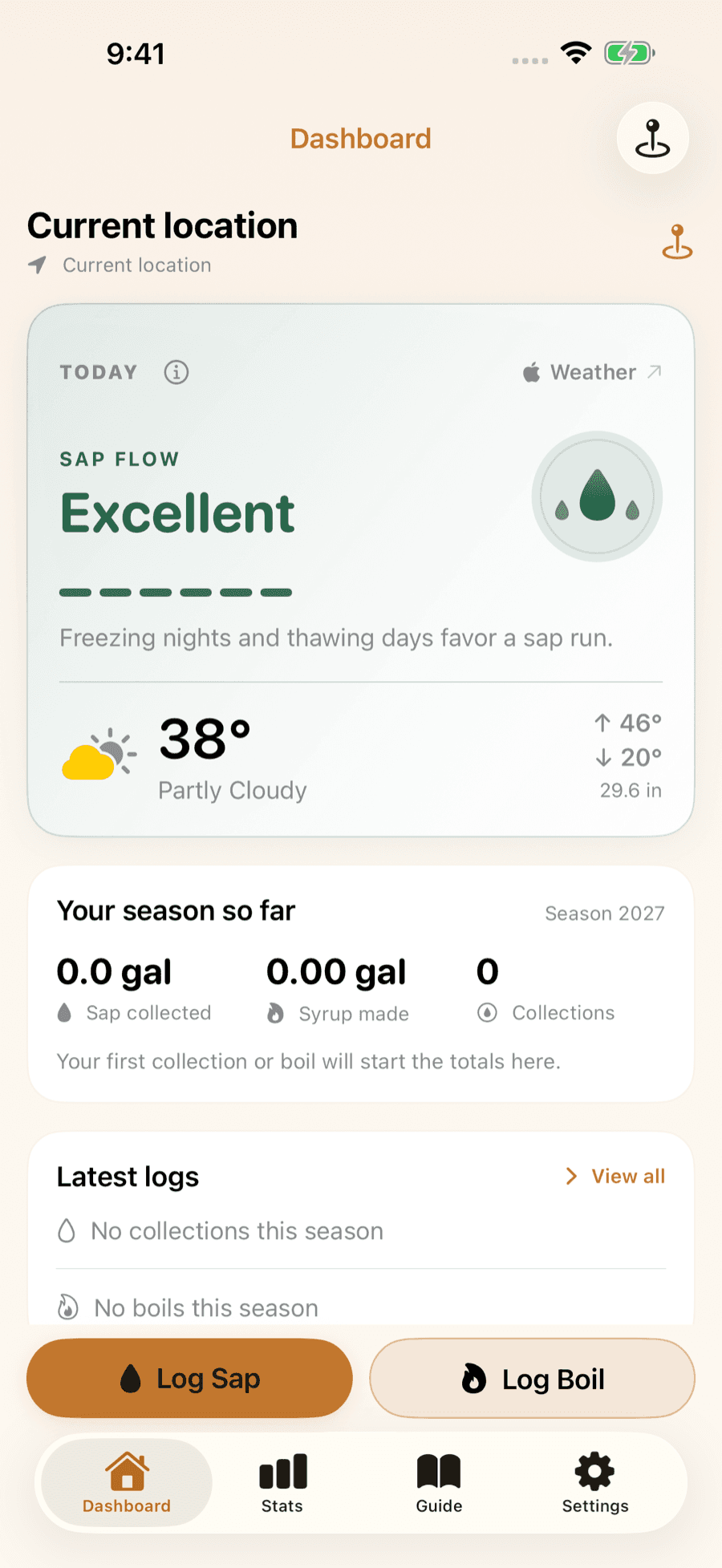
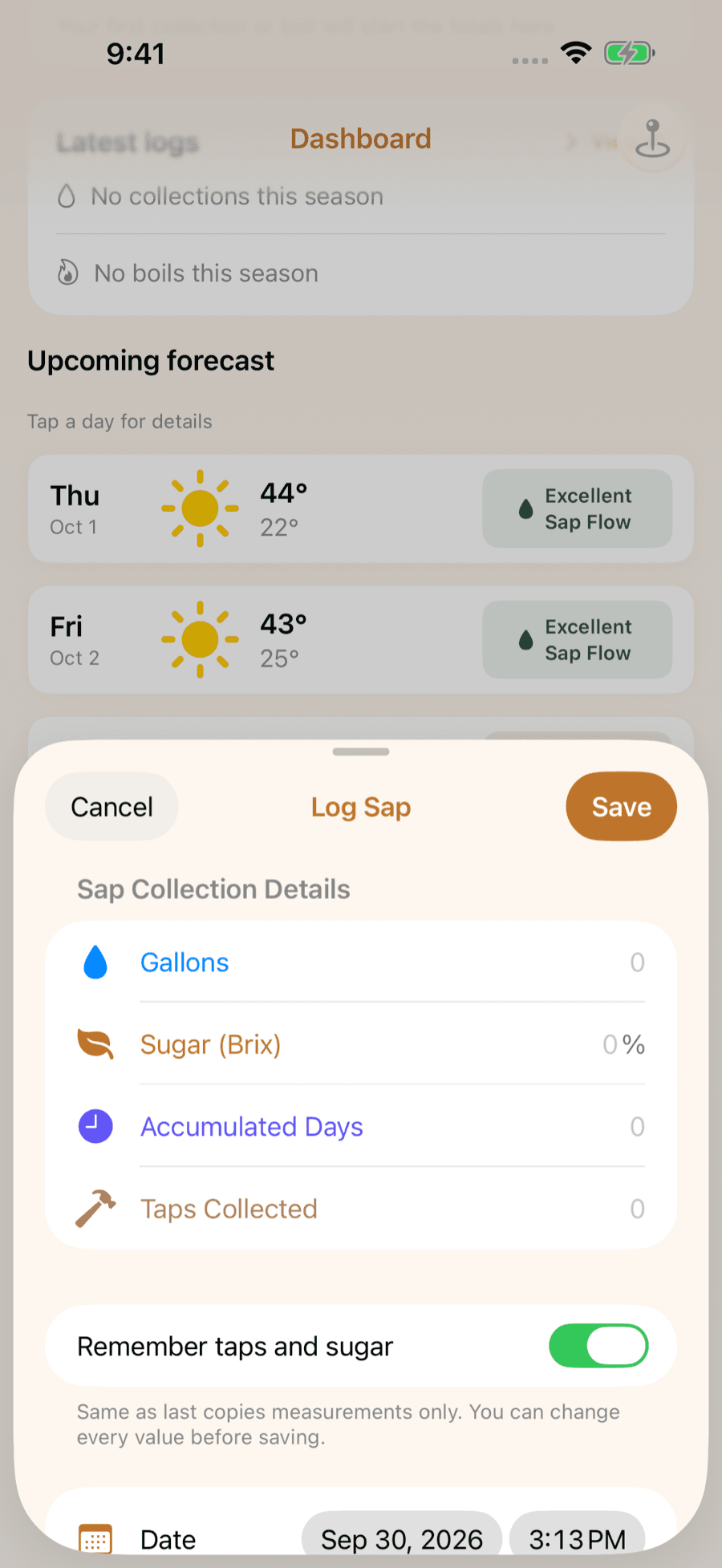
LuckySap turns the forecast for any spot into a day-by-day sap outlook and logs every collection and boil. Free on iPhone and Android.