Can you make maple syrup in Colorado?
Local timing guidance
No local guidance found. Colorado Plateau hobbyists describe the window as 'when daytime temperatures reach the 40s, while nighttime temperatures remain well below freezing' — a rule, not a date.
Source: KNAU 2013
Trees
Tappable trees in Colorado
| Species | Status | Where |
|---|---|---|
| BoxelderAcer negundo | native | Riparian bottoms statewide, plains to foothills; 'a knobby, oddball native of southwestern riparian areas'Source: US Forest Service range data; KNAU 2013 |
| Silver mapleAcer saccharinum | planted | 'By far, the silver maple is the most common maple found in the urban landscape' (CSU Extension)Source: CSU Extension PlantTalk 1733 |
| Norway mapleAcer platanoides | introduced | Street tree along the Front Range; CSU notes Norway maples 'are hard wooded' and better suited to Colorado soilsSource: CSU Extension PlantTalk 1733 |
| Rocky Mountain mapleAcer glabrum | native | Mountains statewide; smallSource: US Forest Service range data |
| Bigtooth mapleAcer grandidentatum | native | 'Disjunct populations occur along Lake Powell in Colorado' — far southwest onlySource: US Forest Service range data |
| Paper birchBetula papyrifera | native | Front Range outliers (US Forest Service)Source: US Forest Service range data |
| Freeman maple ('Autumn Blaze')Acer × freemanii | planted | Popular Front Range yard tree (CSU)Source: CSU Extension PlantTalk 1733 |
USDA Forest Inventory · plots measured 2014–2023
How many tappable maples?
The Forest Service’s Colorado plots tally too few maples 10 inches and up for a reliable count.
- FIA counts trees on forest land only. Yard, street and farm trees are not counted, so true numbers are higher.
- Plots measured 2014–2023. FIA visits a different share of its plots each year, so a “current” estimate pools 10 years of visits.
- Species are listed only where the statewide sampling error is 50% or less. FIA measures bigtooth and Rocky Mountain maples at the root collar rather than at chest height, so they are not in these counts.
- Source: USDA Forest Service, Forest Inventory and Analysis (live trees on forest land, by species and trunk diameter at 4.5 ft). How FIA counts trees →
Who already does it
Sugaring in Colorado, documented
'a few enterprising residents of the Colorado Plateau have begun collecting [box elder sap] to make a sweet syrup' — Four Corners hobbyists (Arizona-based public radio; Colorado not named specifically)
KNAU Earth Notes, 6 Mar 2013Producer or news report
No Colorado producer or extension sugaring guidance found; CSU Extension's maple page covers landscape choice only
Regional context: USU-led USDA Acer grant covers Idaho, Utah and Wyoming (Wheatland, WY boxelder trial: 41.1 L per tree over 63 days) — Colorado is not a partner state
Cautions
What local sources warn about
- Box elder sap is lean and tastes 'more reminiscent of caramel than maple'; 'As soon as the tree's flower buds begin to swell, the taste of the sap changes unpleasantly.'Source: KNAU 2013
- Altitude lowers the boiling point — finish syrup by temperature above local boiling (about +7 °F), not by a fixed 219 °F.Source: Oregon State Extension EM 9163
- Front Range silver maples suffer iron chlorosis on alkaline clay and are storm-brittle — tap only healthy trees.Source: CSU Extension PlantTalk 1733
Where to look
Likely sugaring country
Fort Collins
CSU home; Front Range town canopy of silver/Norway maple and riparian boxelder
Durango
Colorado Plateau/Four Corners where box elder hobby tapping is reported
Grand Junction
Western Slope river bottoms with large boxelders and cold winter nights
FAQ
Sugaring in Colorado: questions
- Can you tap maple trees in Colorado?
- Marginal. Marginal: Colorado has native boxelder in every river bottom, planted silver and Norway maples in every Front Range town, and the freeze-thaw swings are there — but no Colorado producer, festival or extension sugaring program was found; the only regional record is Colorado Plateau hobbyists tapping box elder.
- When do you tap maple trees in Colorado?
- No local guidance found. Colorado Plateau hobbyists describe the window as 'when daytime temperatures reach the 40s, while nighttime temperatures remain well below freezing' — a rule, not a date. (Source: KNAU 2013.)
- Which trees can you tap in Colorado?
- Boxelder (Acer negundo, native): Riparian bottoms statewide, plains to foothills; 'a knobby, oddball native of southwestern riparian areas'. Silver maple (Acer saccharinum, planted): 'By far, the silver maple is the most common maple found in the urban landscape' (CSU Extension). Norway maple (Acer platanoides, introduced): Street tree along the Front Range; CSU notes Norway maples 'are hard wooded' and better suited to Colorado soils. Rocky Mountain maple (Acer glabrum, native): Mountains statewide; small. Bigtooth maple (Acer grandidentatum, native): 'Disjunct populations occur along Lake Powell in Colorado' — far southwest only. Paper birch (Betula papyrifera, native): Front Range outliers (US Forest Service). Freeman maple ('Autumn Blaze') (Acer × freemanii, planted): Popular Front Range yard tree (CSU).

LuckySap · free on iPhone & Android
Try a season where you are
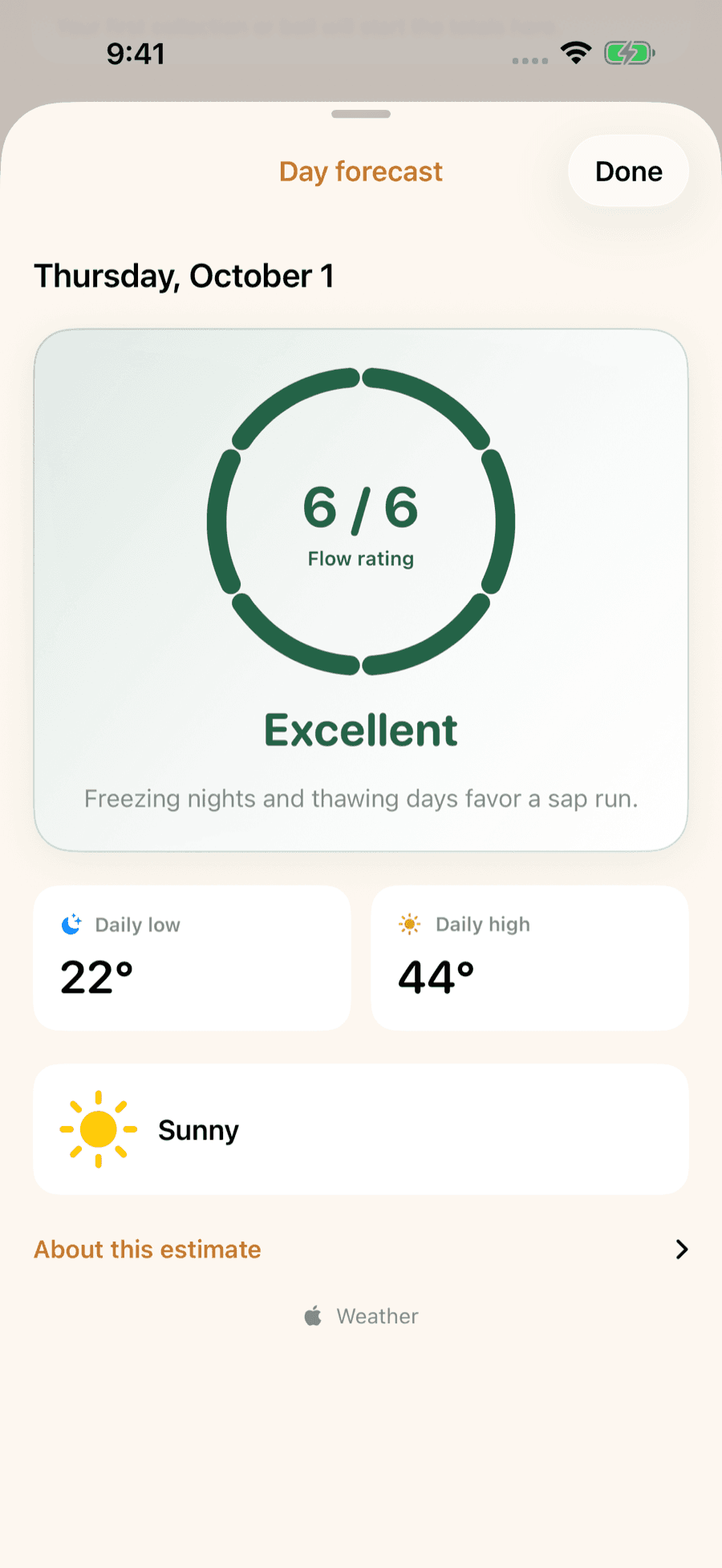
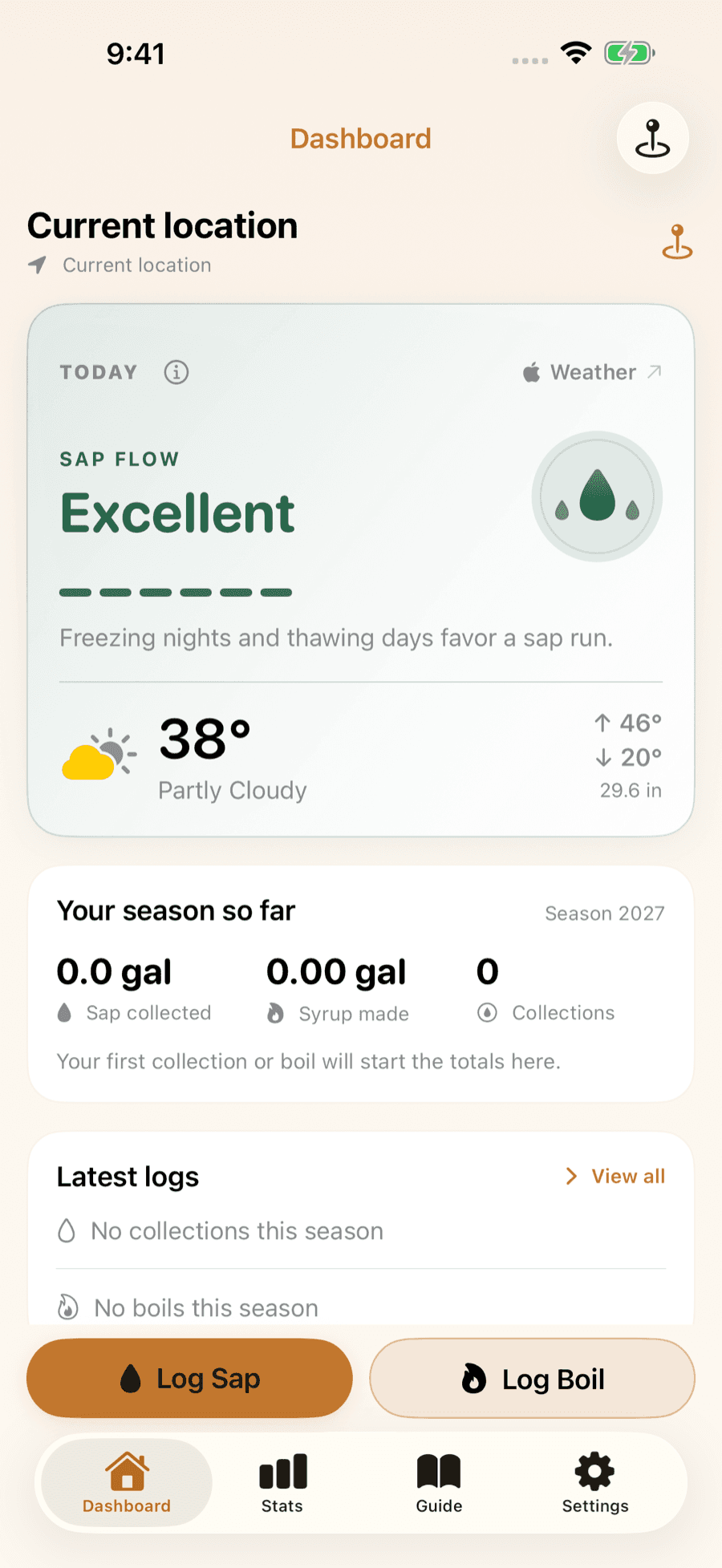
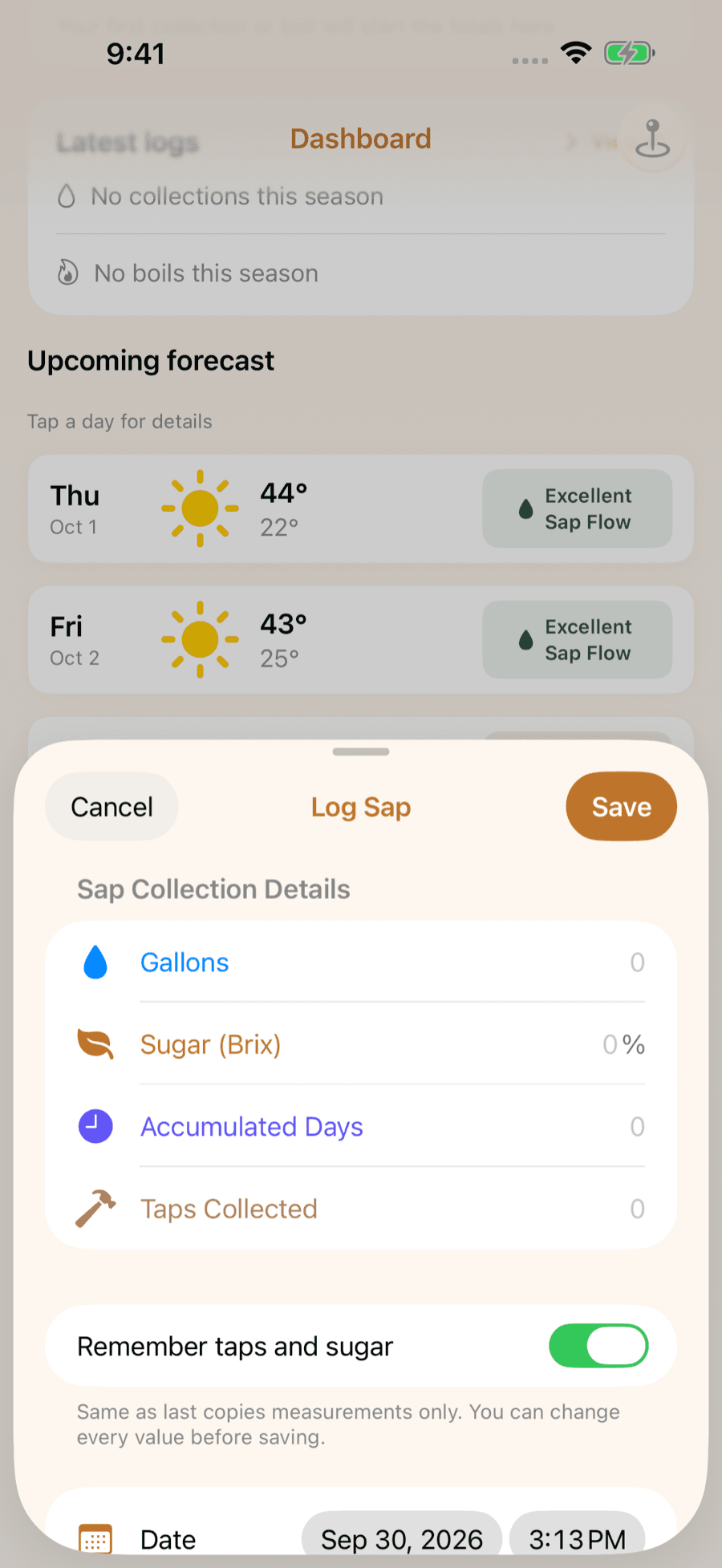
LuckySap turns the forecast for any spot into a day-by-day sap outlook and logs every collection and boil. Free on iPhone and Android.