Can you make maple syrup in Kansas?
Local timing guidance
No local guidance found. The only dated observation: HPPR's visit during Spring Break (mid-March 2016) found buckets still on the trees and syrup simmering while 'tiny buds turned toward the sun' — i.e. the Courtland season was ending in mid-March.
Source: HPPR 2016 (PRACTITIONER observation, not guidance)
Trees
Tappable trees in Kansas
| Species | Status | Where |
|---|---|---|
| Sugar mapleAcer saccharum | native | Eastern Kansas only — FEIS range: 'southward through Minnesota, and eastern Kansas into northeastern Texas'; also widely planted in townsUSFS FEIS (KS in STATES list) |
| Silver mapleAcer saccharinum | native | River and creek bottoms statewide in the east, and the commonest big yard tree in Kansas townsUSFS FEIS (KS in STATES list) |
| BoxelderAcer negundo | native | Riparian sites statewide; FEIS var. texanum 'western Missouri, eastern Kansas'USFS FEIS (KS in STATES list) |
| Black walnutJuglans nigra | native | Eastern Kansas; 'isolated populations occur in ... central Kansas'USFS FEIS (KS in STATES list) |
| Red mapleAcer rubrum | planted | Not in the FEIS native list for Kansas; planted as a yard treeUSFS FEIS (KS absent from STATES list) |
Who already does it
Sugaring in Kansas, documented
'Republic County Maple Guys', Courtland (Republic County): a sugar shack with a wood-fired evaporator at Snow Goose Lodge; buckets on 'scores of maple trees' around town; in their third year (2016) 'approximately 600 gallons of sap this tapping, which should render around 12 gallons of syrup', sold at local farm markets
High Plains Public Radio, 11 Mar 2016 · PRACTITIONER
Cautions
What local sources warn about
- Low volume: a whole town's worth of tapped maples yielded ~600 gallons of sap and ~12 gallons of syrup in the crew's third year. (HPPR 2016 (PRACTITIONER))
- Kansas sits at sugar maple's western limit (FEIS: 'eastern Kansas'); west of the Flint Hills the only tappable natives are silver maple and boxelder, whose sap is leaner and whose buds break early (see leg-evidence §2). (USFS FEIS (VERIFIED))
- Nearby prairie extension advice (SDSU, Nebraska Forest Service) notes freeze-thaw weather on the Plains is 'highly variable during the season' and years can fail. (SDSU Extension 2019 (VERIFIED, neighbouring state))
Where to look
Likely sugaring country
Courtland (Republic County)
The documented producer — a town-wide tapping effort on the Nebraska line
Lawrence (Douglas County)
Eastern Kansas river town inside sugar maple's native range, heavy urban maple canopy
Manhattan (Riley County)
Flint Hills edge; Kansas State University's home, the natural place for any future extension guidance
Autosuggest priority place ('can you tap maple trees in kansas'). SCANNED: 2 searches (K-State extension silver maple boxelder; Kansas producer Flint Hills/Lawrence/Manhattan). No K-State Research & Extension maple publication surfaced; NASS 2017 KS county PDF not opened. Timing is an observation, not guidance.
FAQ
Sugaring in Kansas: questions
- Can you tap maple trees in Kansas?
- Yes, in parts of it. Yes in the eastern third and along northern river towns: sugar maple reaches eastern Kansas, silver maple and boxelder line every creek and street, and a small-town crew in Republic County has boiled syrup commercially since about 2013 — but trees are scattered and the season is short.
- When do you tap maple trees in Kansas?
- No local guidance found. The only dated observation: HPPR's visit during Spring Break (mid-March 2016) found buckets still on the trees and syrup simmering while 'tiny buds turned toward the sun' — i.e. the Courtland season was ending in mid-March. (HPPR 2016 (PRACTITIONER observation, not guidance))
- Which trees can you tap in Kansas?
- Sugar maple (Acer saccharum, native): Eastern Kansas only — FEIS range: 'southward through Minnesota, and eastern Kansas into northeastern Texas'; also widely planted in towns Silver maple (Acer saccharinum, native): River and creek bottoms statewide in the east, and the commonest big yard tree in Kansas towns Boxelder (Acer negundo, native): Riparian sites statewide; FEIS var. texanum 'western Missouri, eastern Kansas' Black walnut (Juglans nigra, native): Eastern Kansas; 'isolated populations occur in ... central Kansas' Red maple (Acer rubrum, planted): Not in the FEIS native list for Kansas; planted as a yard tree

LuckySap · free on iPhone & Android
Try a season where you are
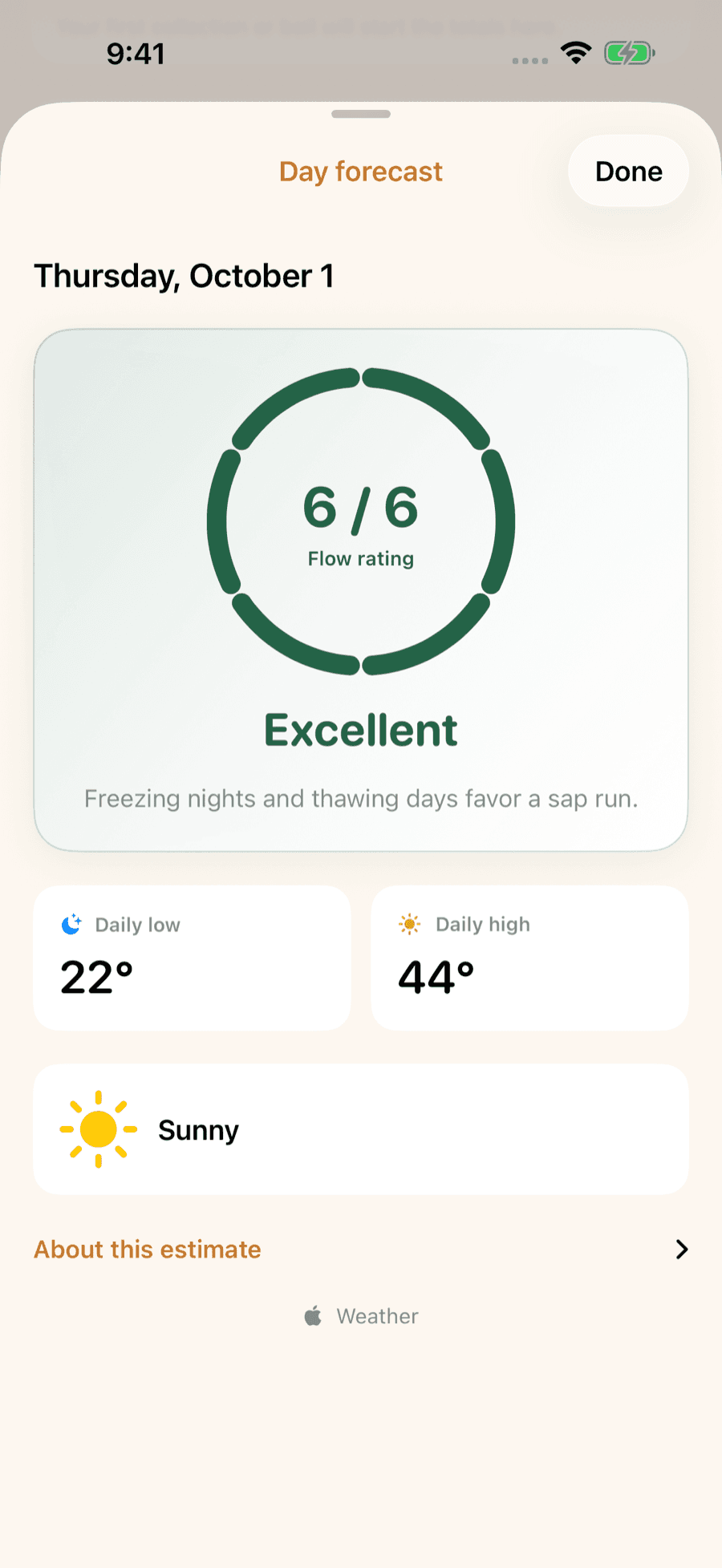
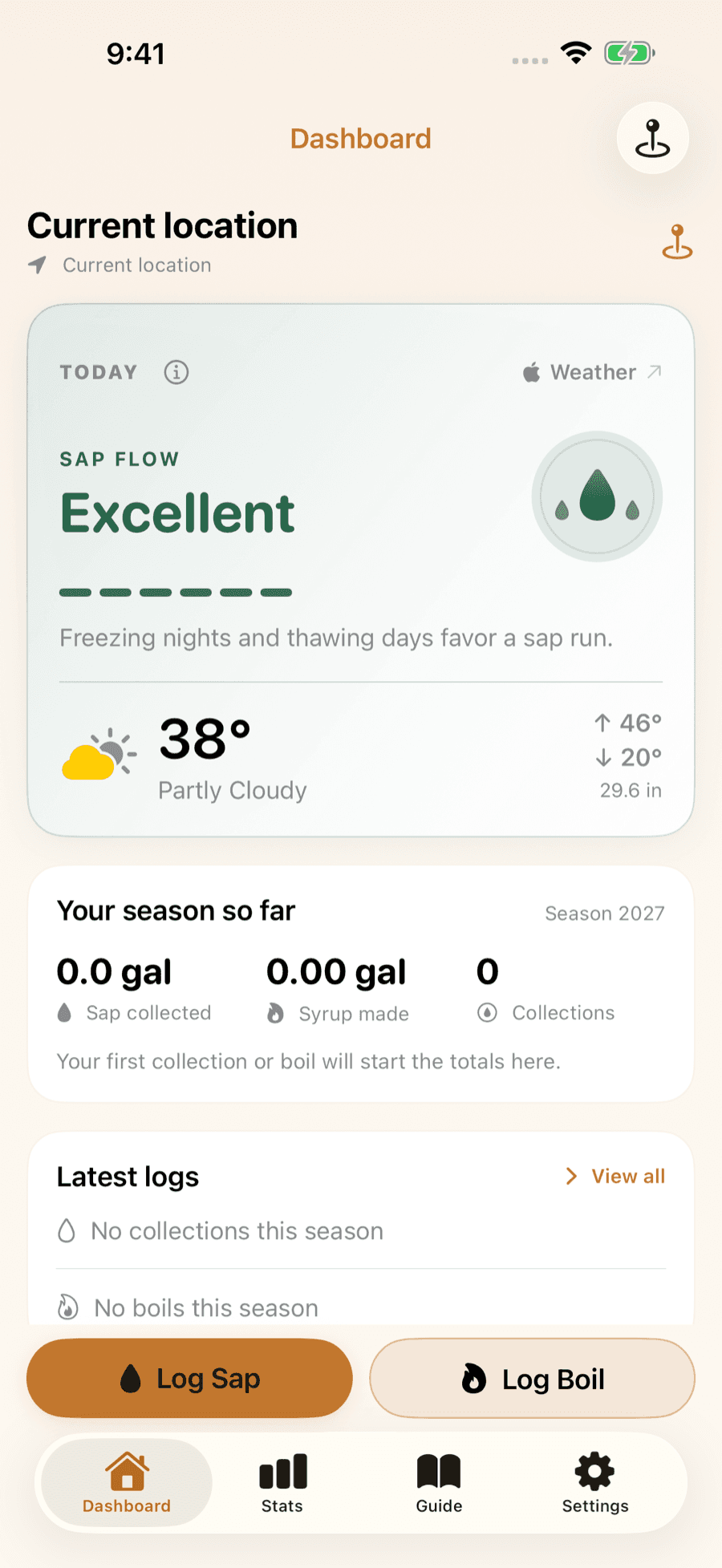
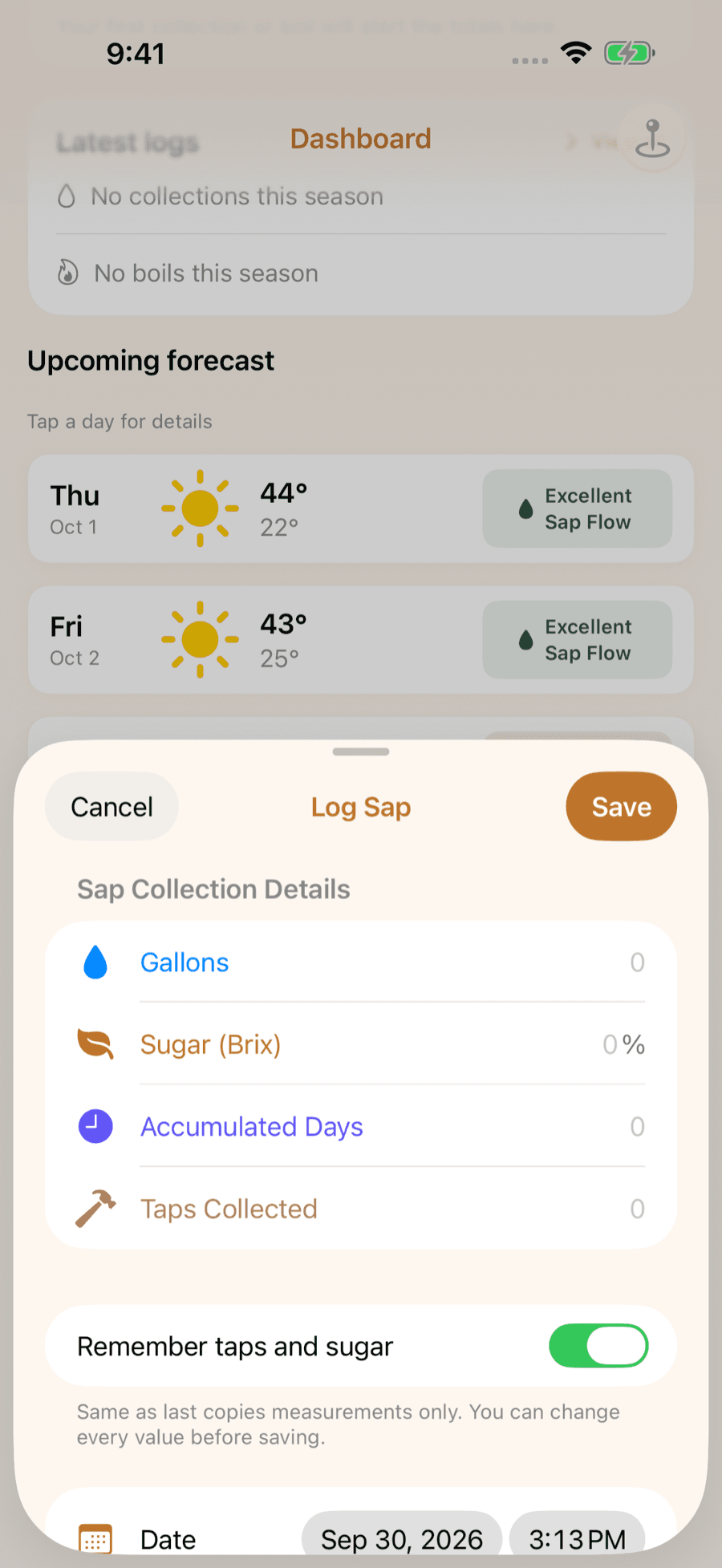
LuckySap turns the forecast for any spot into a day-by-day sap outlook and logs every collection and boil. Free on iPhone and Android.