Sugar maple
Acer saccharum
The gold standard — if you've got one, tap it first.
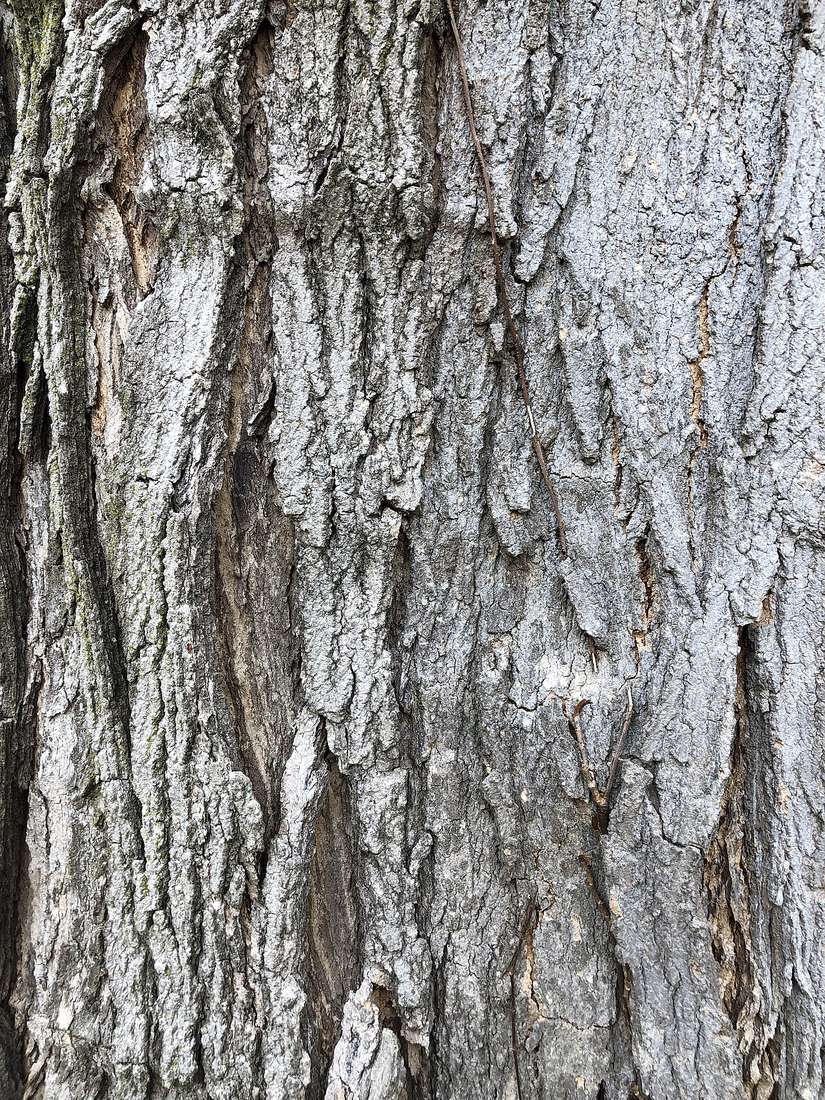 Bark
Bark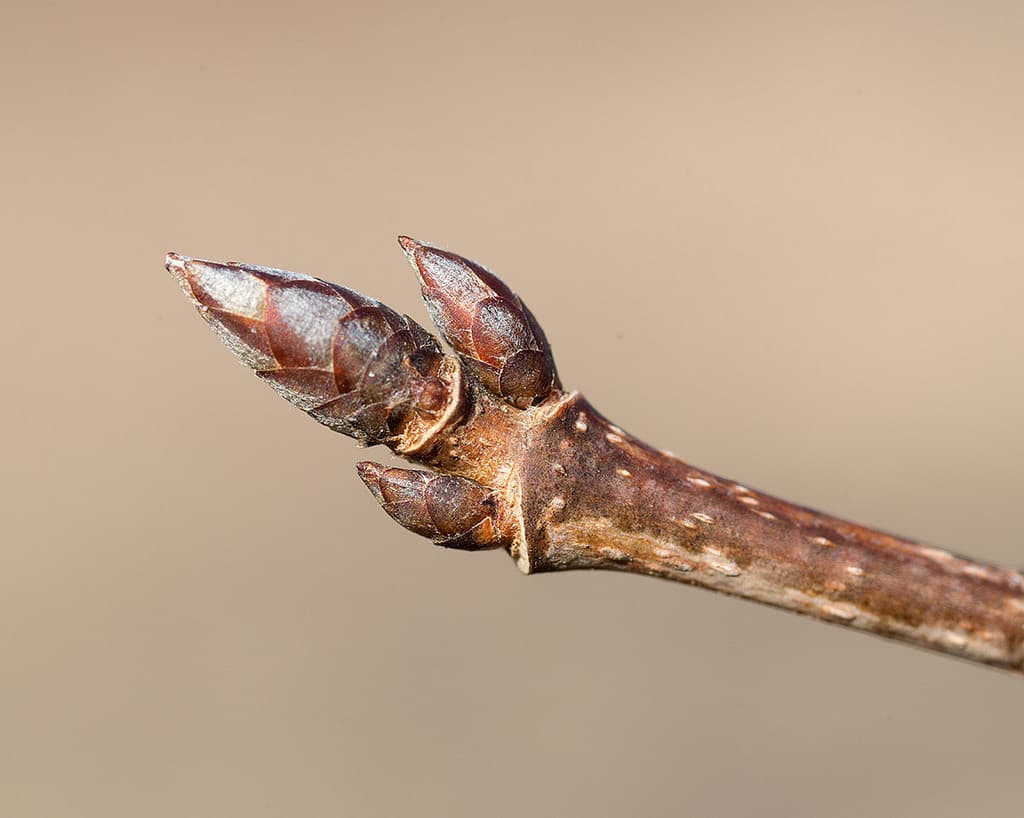 Winter buds & twig
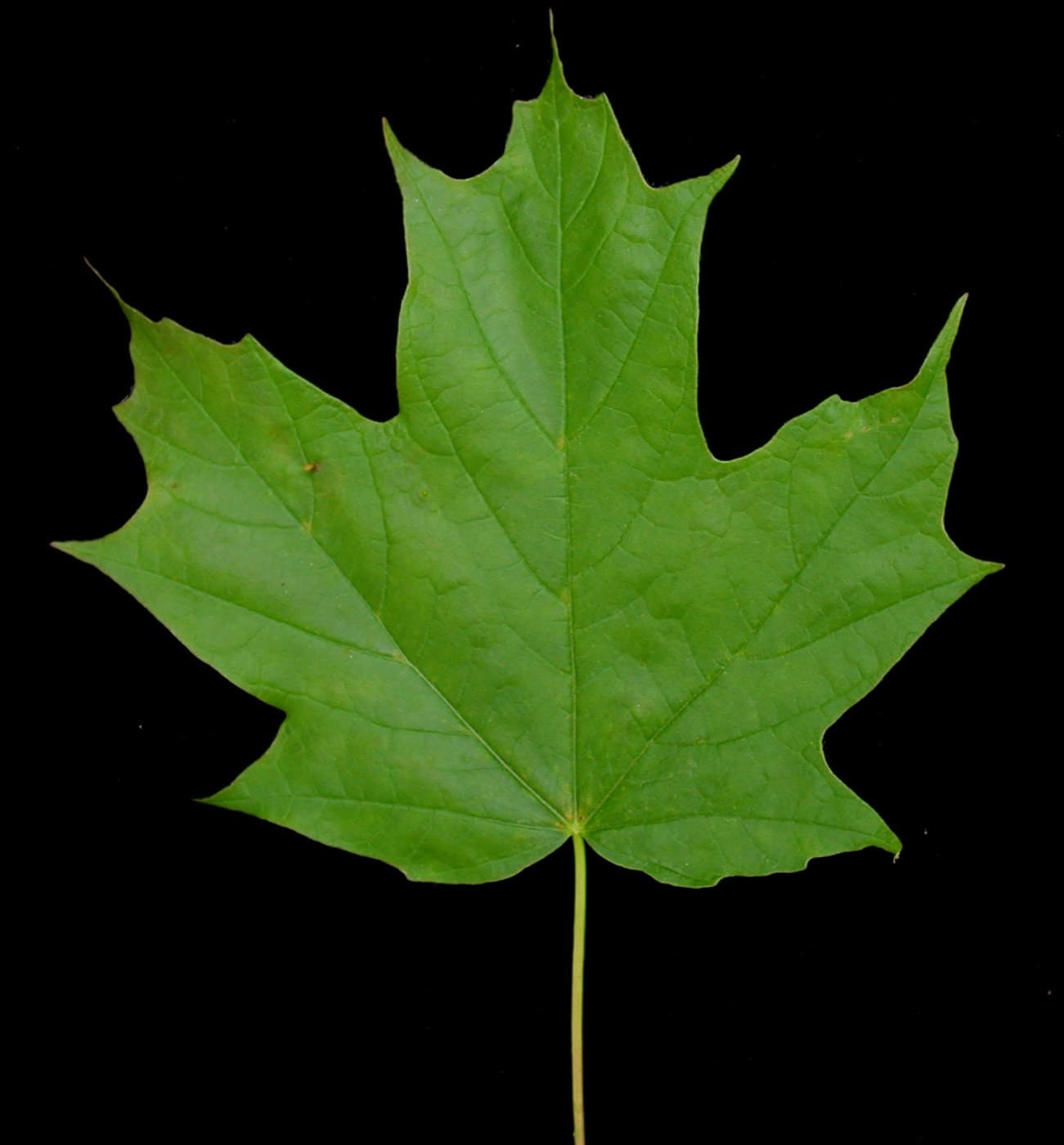 Leaf
Leaf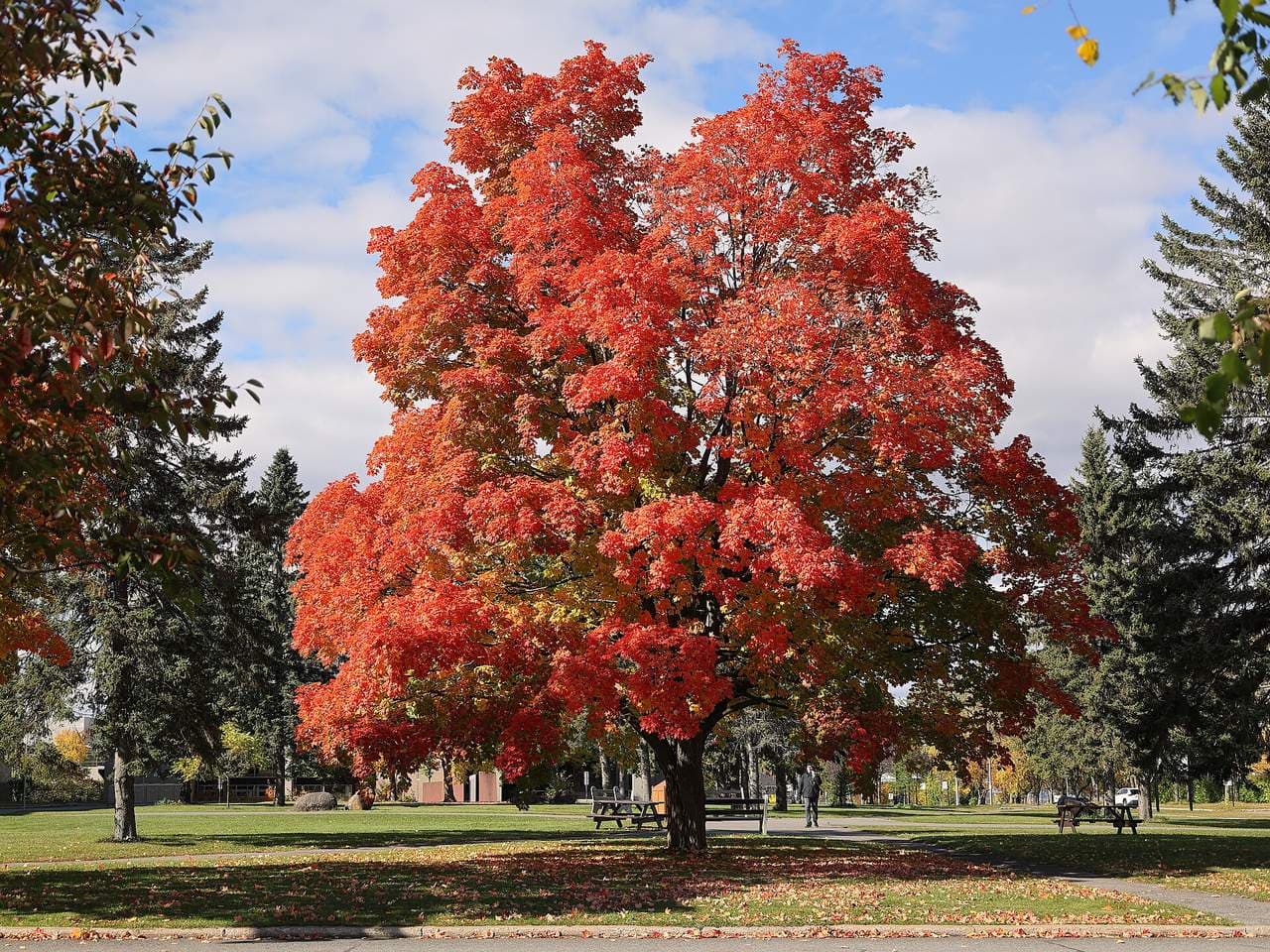 Whole tree
- Opposite branching: buds and twigs come off in matched pairs — the first test for any maple.
- Buds are brown, slender and very sharp-pointed, with tight scales; the tip bud is about ¼–⅜ inch long.
- Twigs are brown, slender and shiny, dotted with pale lenticels.
- Mature bark is gray-brown and furrowed into long, thick, irregular plates that curl outward along one edge. Trunks under about 4–8 inches are still smooth and gray.
- Forest trees grow tall and straight; open-grown trees make a dense, oval crown.
- Leaves 3–6 inches wide with 5 rounded lobes and smooth edges — no fine teeth, which quickly rules out red and silver maple.
- Snap off a leaf stem and the sap is clear, not milky (milky means Norway maple).
- Winged seeds hang in horseshoe-shaped pairs and ripen in fall.
Norway maple
Norway's buds are fat, rounded and green-to-purple (sugar maple's are slim, sharp and brown), and its bark has tight interlacing ridges instead of curling plates. In summer its leaf stems bleed milky sap.
Red maple
Red maple's buds are short, blunt and red on reddish twigs; sugar maple's are sharp and brown.
Black maple
Nearly identical and just as good to tap. Look for drooping, often 3-lobed leaves with small leafy stipules where the leaf stem meets the twig.
Oaks
Oaks branch alternately and carry a cluster of buds at each twig tip; maples pair up.
Keep this season's numbers for next year
LuckySap logs every collection with its sugar reading and your notes, then lines this season up against the last. Free on iPhone.