Fair — lower yieldAlso called Soft maple, River maple, White maple, Silverleaf maple
Silver maple
Acer saccharinum
Tappable, but usually the fourth pick — first to bud and often lowest in sugar.
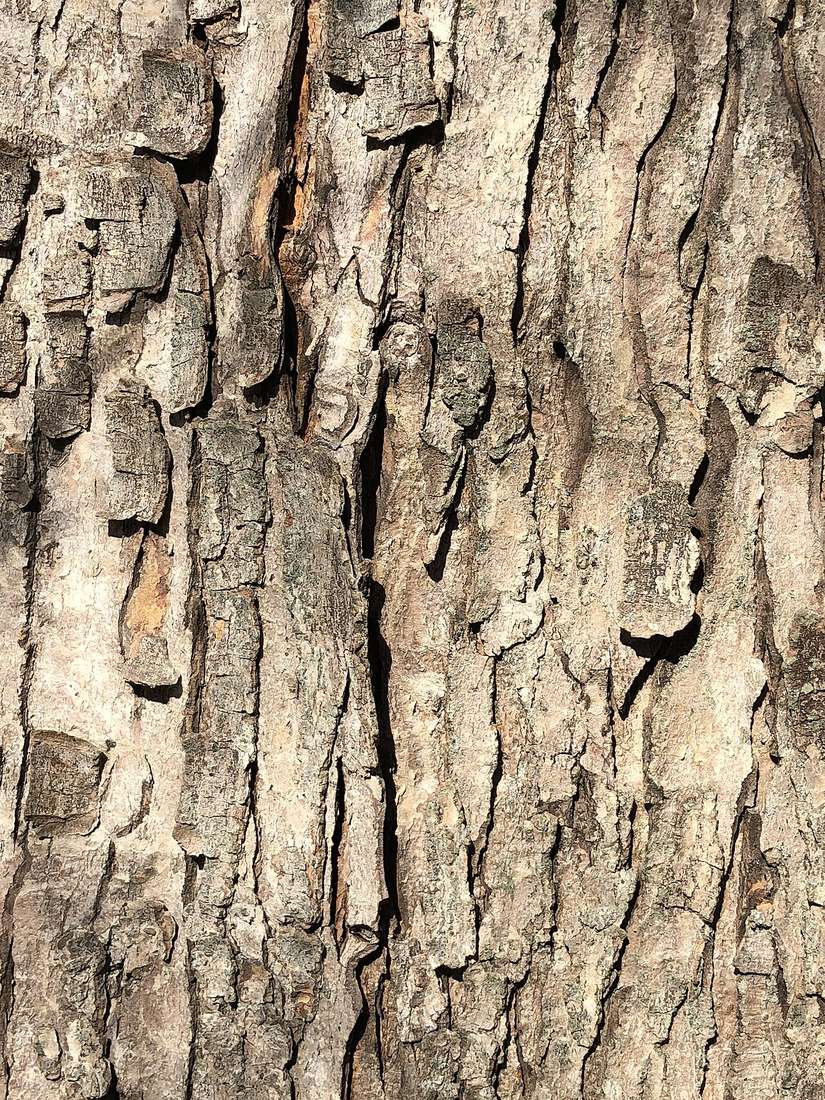 Bark
Bark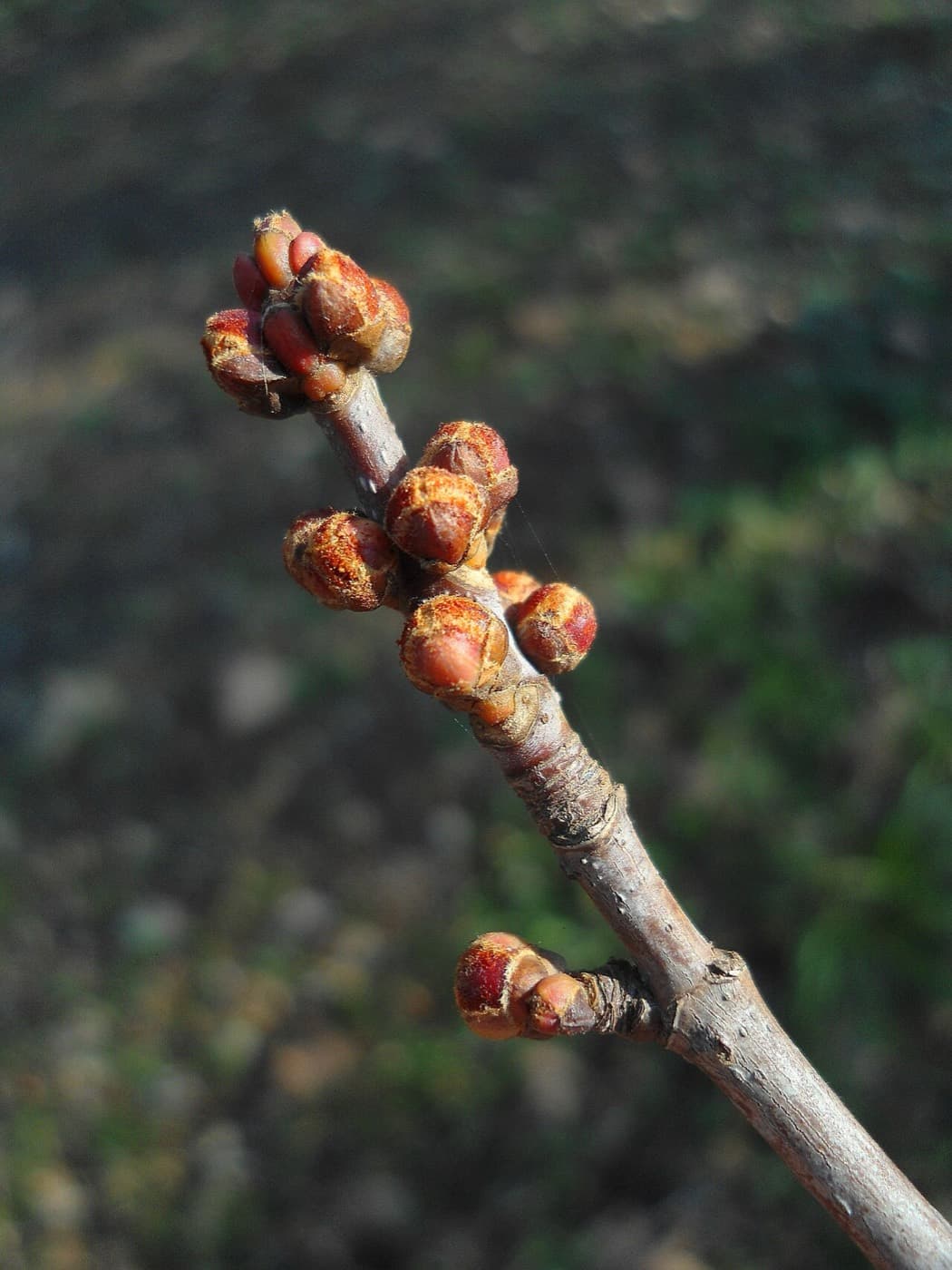 Winter buds & twig
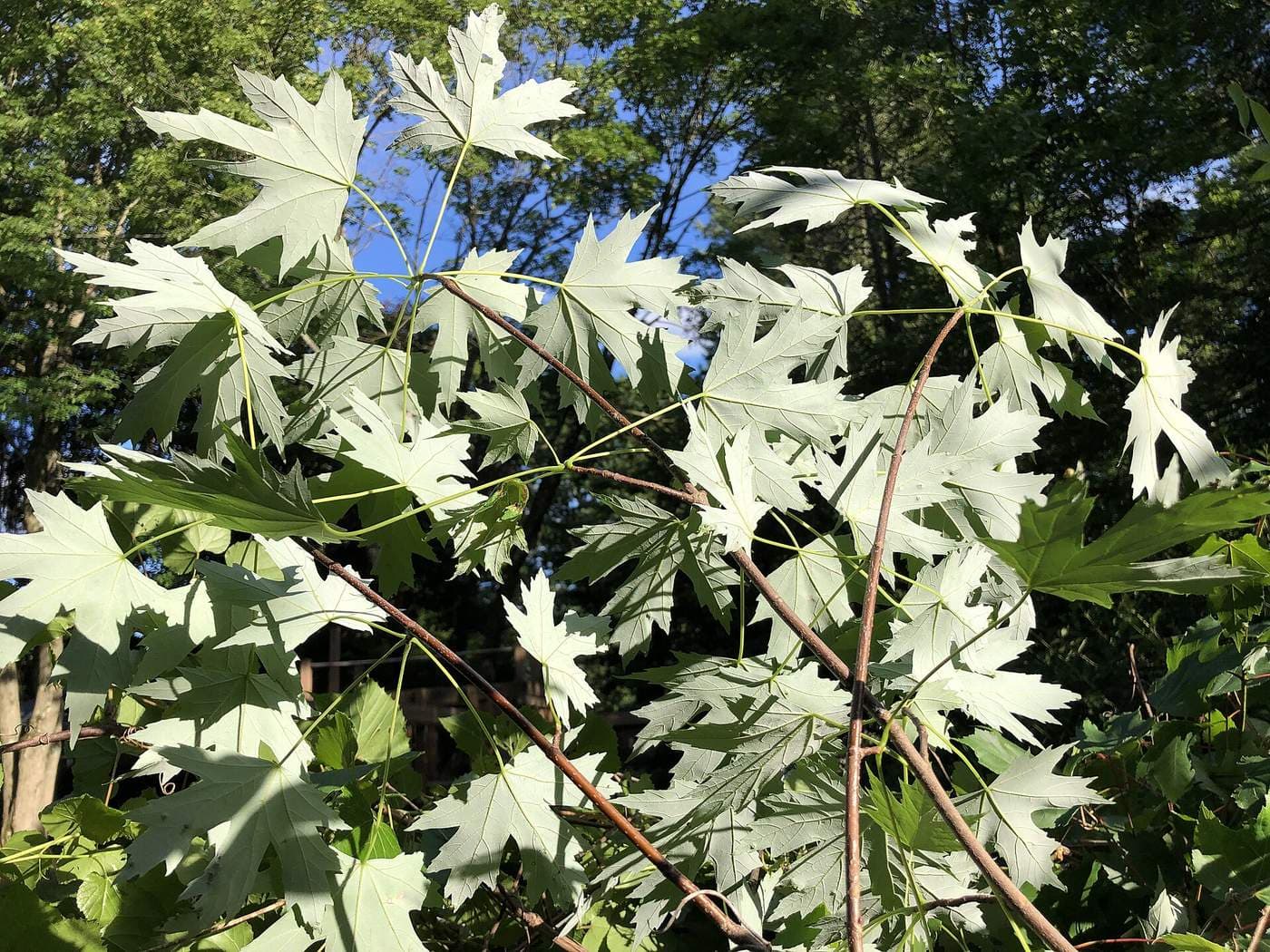 Leaf
Leaf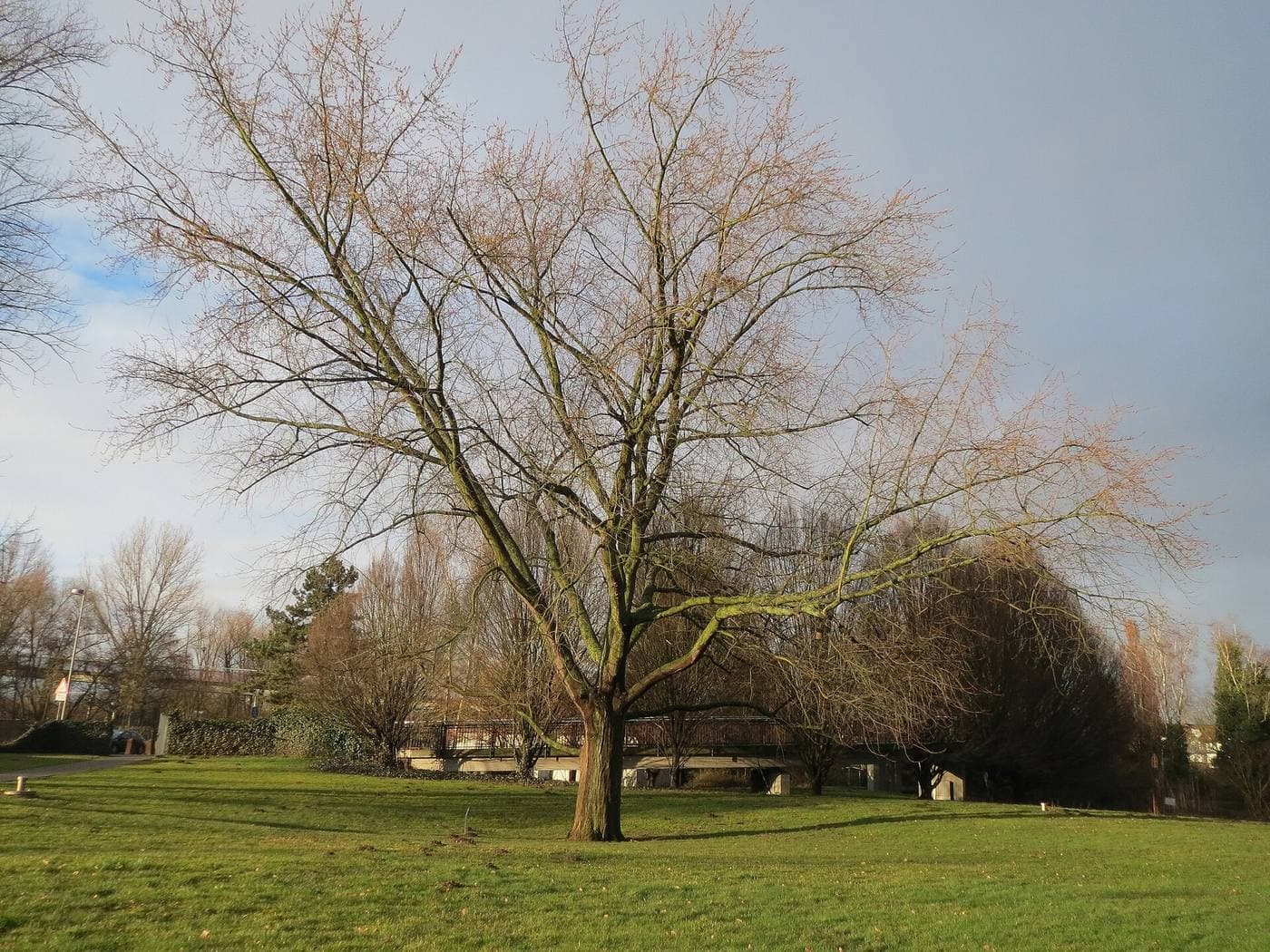 Whole tree
Identify it in winter
- Opposite branching; twigs are chestnut-brown to reddish and stouter than red maple's.
- Scrape a twig and sniff — silver maple smells rank and foul.
- Round reddish flower buds bunch into dense clusters along the twigs.
- Mature bark is shaggy: long, thin, scaly strips that pull away from the trunk and hang loose.
- A short trunk that splits into several big limbs; long branches sweep down, then curve back up. Look for it on floodplains, stream banks and as big old street trees.
In summer
- Leaves 5-lobed and deeply cut, with fine teeth — the undersides flash silvery white in the wind.
- The biggest winged seeds of any native maple (1½–2½ inches), widely spread, ripening in late spring.
Easily confused with
Red maple
Red maple twigs don't stink when scraped, the bark is less shaggy, and the leaves are shallowly lobed with whitish (not silvery) undersides.
Freeman maple (red × silver hybrid)
A natural cross with a mix of both parents' traits; sap sugar is thought to run about 1.5–2%.
Other trees
Keep this season's numbers for next year
LuckySap logs every collection with its sugar reading and your notes, then lines this season up against the last. Free on iPhone.