Not recommendedAlso called White birch, Canoe birch
Paper birch
Betula papyrifera
You can tap it, but it's a different sport — around 100+ gallons of sap per gallon of syrup, after maple season ends. Save it for year two.
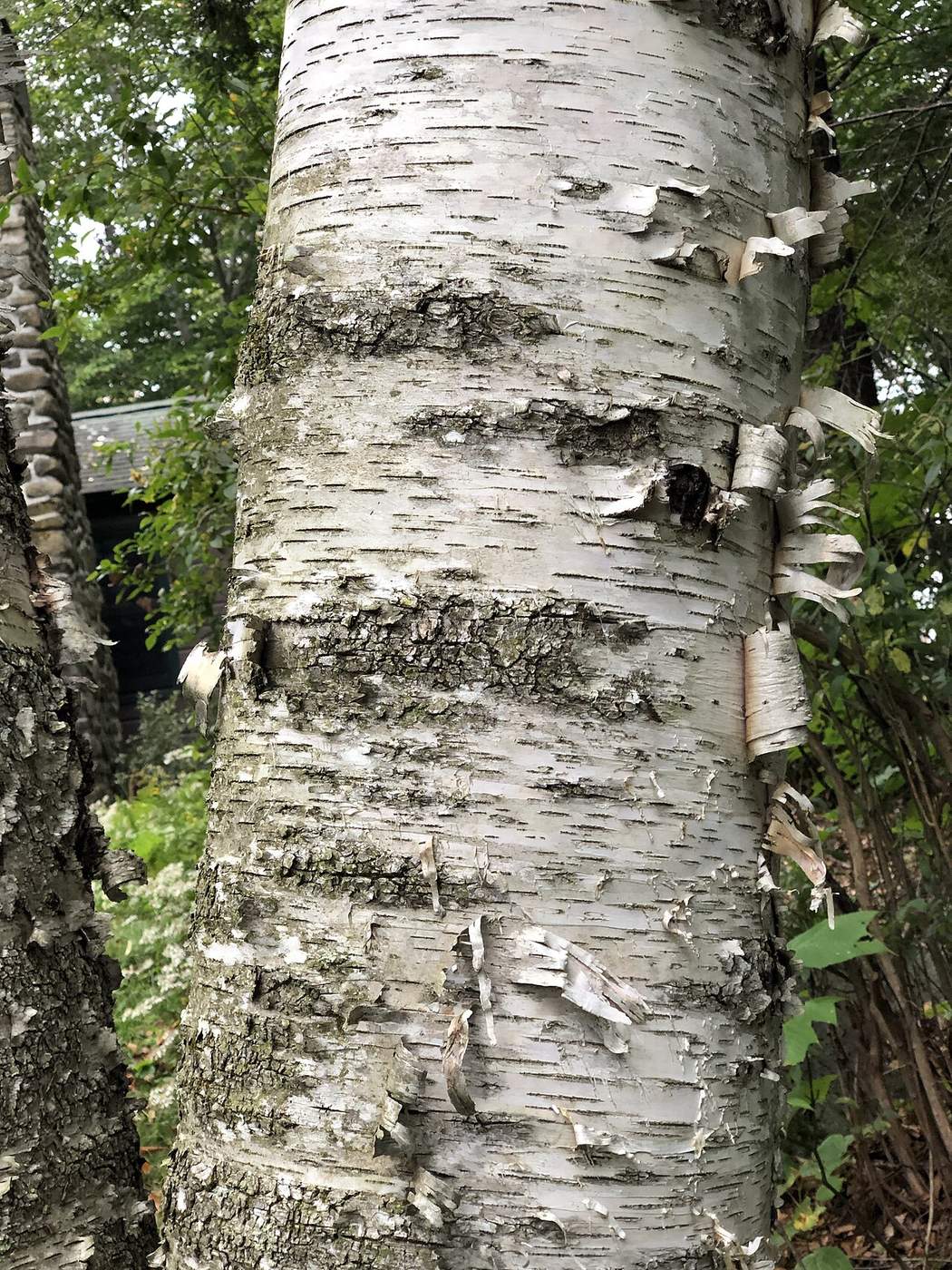 Bark
Bark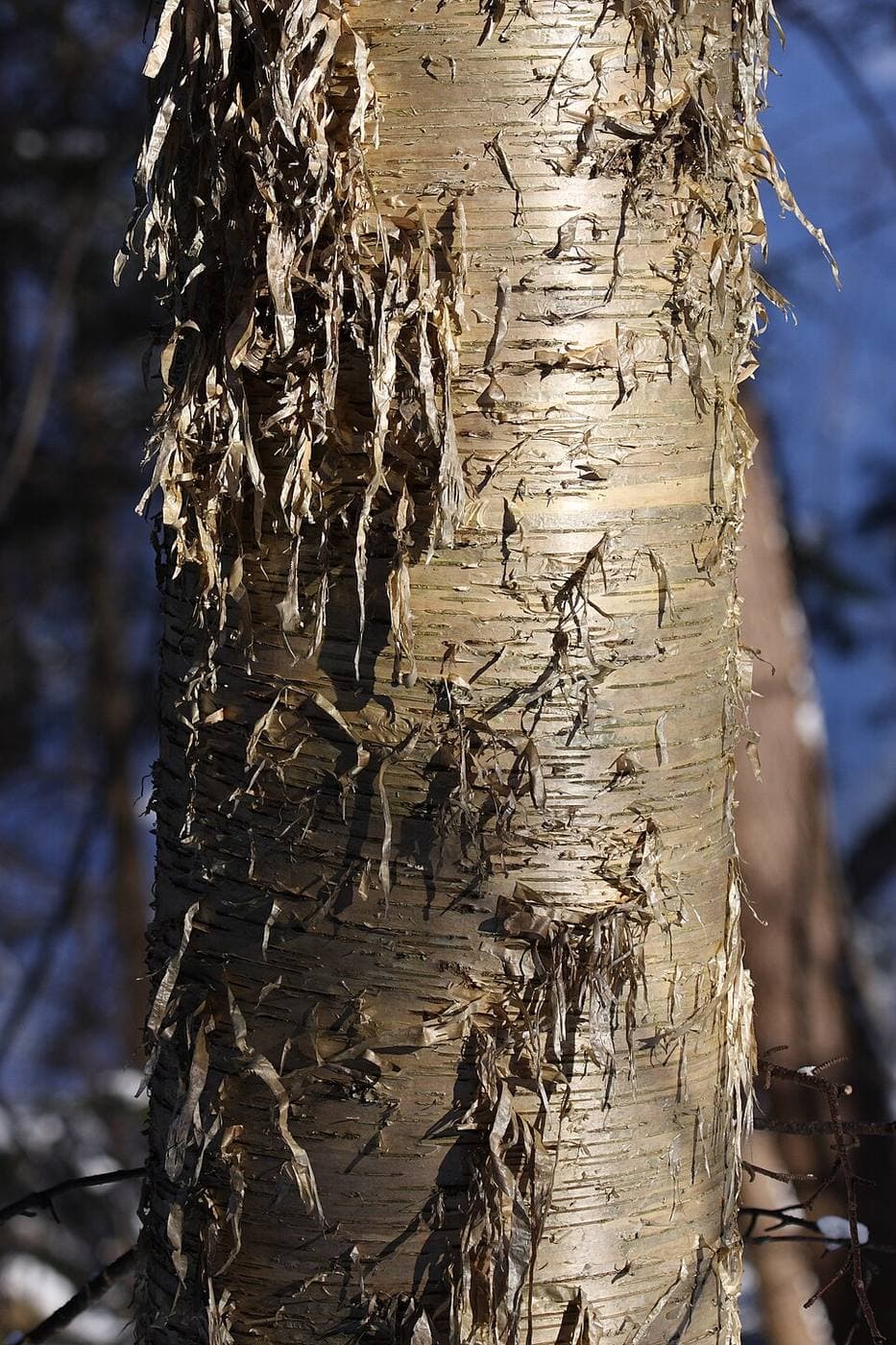 Bark
Bark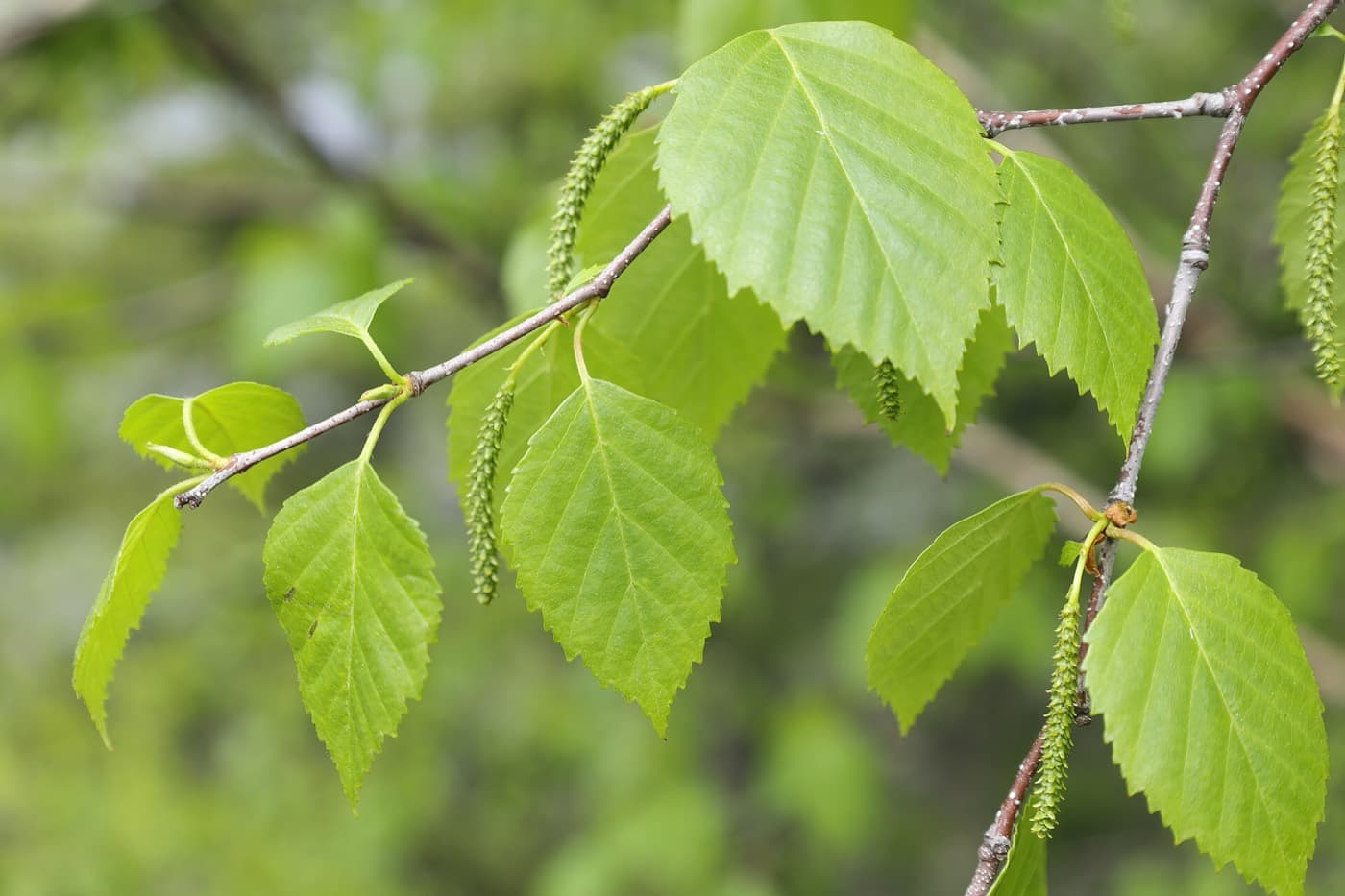 Leaf
Leaf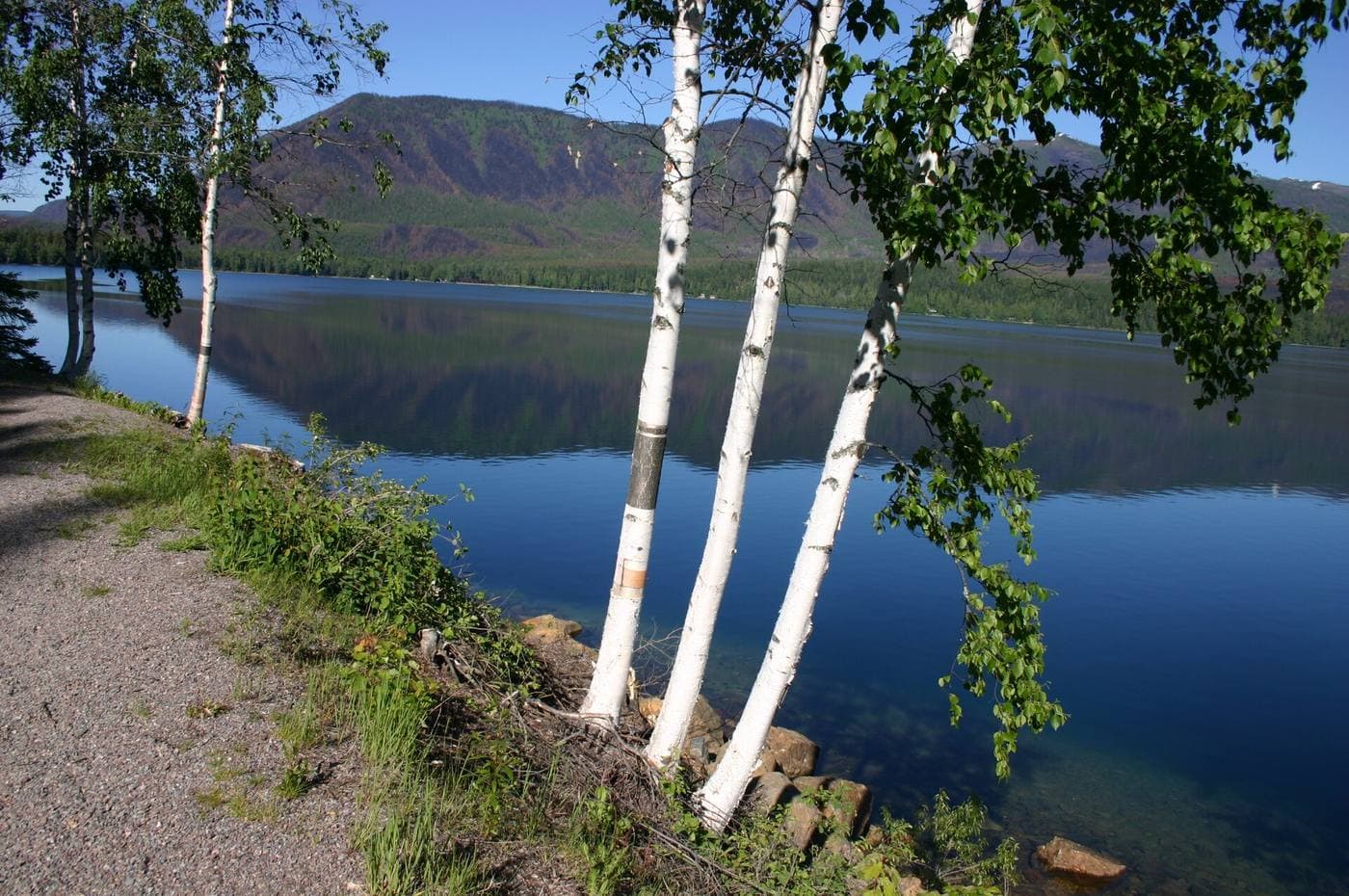 Whole tree
Identify it in winter
- Alternate branching — buds and twigs stagger along the stem, never in pairs. (So it's not a maple.)
- Chalky to creamy-white bark peeling in thin, horizontal, papery strips, with orange inner bark; it can turn dark and furrowed near the base.
- Young trees stay golden-brown until about age 10–12 before they whiten.
- Twigs are slender and dull red-brown with pale lenticels — no wintergreen smell when scratched (yellow birch has one).
- Small male catkins are already formed at the twig ends all winter.
In summer
- Alternate, oval leaves 3–5 inches long with a pointed tip and doubly toothed edges.
- Hanging catkins in spring, then slim cone-like fruits that fall apart in autumn.
Easily confused with
Yellow birch
Shiny bronze-to-golden bark that shreds in thin, curly strips (older trunks go red-brown and scaly), and twigs that smell of wintergreen when broken.
Gray birch
A small, often clumped tree whose chalky white bark generally doesn't peel; leaves are triangular with a long tip.
Quaking aspen
Smooth, creamy to very light green bark that turns dark and furrowed near the base with age (no papery curls); leaves nearly round on flattened stems.
Other trees
Keep this season's numbers for next year
LuckySap logs every collection with its sugar reading and your notes, then lines this season up against the last. Free on iPhone.