Good to tapAlso called Soft maple, Swamp maple, Scarlet maple, Water maple
Red maple
Acer rubrum
A solid second choice — good syrup, just a shorter and usually less sweet season.
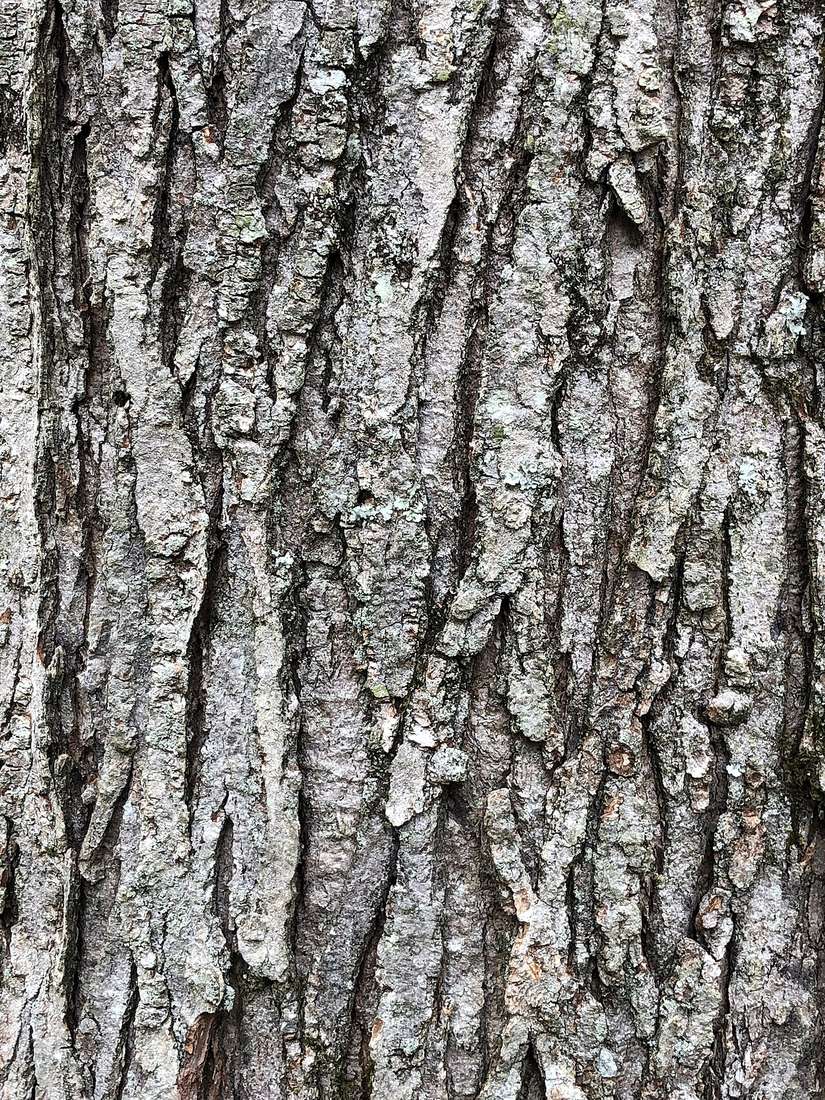 Bark
Bark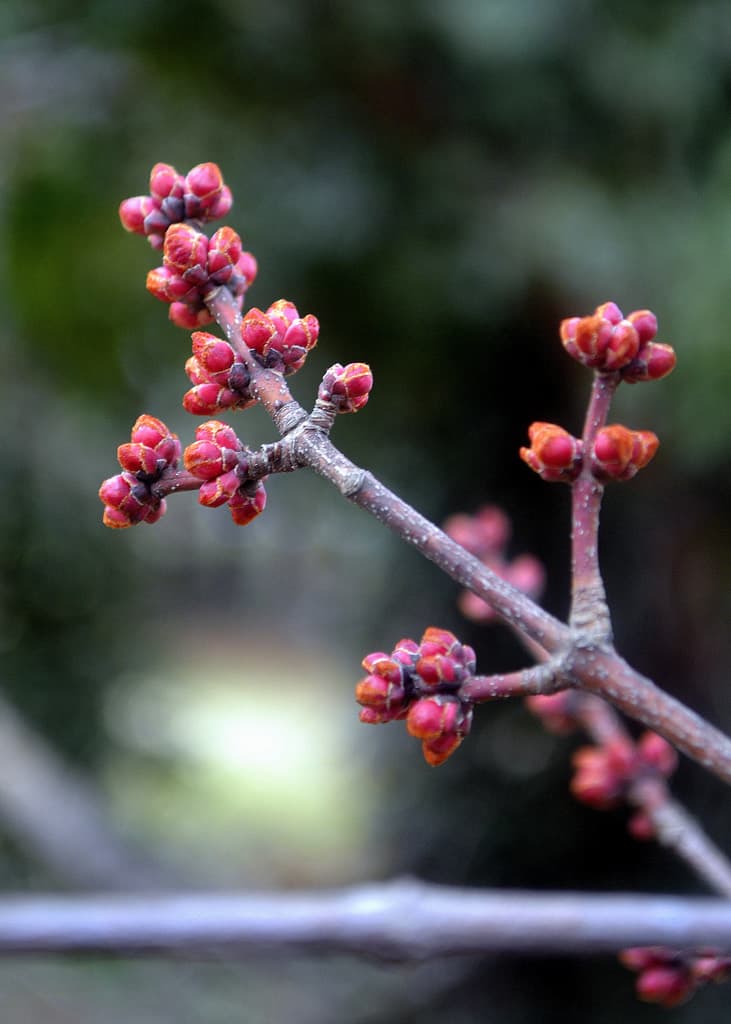 Winter buds & twig
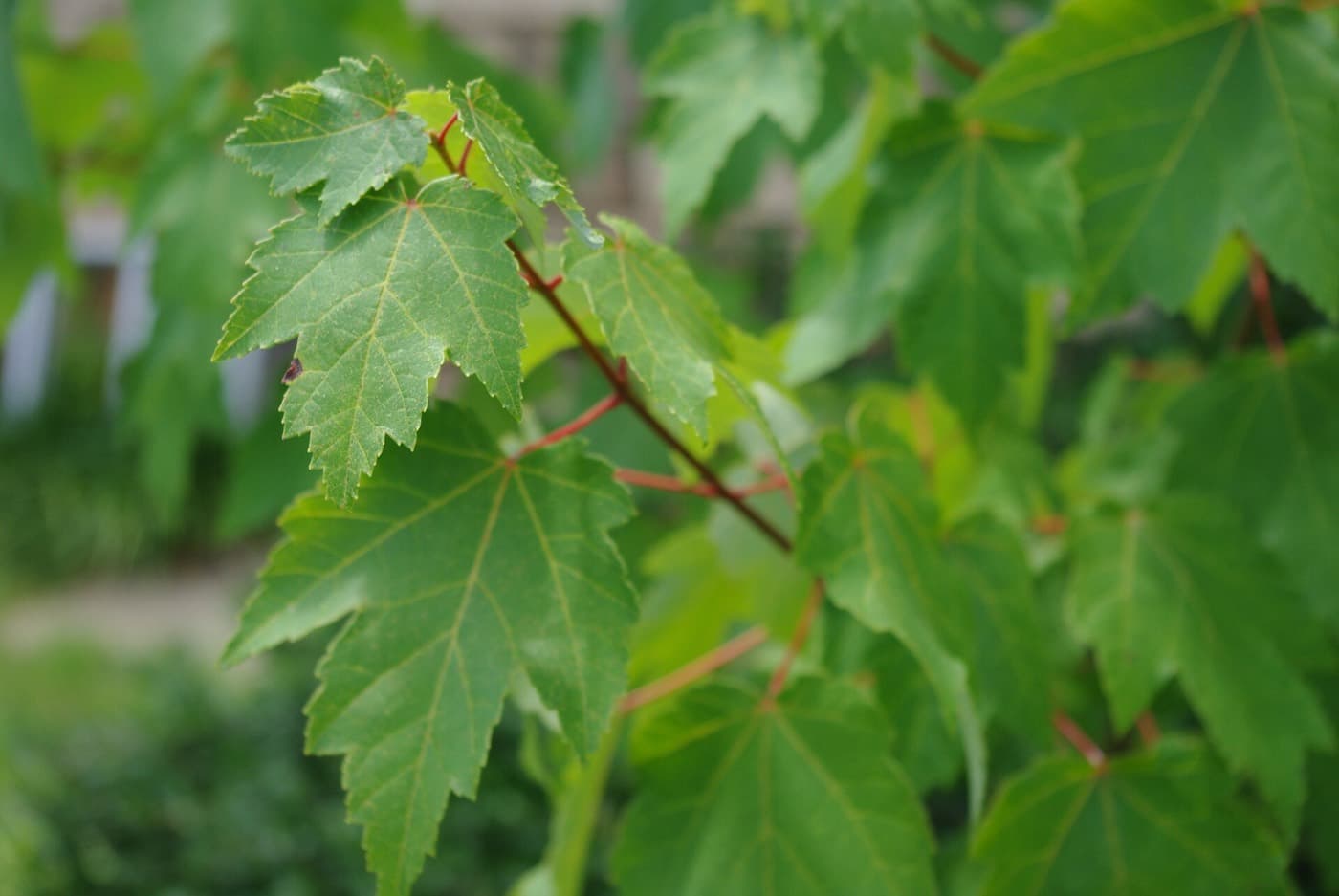 Leaf
Leaf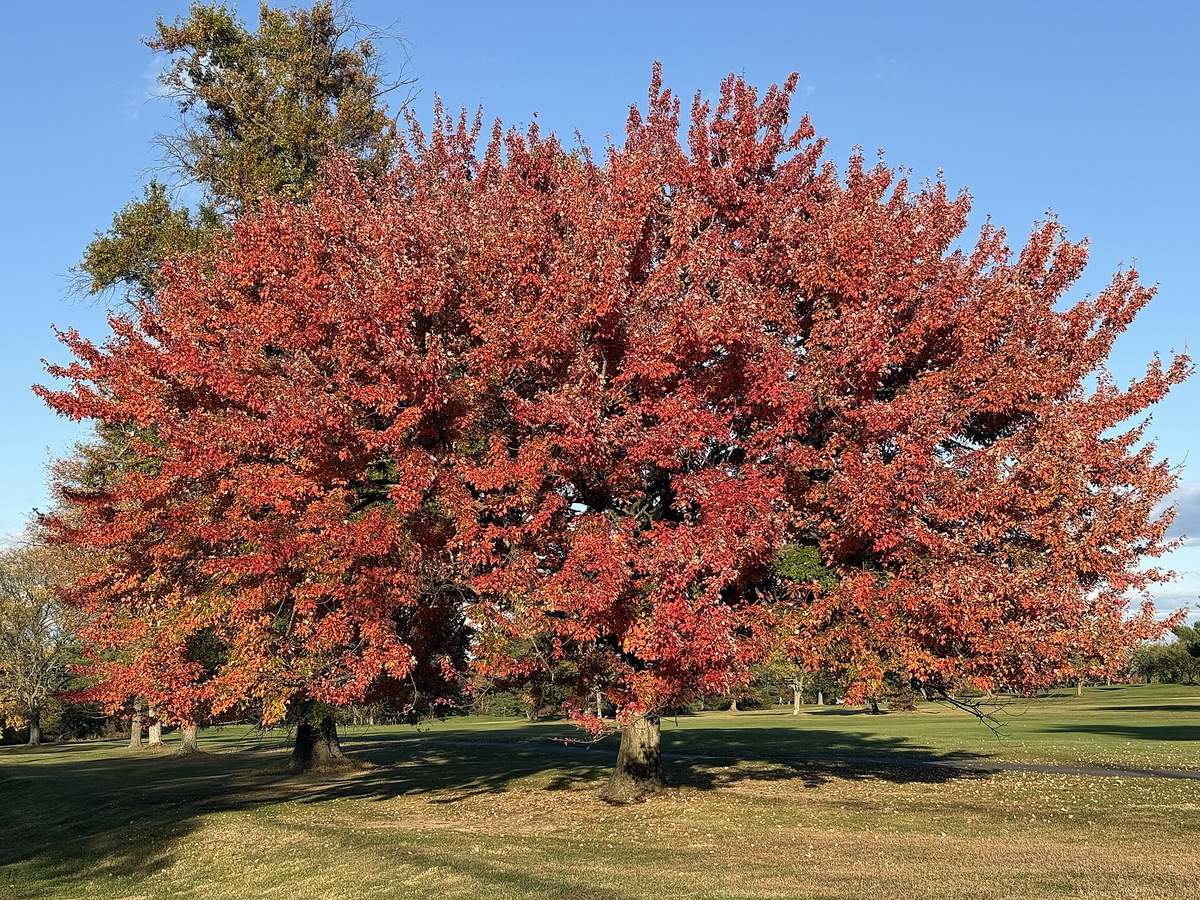 Whole tree
Identify it in winter
- Opposite branching with slender, shiny, reddish twigs.
- Buds are short, blunt, rounded and red, with a few loose scales; extra buds sometimes sit side by side.
- Scrape a twig and sniff — red maple has no odor (silver maple smells foul).
- Young bark is smooth and light gray; older trunks break into long, scaly plates that often loosen while staying attached at the top.
- Grows almost anywhere, from swamps to dry ridges — often the only maple on wet ground.
In summer
- Leaves 2–6 inches wide, usually 3-lobed with sharp V-shaped notches and small sharp teeth along the edges; undersides look whitish.
- Clusters of small red flowers appear in very early spring, weeks before the leaves.
- Small V-shaped winged seeds ripen in late spring.
Easily confused with
Silver maple
Silver maple twigs smell foul when scraped and its bark is shaggier; in summer its leaves are deeply cut with silvery-white undersides.
Sugar maple
Sugar maple buds are long, sharp and brown — not short, blunt and red.
Freeman maple (red × silver hybrid)
A natural cross (Acer × freemanii) that can lean toward either parent. Treat it like red maple: sap sugar is thought to run about 1.5–2%.
Other trees
Keep this season's numbers for next year
LuckySap logs every collection with its sugar reading and your notes, then lines this season up against the last. Free on iPhone.