Fair — lower yield
Black walnut
Juglans nigra
Sweet sap and nutty, maple-like syrup — but only a trickle compared with a maple, so treat it as a fun side project.
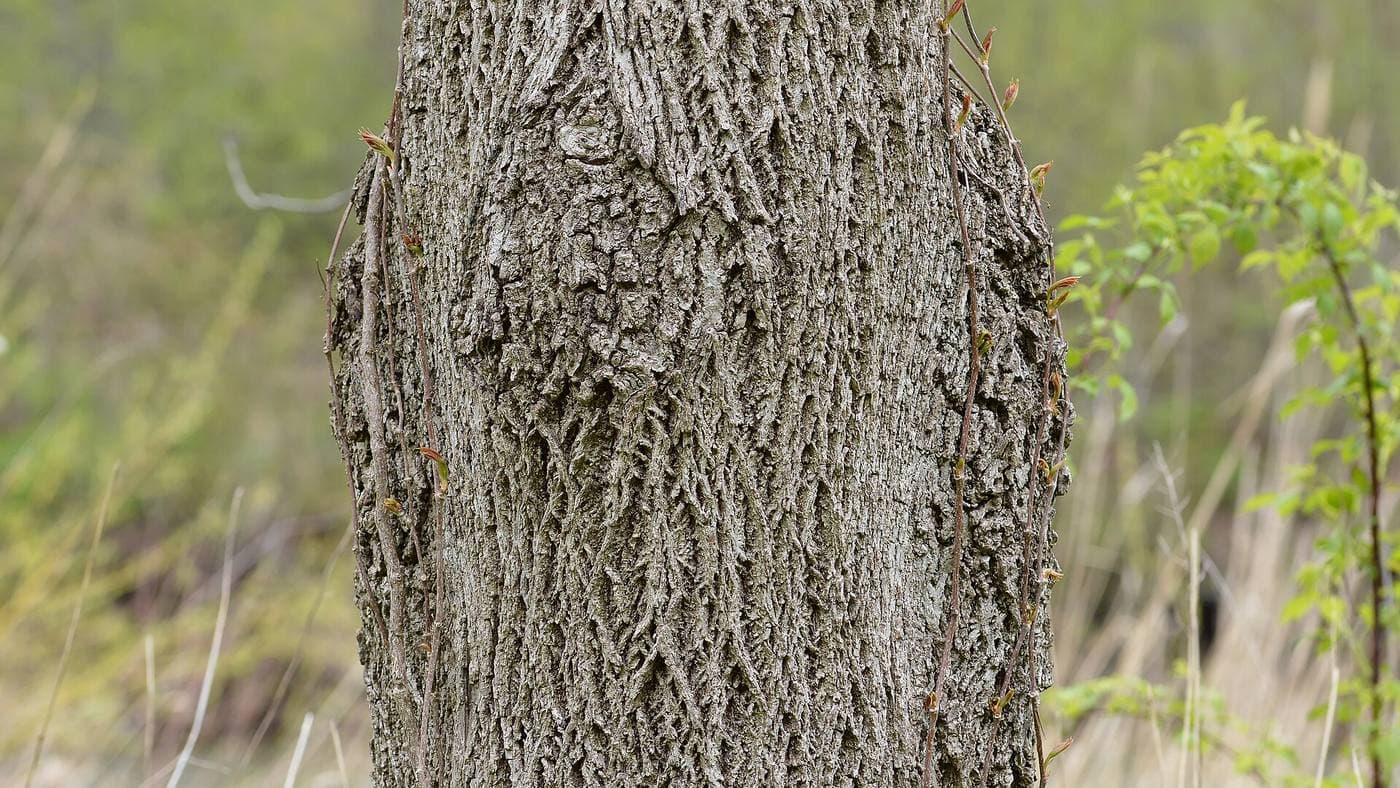 Bark
Bark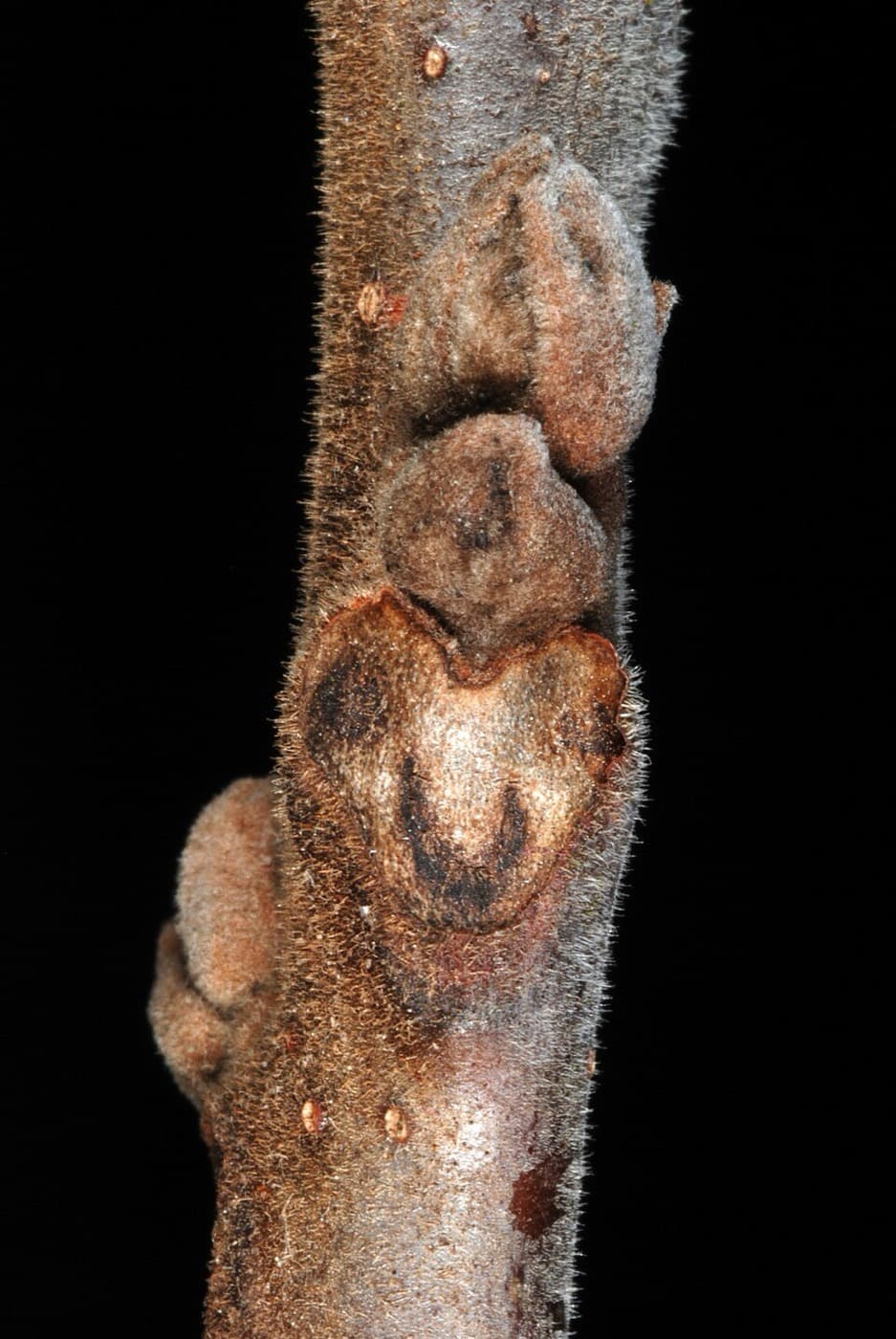 Winter buds & twig
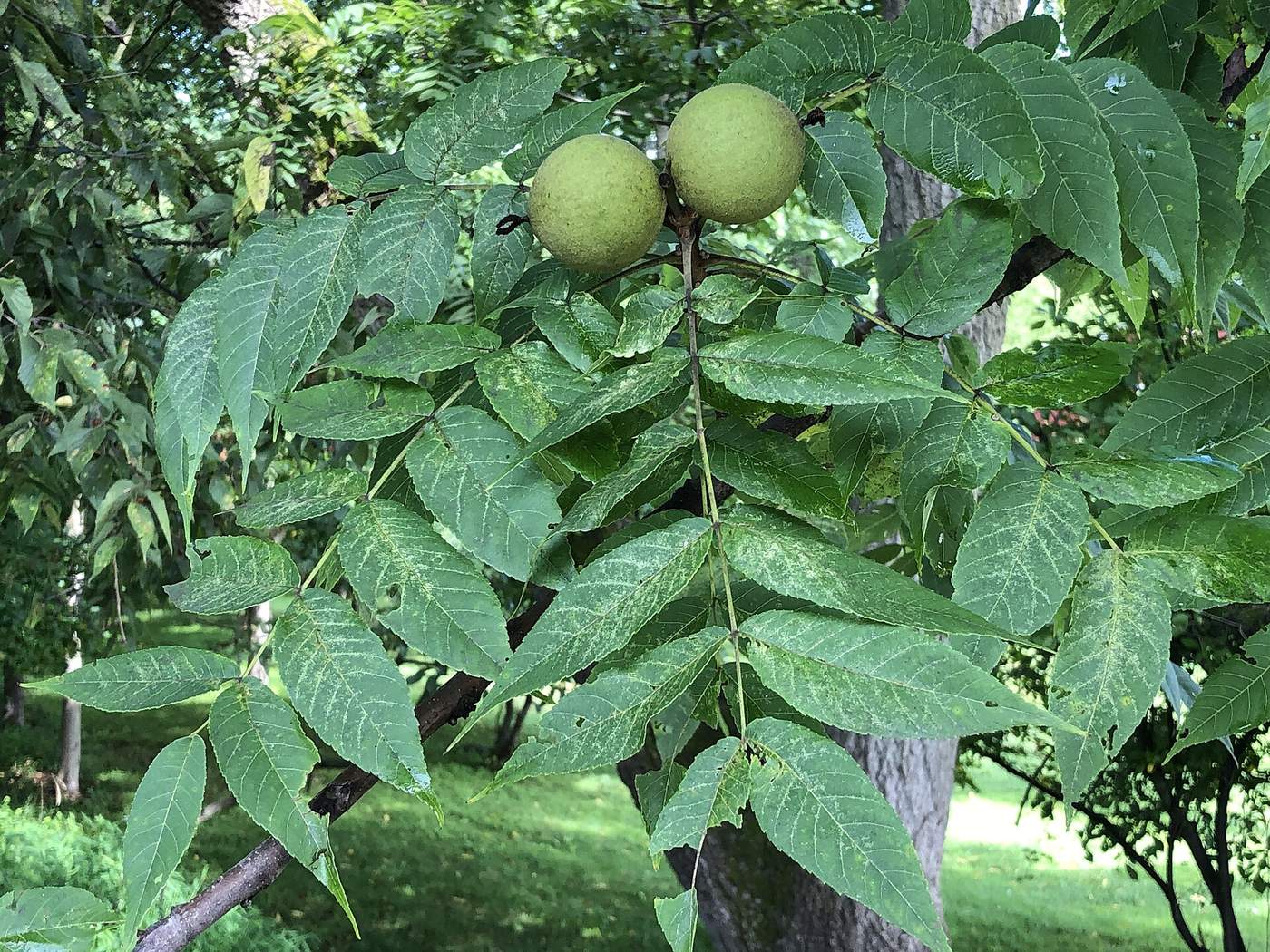 Leaf
Leaf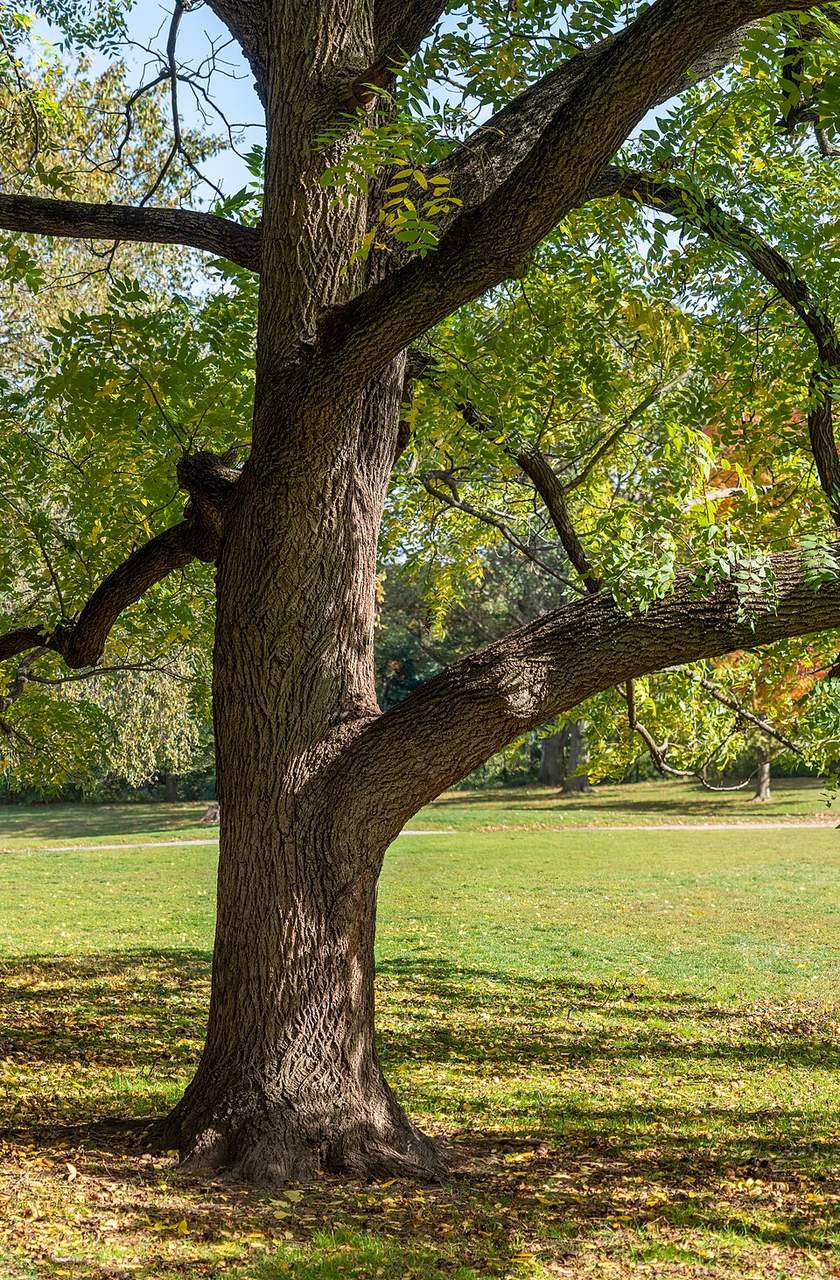 Whole tree
Identify it in winter
- Alternate branching on thick, stout twigs.
- Big three-lobed leaf scars — the classic “monkey face” — sit just below fuzzy tan buds.
- Slice a twig lengthwise: the pith is chambered into little compartments and buff-colored.
- Bark is dark brown, ridged and furrowed in a rough diamond pattern.
- Look underneath: round walnuts 2–2½ inches across in thick husks.
In summer
- Big compound leaves 12–24 inches long with 10–24 finely toothed leaflets; the end leaflet is often missing or runty.
- Round green walnuts, 2–2½ inches across, ripen from late summer into fall.
Easily confused with
Butternut
Lighter, ashy-gray bark with flat, shiny-topped ridges; dark-brown chambered pith; a fuzzy “eyebrow” above each leaf scar; and lemon-shaped nuts.
Maples
Walnut is alternate-branched with huge leaf scars; every maple is opposite.
Other trees

Keep this season's numbers for next year
LuckySap logs every collection with its sugar reading and your notes, then lines this season up against the last. Free on iPhone.