Skip to content
LuckySap
New York · public-land rules · verified 2026-10-05

Can you tap maple trees on public land in New York?

Sometimes — but only by winning a state contract, and never in the Adirondack or Catskill Forest Preserve. New York's DEC sells maple tapping rights on selected State Forest stands by competitive bid, and a 2024 change to the law lets it sign tapping contracts of up to ten years. State parks prohibit injuring trees outright, and the Finger Lakes National Forest requires a special permit for maple sap.

At a glance

State forests
Yes, with a permit or license
State parks
No
National forests
Yes, with a permit or license

Confidence: medium. Factual guidance from the sources below, not legal advice.

State forests

Yes, with a permit or license

The Environmental Conservation Law lets DEC sell "the sap from maple trees" as a forest product on State Forests (reforestation areas) outside the Adirondack and Catskill parks, and since 2024 authorizes contracts for tree tapping and sap production of up to ten years (ECL § 9-0505(1), (5)). DEC foresters pick and mark the stands, and each sale goes to the highest responsible bidder — you can't apply for a stand of your choosing. DEC's sales page lists one example: contract TX11811 on Bombay State Forest (Franklin County), 465 taps on about 14 acres, minimum bid $1,162.50 for a contract running January 2022 to July 2026, with a performance bond and annual DEC tap inspections. For bid opportunities, DEC says to contact your regional Lands and Forests office. Forest Preserve land in the Adirondack and Catskill parks is off the table: the state constitution says it "shall not be leased, sold or exchanged" and its timber may not be "sold, removed or destroyed" (Art. XIV, § 1). There is no hobby tapping permit. The general state-land rule bars injuring any tree "except for personal consumption or under permit" (6 NYCRR 190.8(g)); we found nothing from DEC saying that the personal-consumption wording covers drilling tapholes, so don't rely on it — ask the regional office first (not confirmed).


State parks

No

In state parks and historic sites, the list of "activities absolutely prohibited" includes to "injure, destroy, deface, remove ... or cut any ... tree or other plant life" (9 NYCRR 375.1(e)). No tapping permit exists in the park rules we read. Wildlife management area rules were not checked separately; they are DEC state land, so 6 NYCRR 190.8(g) is the starting point.

National forests

Yes, with a permit or license

New York's only national forest, the Finger Lakes National Forest, lists maple sap as a forest product for which "special permits are required," obtained from a forest office; the page gives no fee or tap limit (not confirmed). Its sister forest in Vermont handles sugaring with special-use permits. The federal rule underneath: damaging or removing any tree or forest product without authorization is prohibited (36 CFR 261.6).

Forests in New York: Finger Lakes National Forest

Town, county and roadside trees

County forests, town and village land, parks and street trees all need the owner's consent. New York's tree-damage statute applies to trees "on the common or other land of a city, village, town or county" as well as private land: injuring one without the owner's consent exposes you to treble the stumpage value or $250 per tree, or both (RPAPL § 861). We found no statewide tapping program for municipal land; ask the town board, parks department or county forester (local programs were not surveyed).

Private land you don't own

Get the owner's consent, ideally in writing. The statutes don't name tapping or sap, but they cover it in substance: no one may "injure or destroy" any tree on another's land without consent (ECL § 9-1501), and the owner can sue for treble stumpage value or $250 per tree, or both (RPAPL § 861). For lease terms, the UVM Extension annotated sugarbush lease is the standard northeastern template.

Lease rates seen in the sources: No New York-specific survey was opened. UVM Extension's 2019 survey of 312 producers across several northeastern states found the most common rent was $1.00–$1.24 per tap per year, then $0.50–$0.99 ("Maple Rental Rates," January 2020). The one DEC sale on record worked out to $2.50 per tap for a contract spanning roughly five sugaring seasons (minimum bid $1,162.50 for 465 taps).

What to confirm

DEC's sales page lists only one maple sale (2022), so opportunities are rare; whether any ten-year contracts have been signed under the 2024 amendment was not confirmed. Whether the "personal consumption" exception in 6 NYCRR 190.8(g) could cover small-scale tapping on State Forests is not confirmed — DEC's own State Forest page says unauthorized cutting of live trees is prohibited and says nothing about tapping. Finger Lakes National Forest permit fees were not found. Wildlife management areas and county/town programs were not surveyed.

FAQ

New York's public-land questions

Can I tap maple trees in New York state forests?
Yes, with a permit or license. The Environmental Conservation Law lets DEC sell "the sap from maple trees" as a forest product on State Forests (reforestation areas) outside the Adirondack and Catskill parks, and since 2024 authorizes contracts for tree tapping and sap production of up to ten years (ECL § 9-0505(1), (5)). DEC foresters pick and mark the stands, and each sale goes to the highest responsible bidder — you can't apply for a stand of your choosing.
Can I tap maple trees in New York state parks?
No. In state parks and historic sites, the list of "activities absolutely prohibited" includes to "injure, destroy, deface, remove ... or cut any ...
Can I tap maple trees in New York national forests?
Yes, with a permit or license. New York's only national forest, the Finger Lakes National Forest, lists maple sap as a forest product for which "special permits are required," obtained from a forest office; the page gives no fee or tap limit (not confirmed). Its sister forest in Vermont handles sugaring with special-use permits.
Can I tap trees along the road or in a town park in New York?
County forests, town and village land, parks and street trees all need the owner's consent. New York's tree-damage statute applies to trees "on the common or other land of a city, village, town or county" as well as private land: injuring one without the owner's consent exposes you to treble the stumpage value or $250 per tree, or both (RPAPL § 861). We found no statewide tapping program for municipal land; ask the town board, parks department or county forester (local programs were not surveyed).

LuckySap · free on iPhone & Android

Found trees? Know when they'll run.

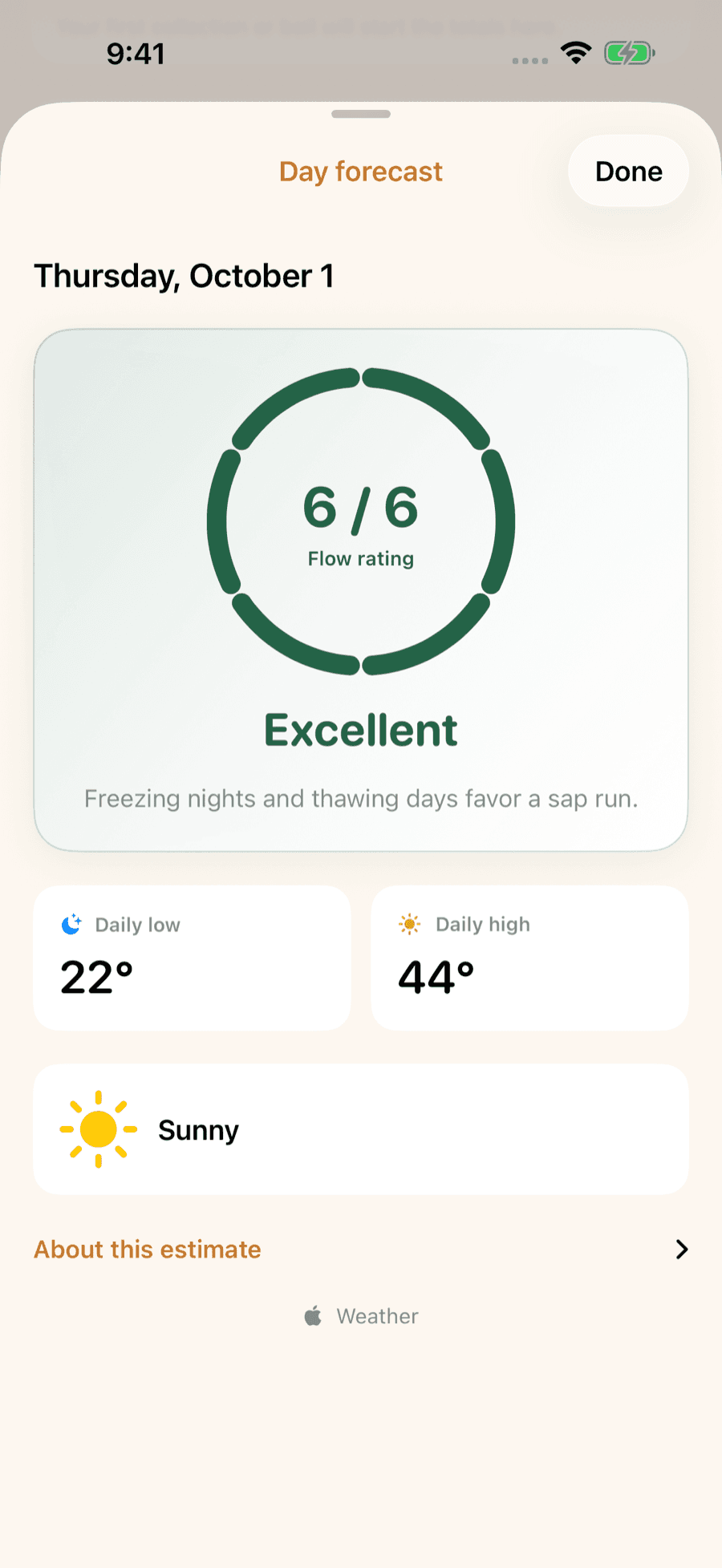
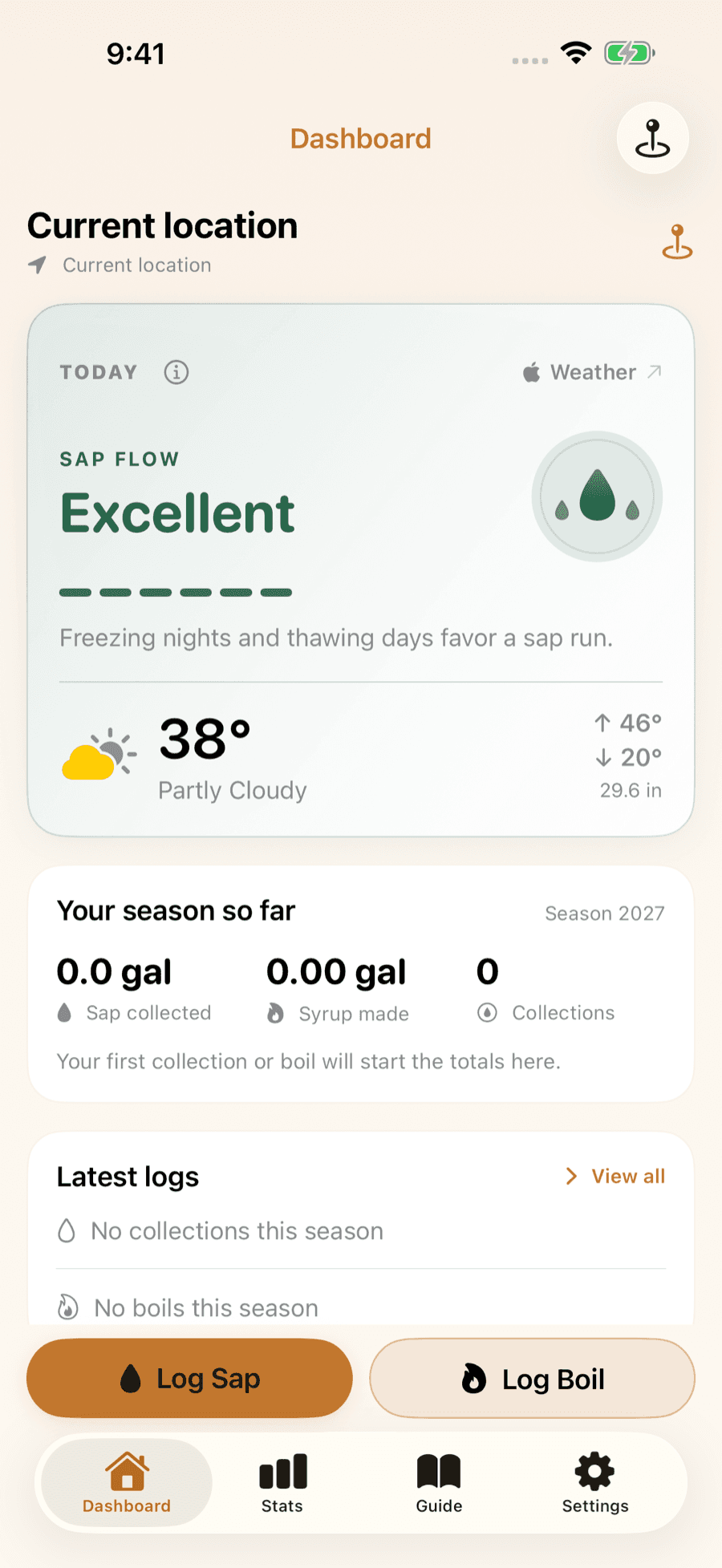
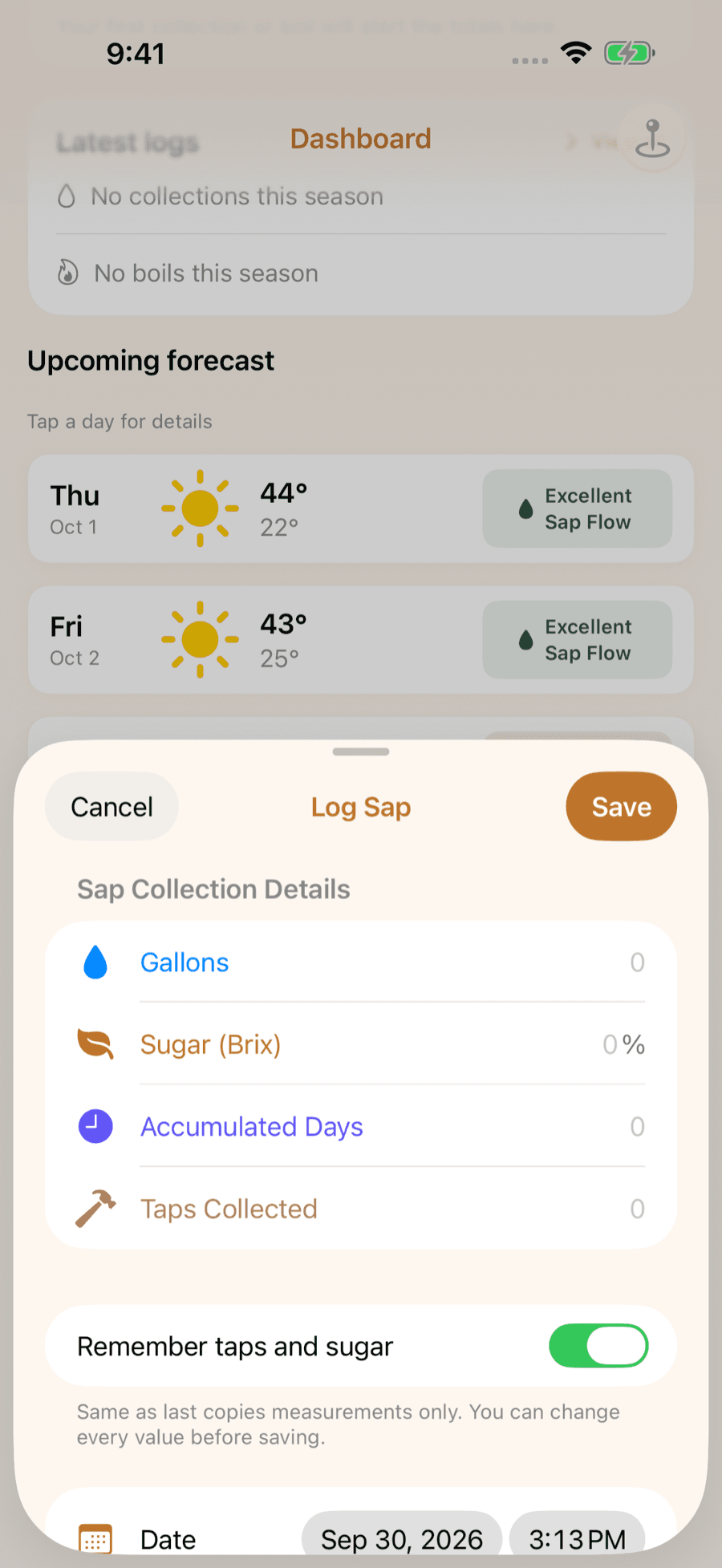
LuckySap turns the forecast for your spot into a day-by-day sap outlook and logs every collection and boil. Free on iPhone and Android.

Download on the App StoreGet it on Google Play