Can you make maple syrup in Germany and central Europe?
Local timing guidance
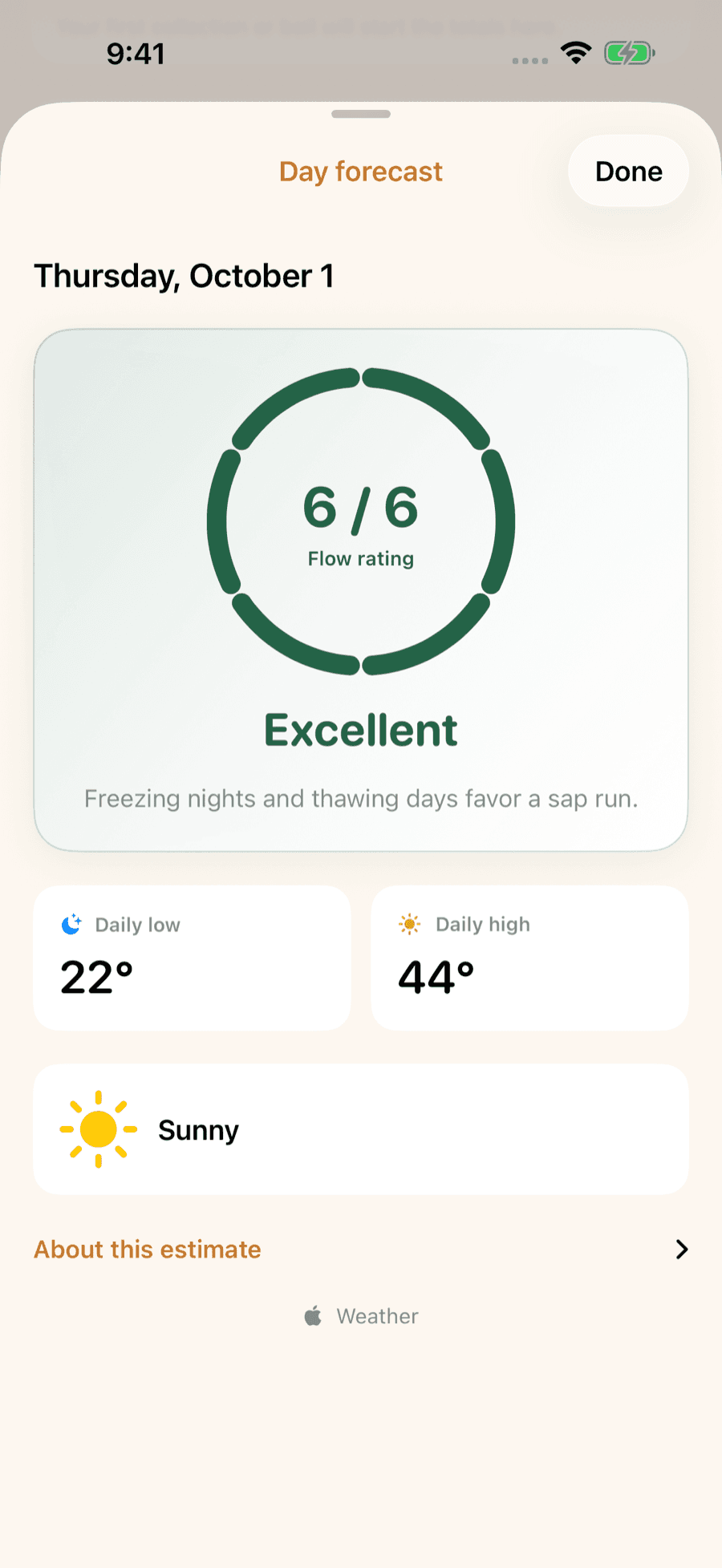
No local source gives tapping dates for Germany and central Europe. The rule everywhere is the same: tap when the forecast shows freezing nights and days near 40 °F; our sap forecast works for any location.
Trees
Tappable trees in Germany and central Europe
| Species | Status | Where |
|---|---|---|
| Sycamore maple (Bergahorn)Acer pseudoplatanus | native | Mountain and ravine forests, Alps and Mittelgebirge — the species historically used for sugar and now studied in the Bavarian AlpsLWF Wissen 62 (VERIFIED); TUM project ST397 (VERIFIED) |
| Norway maple (Spitzahorn)Acer platanoides | native | Lowland and hill forests, 'ein Baum der Ebene, des Hügellandes'; absent from northwest Germany; ubiquitous street treeSDW Baum des Jahres 1995 (VERIFIED); LWF Wissen 62 |
| Field maple (Feldahorn)Acer campestre | native | Hedgerows and warm lowland woods across central EuropeLWF Wissen 62 (VERIFIED) |
| Sugar mapleAcer saccharum | planted | Arboreta and parks onlyRECALL |
| Silver and downy birchBetula pendula / pubescens | native | Throughout; birch-sap tapping is traditional in eastern/northern EuropeEIP Wales manual (VERIFIED, citing Finland); RECALL for Germany |
Who already does it
Sugaring in Germany and central Europe, documented
LWF Wissen 62 'Ahorne (Acer) – die Zuckerbäume' (Lagoni): native maples are 'reich an Kohlehydraten, jedoch für eine kommerzielle Sirupgewinnung nicht ausreichend ergiebig'; maple sugar peaked in Germany at the end of the 18th century when cane prices soared; later attempts 'setzten sich nicht durch', though the GDR researched it in the 1960s
Bayerische Landesanstalt für Wald und Forstwirtschaft · VERIFIED
TU Munich project ST397 (Bavarian StMELF): 'investigates the potential of sap from native sycamore maple trees (Acer pseudoplatanus) growing in mountain forests of the Bavarian Alps for the production of maple syrup' — sugar concentration, sap volume per tree per season, elevation effects; notes 'a lack of scientific data on sap volumes that can be tapped per season'
SDW 'Baum des Jahres 1995: Spitzahorn' — range and ecology of Norway maple in Germany
Schutzgemeinschaft Deutscher Wald · VERIFIED
No current commercial German/Austrian/Swiss maple-syrup producer found; search hits were retail listings for Canadian syrup
Session search log (1 German-language search) · PRACTITIONER
Cautions
What local sources warn about
- The authoritative German forestry view is negative on commercial viability; hobby tapping is a historical curiosity being re-examined scientifically (TUM), not an established practice. (LWF Wissen 62 (VERIFIED); TUM ST397 (VERIFIED))
- European sources describe sap 'bleeding' (Blutungssaft) in spring; central European lowland winters are often too mild/oscillating — expect the best chance in Alpine and Mittelgebirge valleys, which is exactly where TUM is sampling. (LWF Wissen 62 (VERIFIED); TUM ST397 (VERIFIED))
- Protected mountain and 'Schutzwald' forests: TUM frames syrup as a non-timber product from protection forests — permissions apply. (TUM ST397 (VERIFIED))
Where to look
Likely sugaring country
Garmisch-Partenkirchen / Bavarian Alps
TUM's sycamore-sap study area (mountain forests)
Freising (Bavaria)
Home of LWF and TUM's forestry faculty — the source of German maple-sap science
Innsbruck (Tyrol, Austria)
Alpine valley with abundant sycamore and real freeze-thaw springs (no tapping record found)
Minor place. Timing: no local guidance found (LWF gives no months). Austria/Switzerland not separately researched beyond the one German-language search.
FAQ
Sugaring in Germany and central Europe: questions
- Can you tap maple trees in Germany and central Europe?
- Marginal. Marginal: central Europe's native sycamore, Norway and field maples carry sugary sap and were tapped historically (a late-18th-century sugar-shortage boom, GDR research in the 1960s), but the Bavarian State Forestry Institute judges them 'not sufficiently productive for commercial syrup production'; a current TU Munich project is measuring Alpine sycamore sap to test that.
- Which trees can you tap in Germany and central Europe?
- Sycamore maple (Bergahorn) (Acer pseudoplatanus, native): Mountain and ravine forests, Alps and Mittelgebirge — the species historically used for sugar and now studied in the Bavarian Alps Norway maple (Spitzahorn) (Acer platanoides, native): Lowland and hill forests, 'ein Baum der Ebene, des Hügellandes'; absent from northwest Germany; ubiquitous street tree Field maple (Feldahorn) (Acer campestre, native): Hedgerows and warm lowland woods across central Europe Sugar maple (Acer saccharum, planted): Arboreta and parks only Silver and downy birch (Betula pendula / pubescens, native): Throughout; birch-sap tapping is traditional in eastern/northern Europe
Nearby
Other places beyond the belt

LuckySap · free on iPhone & Android
Try a season where you are
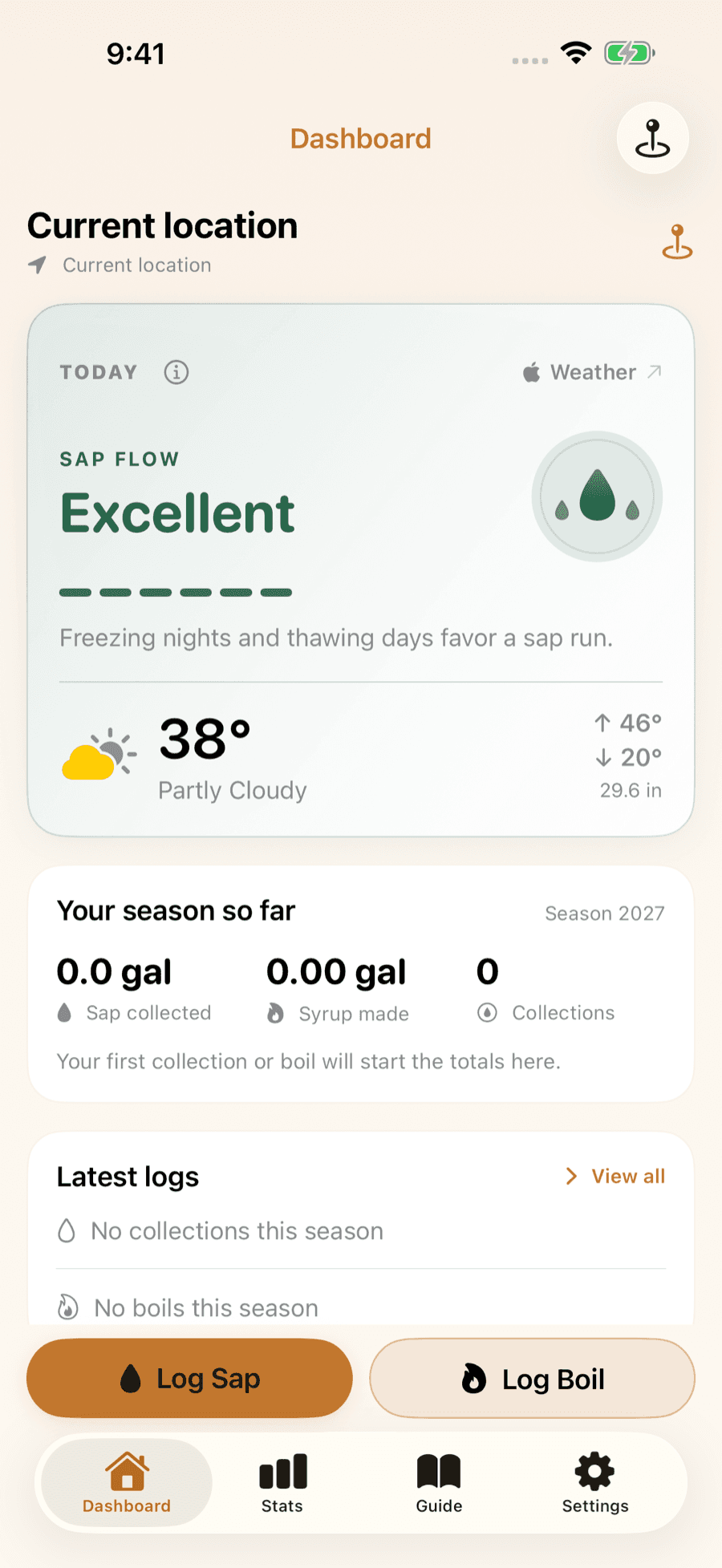
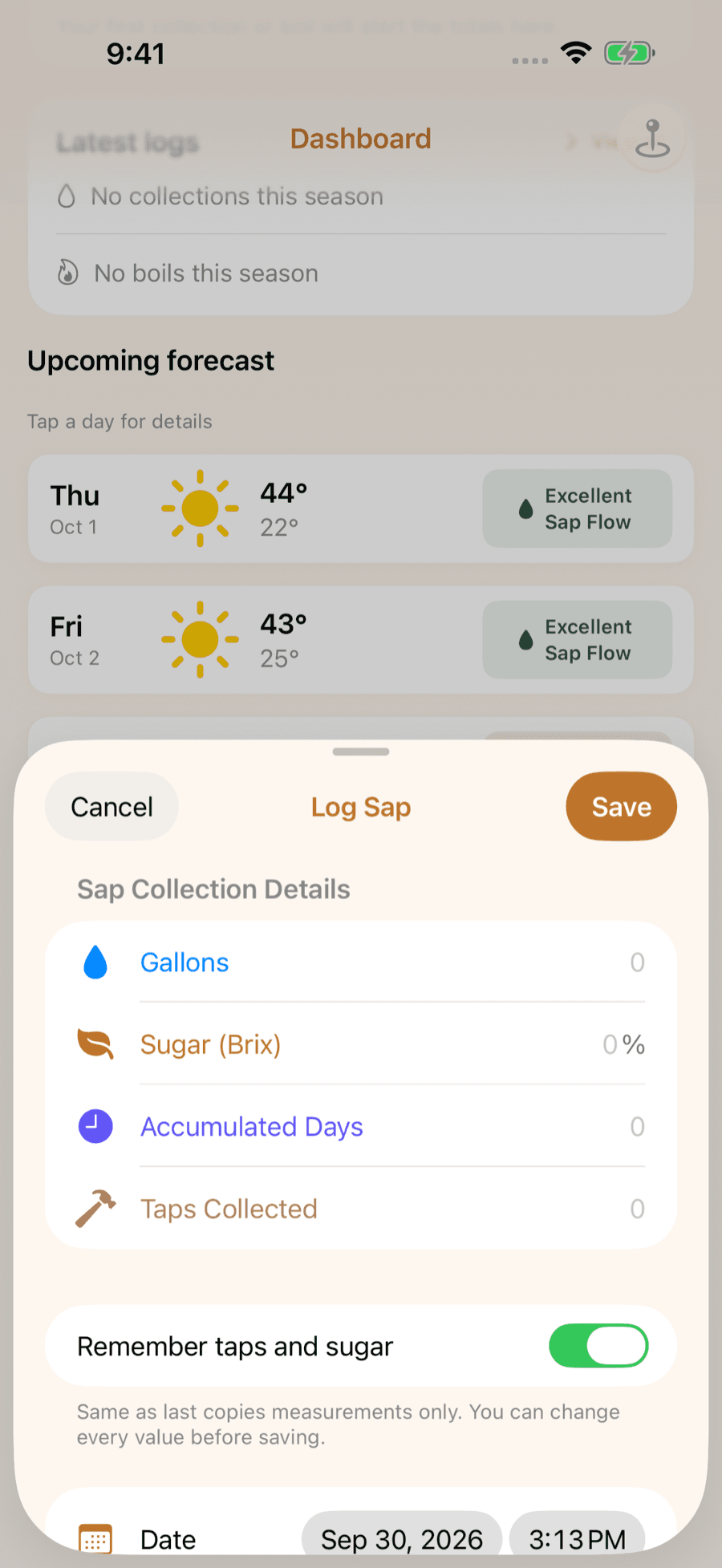
LuckySap turns the forecast for any spot into a day-by-day sap outlook and logs every collection and boil. Free on iPhone and Android.