Five signs the season is over
- 1
The buds are breaking
The season ends when temperatures stay above freezing and buds break dormancy. Check the twig tips: swelling buds mean the tree is waking up for spring. - 2
The sap turns “buddy”
Sap from budding trees gives syrup a disagreeable flavor and smell. Once your syrup starts tasting off, the season is done. (Red and silver maples bud earlier, so they usually finish first.) - 3
The nights stop freezing
Without a refreeze, a run keeps going for 30 to 72 hours and then fades as the pressure in the tree drains away. Warm nights all week in the forecast mean no new runs are on the way. - 4
The sap goes cloudy or yellow
Microbes build up over the season, so late sap spoils faster and makes darker syrup. If fresh sap already looks cloudy at the spout, you're near the end. - 5
The tapholes dry up
Tapholes heal or dry up in 6 to 10 weeks, and mid-season warm spells speed that up by letting microbes dry and plug them.
Let the forecast help
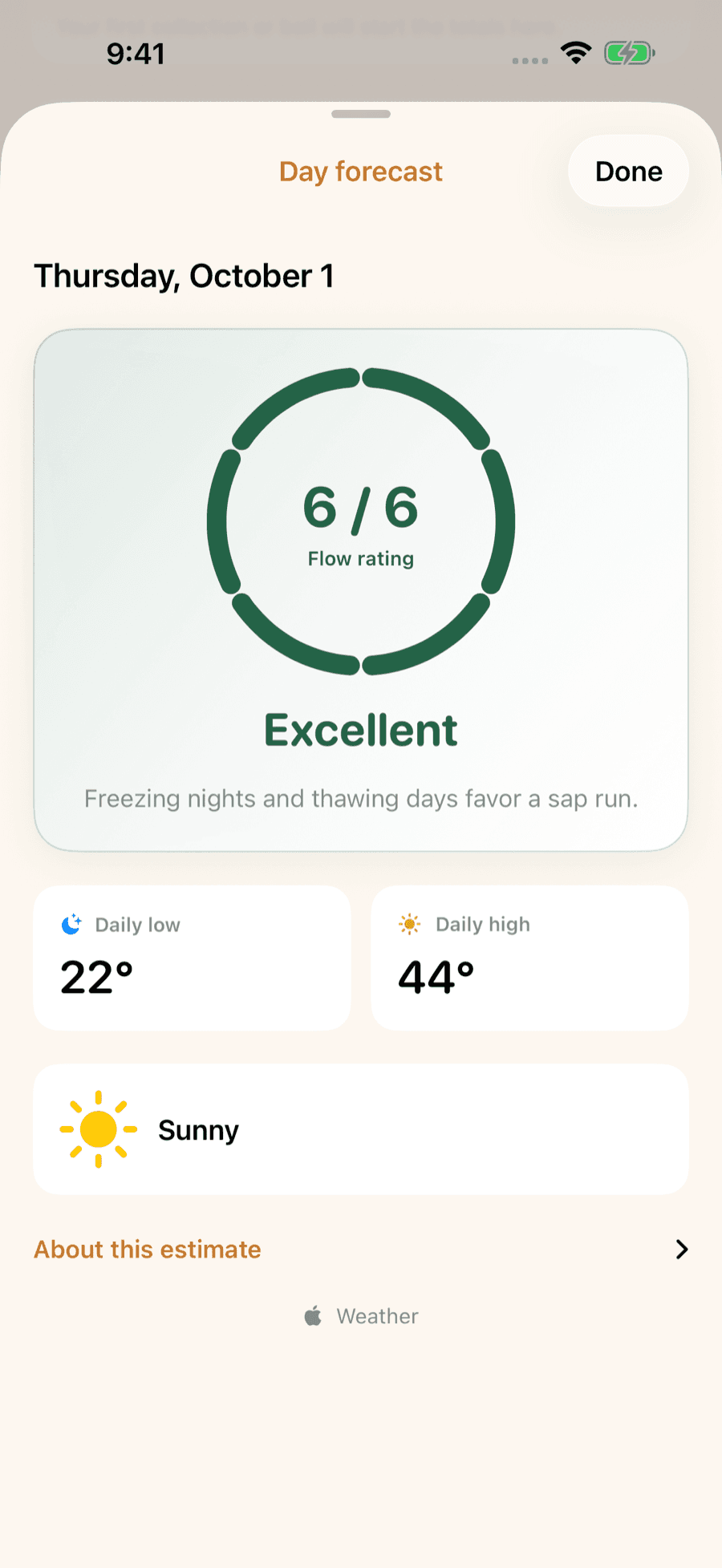
The sap forecast calls a day “No refreeze forecast” when the low stays above freezing, and “Run tapering” when a run is winding down without one. A strip of those, plus swelling buds, is about as clear a signal as sugaring gets.
Don't quit on one warm day
A single mild night doesn't end the season. Sap can even run overnight when it stays above freezing. What ends it is a string of warm nights and budding trees.
How to pull taps
Pull spouts as soon as the season is over. Leaving them in through the growing season slows healing.
- Work each spout out gently.
- Don't plug the hole. Healthy trees close tapholes on their own in one to three years.
- Clean and sanitize spouts before you store them for next year.
How long a season lasts
A typical season runs about four to six weeks, with big swings from year to year. Look up your state's typical closing date and its year-by-year USDA record on the when-to-tap pages.